NEW YORK: The veto power of the United Nations Security Council (UNSC) must be challenged and ultimately abolished to address its failures, says Foreign Minister Datuk Seri Mohamad Hasan.
He said expanding the Council’s membership alone would not be enough to resolve its shortcomings, stressing that the use of the veto must be questioned, particularly in cases involving crimes against humanity.
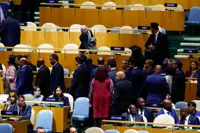
“The exercise of the veto must be questioned and strongly challenged by every single member of this General Assembly ... particularly in cases of crimes against humanity,” he said in Malaysia’s national statement at the General Debate of the 81st United Nations General Assembly (UNGA) here yesterday.
Mohamad said Resolution 76/262, which provides for General Assembly consideration of vetoes cast in the Security Council, should be used to strengthen accountability.
“Expanding the Council’s membership alone will not be enough to resolve its failures. It is the veto that must be challenged, and it is the veto that must be abolished. We must begin the work now.”
He said that paralysis in the Security Council should not translate into paralysis of the United Nations, while trust in the world body could only be restored through concrete action and respect for international law.
Mohamad also said the United Nations must move from reacting to crises to preventing them, with the task particularly urgent in Gaza.
He said Malaysia and other member states had consistently called for an immediate ceasefire, unrestricted humanitarian aid, action against Israel and full Palestinian membership of the UN.
However, he said the collective will of the General Assembly had repeatedly encountered the silencing effect of the veto.
“Malaysia will speak plainly: we are sick of it,” he said, Bernama reported.
On the wider situation in the Middle East, Mohamad urged all parties to step back from further escalation, warning that conflict could affect major energy and trade routes, including the Straits of Hormuz and Bab el-Mandab.
He said the consequences could also be felt in South-East Asia through higher food, fuel and living costs.
“A family in South-East Asia has no part in these disputes. Yet that family still pays the price when food, fuel and the cost of living rise,” he said.
Mohamad also called for a greater role for the Global South in shaping artificial intelligence governance, saying developing countries should not merely become destinations for data centres, investment and technology infrastructure.
“We must be partners in innovation. Not merely customers and markets. And not merely destinations for investment,” he said.
He said middle powers such as Malaysia and regional organisations such as Asean could help keep dialogue alive when major powers could not agree.
“We are the global majority. We must not simply live with the consequences of choices made elsewhere. We must help shape those choices,” he said.
Mohamad said Malaysia would continue working to strengthen multilateralism and make the United Nations worthy of the trust placed in it.
He is in New York from Sept 23 to 27 for Malaysia’s participation in the 81st UNGA.