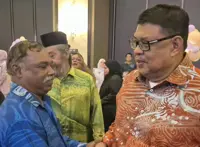
MELAKA: For some villagers in historic city, the absence of a proper home address does not merely mean delayed mail — it costs them places at universities and opportunities to secure jobs, says Datuk Seri Ab Rauf Yusoh.
The caretaker Melaka Chief Minister said scores of students never received their university offer letters, while jobseekers were unaware they had been called for interviews because the correspondence failed to reach them.
He said the lack of clear and structured addresses had long caused confusion in rural communities, where hundreds of houses sometimes shared the same street name or general address.
“In some cases, postmen had no choice but to leave undelivered letters at surau, community halls or coffee shops, hoping that someone would recognise the recipients and pass the letters to them.
“Unfortunately, some of these important letters never reached the intended recipients,” he said when delivering his speech at an appreciation event for retired Melaka civil servants at a leading hotel here on Thursday (Sept 24).
Ab Rauf said he had experienced the same difficulty while growing up in a village in Masjid Tanah.
“My house shared the same general address and street name as hundreds of other homes in the neighbourhood,” he said.
He said this personal experience was among the reasons he championed the Kampung Digital initiative, which assigns structured addresses and individual QR codes to village homes.
The codes, he said, can be scanned using a smartphone to retrieve the precise location and address of a residence, making it easier for postal workers, delivery personnel, emergency responders and government agencies to locate villagers.
Ab Rauf said the initiative was not merely about introducing digital technology in rural areas but resolving a basic problem that had affected villagers for generations.
He also noted that apart from improving mail and parcel deliveries, accurate addresses would enable emergency and welfare personnel to reach residents more quickly.
"The Kampung Digital system also provides the state government with more accurate household and locality data for disaster response, development planning and the targeted distribution of assistance," he added.