
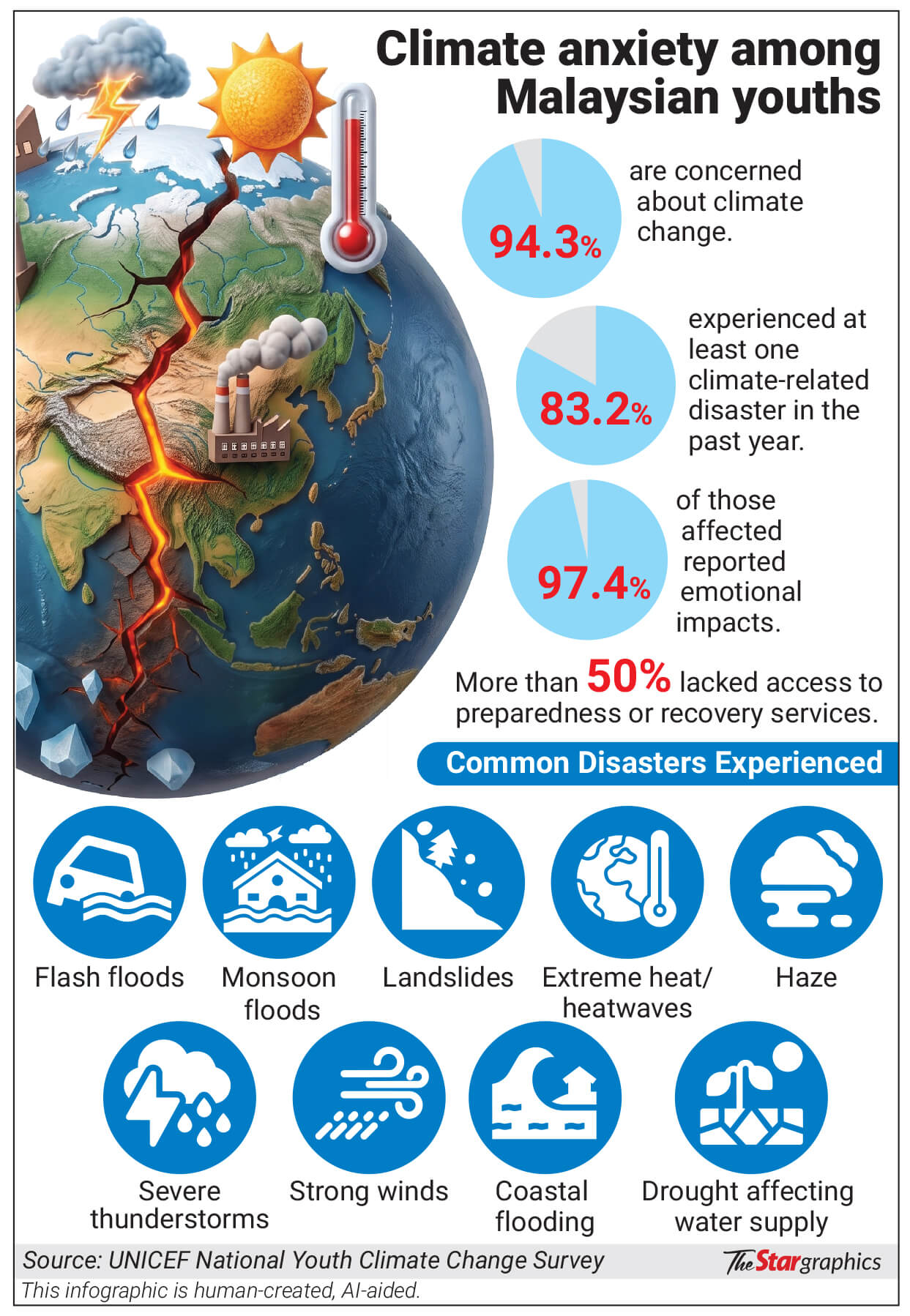
PETALING JAYA: More than eight in 10 Malaysian youths have experienced at least one climate-related disaster in the past year, with nearly all saying the events left them feeling fearful, stressed or hopeless, according to Unicef Malaysia’s National Youth Climate Change Survey 2025.
The nationwide survey found that 83.2% of respondents experienced at least one disaster between 2024 and 2025, while 97.4% reported emotions such as fear, grief, hopelessness, stress or tiredness during climate-related events.
“These exposures, which range from floods and haze to heatwaves and drought, are strongly linked to disruptions in learning, access to essential services and physical and emotional well-being.
“The findings reveal a generation that is not only highly aware of climate risks but a generation already experiencing their effects firsthand,” the report said.
Conducted by Unicef Malaysia with support from the Natural Resources and Environmental Sustainability Ministry, the survey gathered responses from 1,420 youths aged between 15 and 30 nationwide through Unicef’s U-Report platform.
The report, Nurture The Youth, Create The Change, also found that awareness of climate change has increased since the first survey was done in 2020.
“The proportion of youth who viewed climate change as a crisis rose by four percentage points, while overall climate knowledge increased by 11 percentage points.
“Nearly all respondents (94.6%) said climate action should be a national priority,” it said.
The survey found that climate change is also affecting young people’s health and daily lives, with 25.9% reported worsening existing illnesses, 19.7% experienced skin conditions, 18% suffered heat-related illnesses and 14.3% reported having respiratory issues.
More than half (56.5%) also experienced disruptions to essential services during climate-related disasters, including access to information, education and safe spaces.
The survey highlighted regional differences in climate impacts.
“Youth along the east coast report flood exposure well above national levels.
“In Perlis, more than half experienced life-threatening heat, while urban centres such as Kuala Lumpur, Putrajaya and Negri Sembilan face the highest air-pollution exposure,” it said, highlighting the need for localised, risk-informed adaptation that reflect the hazards children face where they live.
Despite these challenges, the survey found Malaysian youths remain eager to be part of the solution, with 83.1% saying they would consider working in the country’s green economy “driven by a desire to make a difference and by genuine personal interest”.
Unicef Malaysia called for stronger health and safety systems, uninterrupted access to essential services during climate-related disruptions and greater youth participation in climate planning and decision-making.
“Together, these actions can strengthen Malaysia’s climate resilience and ensure that every child is protected and able to thrive amidst a changing climate,” the report added.