PETALING JAYA: Most vehicle owners are familiar with the B5 inspection when transferring ownership, which is a mandatory requirement under the Road Transport Act 1987.
Many are also familiar with the B7 inspection, which is a requirement when financing the vehicle purchase through a licensed financial institution.
Here, examiners look into details such as chassis and engine numbers, and compare them with information in the Road Transport Department (JPJ) database, as per the original vehicle registration card.
Surinder Singh, a used-car dealer, said well-executed cosmetic accident repairs can still slip through these tests that are primarily designed to ensure the chassis and engine numbers are not tampered with or are “cut-and-joined” cars.
“These typical hire-purchase or ownership transfer inspections are not designed to look for repaired body panels,” he said, adding that if a repaired car stays within the alignment limits on the computerised test rig, it will still pass the inspection.
ALSO READ: When used car dream crashes
A pass in the B5 and B7 inspection, he said, would mean that a vehicle was legal and met minimal road safety standards. In these checks, inspectors would have carried out visual undercarriage and above-carriage inspections looking out for major structural rust, structural modifications or cracked frames.
Surinder, however, added that Puspakom’s basic checks do not use diagnostic scanners, which can determine if airbags were deployed or deactivated in the past, or if the dashboard warning bulbs were intentionally bypassed, or even if the odometer has been “rolled back”.
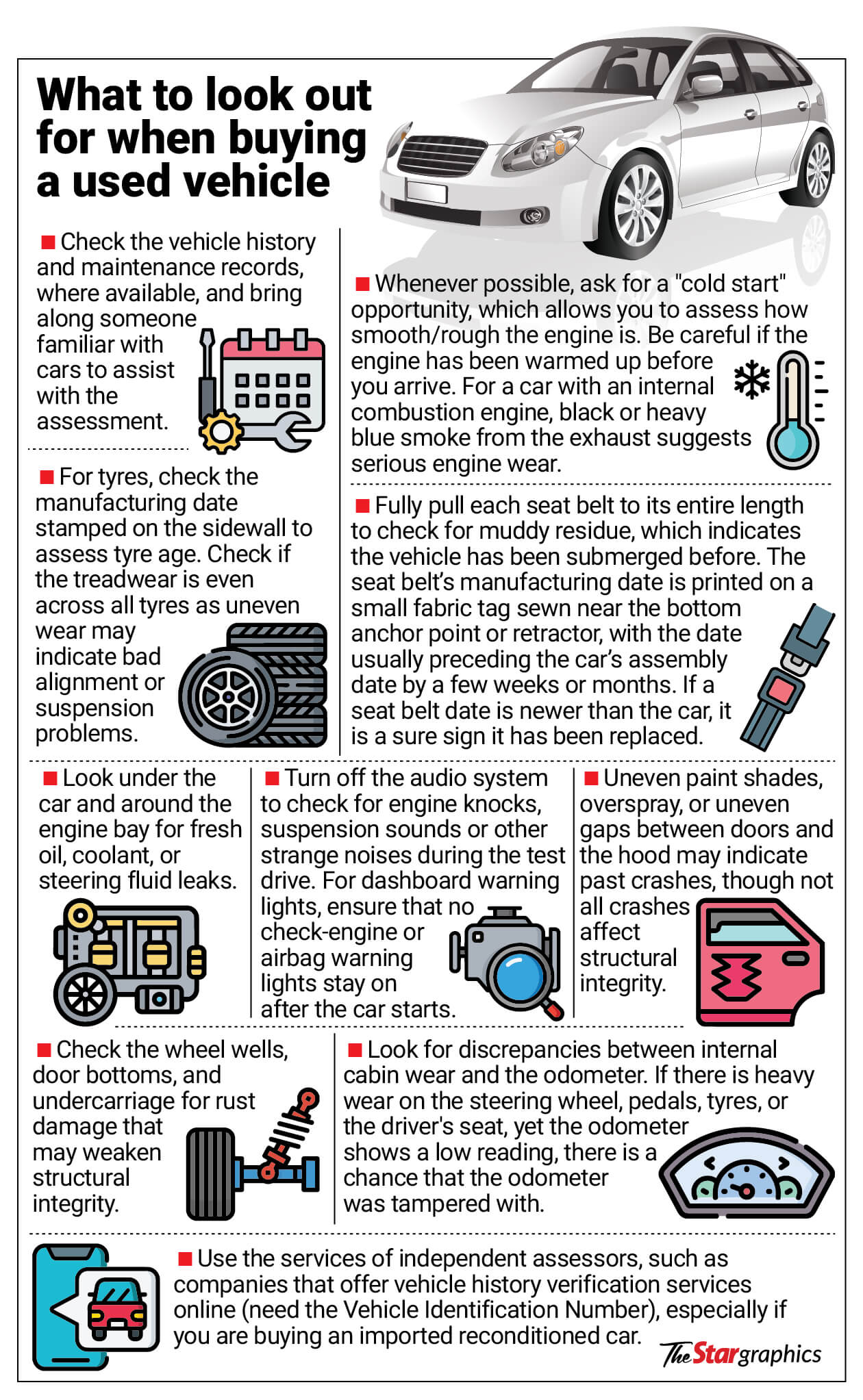
Diagnostic scanners are plugged into a vehicle’s OBD port to communicate with the vehicle’s “memory”, from which data can be extracted.
In response, a Puspakom spokesman said while its standard inspection does not involve dismantling vehicle interior panels, the procedures for both inspections are still designed to identify indicators of possible structural modifications.
“For instance, if we find any signs of a possible ‘cut and join’ while checking the pillar parts during the B2, B7 and MV15 inspections, the vehicle will go through the Advanced Inspection (Pemeriksaan Lanjutan) for a more detailed check of its structure,” he said.
On the OBD scanner, Puspakom said it was not part of its regulatory inspection requirements and therefore, not included under B2, B7 or MV15 inspections.
ASLO READ: Independent inspections can safeguard car buyers
“Vehicle owners who wish to obtain a more comprehensive assessment may opt for the Private Voluntary Inspection (PVI) service, which includes an OBD scan to retrieve diagnostic fault codes and identify potential electronic system issues,” it said.
That said, many car buyers have used the more specialised B2 inspection. According to Puspakom, more than 1.8 million B2 inspections were performed nationwide last year, with more than 113,000 coming from Penang.
Without referring specifically to any one case, Puspakom said it is pleased that its B2 inspection contributed to the Consumer Claims Tribunal ruling in favour of “a used vehicle buyer”.
“The case shows the importance of selecting the right inspection based on purpose, and highlights how specialised inspections like B2, alongside Puspakom’s Voluntary Vehicle Inspection, play a vital role in uncovering hidden risks in the used vehicle market,” said Puspakom CEO Mahmood Razak Bahman.