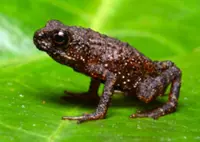
PETALING JAYA: A new species of stream toad, the presence of an exceptionally rare freshwater fish, and a rare sighting of the Robinson’s sticky frog were among the discoveries from an expedition to a newly gazetted reserve in Pahang.
The sticky frog, or its scientific name, Kalophrynus robinsoni, was last seen in 1922, while the stream toad is now undergoing the formal description process, with more updates to follow.
Both species were identified by Universiti Sains Malaysia lead researcher Mohd Abdul Muin Md Akil.
“When I joined this expedition, I was hoping to find the Robinson's sticky frog.
“To record that sighting and discover a new river toad species at the same time was truly remarkable,” he said in a statement by Al-Sultan Abdullah Royal Tiger Reserve (ASARTR).
Located in Pahang, the ASARTR is a large, secure habitat that will play a pivotal role in the recovery of the critically endangered Malayan tiger population and other endangered species such as the Asian elephant, Malayan gaur, and various primates and birds.
The Reserve also aims to invigorate the local economy of Hulu Tembeling in the Jerantut district and foster shared responsibility for conservation efforts.
Mohd Abdul Muin said to the uninitiated, forests may all look the same.
“But as researchers we know that a large, unexplored forest like this reserve always has secrets waiting to be discovered,” he said.
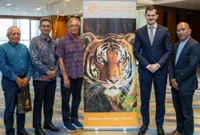
During an event in Kuala Lumpur, 74 attendees, composed of researchers, conservationists, government agencies and community members, attended the ASARTR scientific symposium to present and discuss the findings of the first multidisciplinary expedition to the reserve.
The event, supported by the Mohamed Zayed (MBZ) Conservation Fund and organised by Enggang Management Services (EMS), was officiated by Mohd Halmi Mohd Hassan, CEO of EMS and CEO of Pahang State National Park (PTNP) Zainal Abidin Othman; and Datuk Seri Harry Cockrell, director of Enggang Holdings.
The symposium marked the first presentation of confirmed findings from the week-long expedition, which was initially funded by the European Union (EU) through a EUR 1 million grant to operationalize the reserve, with additional support from partners including the Mohamed Bin Zayed (MBZ) Conservation Fund.