KUALA LUMPUR: The government should reconsider its decision to exclude licensed tourism transport operators from the diesel subsidy programme, as this risks driving up travel costs for Malaysians and undermining the country's competitiveness during Visit Malaysia 2026 (VM2026), says the Malaysian Association of Tour and Travel Agents (MATTA).
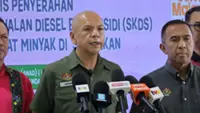
Its president Nigel Wong (pic) said the Finance Ministry's view that subsidising diesel for tourism transport operators would benefit only foreign tourists failed to reflect how the industry actually operates.
"Tourism vehicles serve both Malaysian and international tourists every day," he said in a statement on Wednesday (July 8).
ALSO READ: Sabah tourism sector urges review of diesel subsidy
"Licensed tourism transport operators provide services not only for inbound visitors but also for domestic holidaymakers, school groups, corporate events, incentive travel, religious pilgrimages, educational tours and community programmes.
"It is therefore incorrect to assume that diesel subsidies for tourism transport operators would benefit only foreign tourists.
"To say this subsidy only helps foreigners ignores the reality of how our tourism transport industry operates.
"This decision, if left unchanged, will raise fares for Malaysians and may even force them to consider utilising unlicensed service providers," he added.
Wong said withdrawing the subsidy would increase operating costs for licensed tourism transport operators, with higher costs passed on through increased fares and costlier tour packages for both domestic and international travellers.
He said the move could erode the affordability of travel just as Malaysia intensifies its VM2026 campaign, discouraging domestic travel while making the country a less attractive destination for overseas visitors.
ALSO READ: Govt urged to include tour buses under diesel subsidy scheme
Affordable tourism services, he said, would encourage Malaysians to holiday within the country while boosting inbound tourism, creating greater business opportunities for hotels, restaurants, attractions, retailers, transport operators and local communities.
Wong added that stronger tourism activity would generate jobs, increase tax revenue and foreign exchange earnings, and stimulate economic growth, with the long-term benefits potentially outweighing the cost of providing targeted diesel subsidies to licensed tourism transport operators.
He said the issue was particularly critical in Sabah, where tourism relies heavily on road transport because of the state's vast geography and dispersed attractions.
Wong also cautioned that higher transport costs could weaken Malaysia's position against regional competitors such as Thailand, Indonesia, Vietnam and the Philippines, where governments continue to provide support for their tourism industries.
ALSO READ: Tourism groups seeking diesel subsidy for buses and vans
He said MATTA had been working closely with the Tourism, Arts and Culture Ministry (Motac) since the global energy price crisis, submitting feedback and operational data demonstrating the financial strain faced by tourism transport operators.
Wong urged the Finance Ministry to review its decision, engage with Motac and industry stakeholders to develop a targeted subsidy mechanism, and recognise tourism transport as a strategic enabler of domestic mobility and the tourism economy in support of VM2026.
"Supporting tourism transport operators should be viewed as an investment in Malaysia's long-term economic growth, employment and tourism competitiveness, rather than simply a cost," he said.