KUALA LUMPUR: The government is refining its policies and incentives to accelerate the rollout of electric vehicle (EV) charging infrastructure, while working with utility providers to ensure the power grid can support a growing network of fast chargers.
Deputy Investment, Trade and Industry Minister Sim Tze Tzin said the government was collaborating with Tenaga Nasional Bhd (TNB) to build more power substations needed to supply direct current (DC) fast chargers, as EV adoption gathers pace.
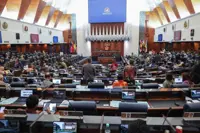
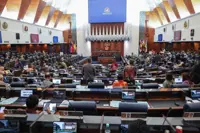
“Electric vehicles are a new technology and product segment. As we develop this industry, the government is continuously adjusting its policies and incentives while expanding the number of charging points,” he told the Dewan Rakyat Wednesday (July 8).
Sim said substations were a key component of the charging ecosystem.
“What the government is doing now is collaborating with stakeholders, particularly TNB, to construct substations.
“For charging points to function effectively, we need substations to supply sufficient direct current power, which means we must construct more of these substations,” he said.
He added that the government was also developing targeted incentives for charging point operators to encourage further investment in charging infrastructure.
Sim was responding to Datuk Dr Ku Abdul Rahman Ku Ismail (PN-Kubang Pasu), who urged EV manufacturers to play a more active role in building charging stations to support wider EV adoption.
Ku Abdul Rahman also proposed that the government work with the Public Works Department and the Housing and Local Government Ministry to ensure charging facilities are incorporated into new housing developments, including apartments and condominiums.
“While this process will take time, the government has taken note of the suggestions raised by Kubang Pasu, and we will continue to improve our efforts,” Sim said.
On EV import policies, Sim said the government applies a different regulatory approach to EVs and internal combustion engine (ICE) vehicles because the two industries are at different stages of development.
He said restrictions on completely built-up ICE vehicle imports, which generally apply to models with engine capacities of 1,800cc and above, had been in place for many years.
EV policies, however, must support both consumer adoption and the growth of local assembly, supply chains and the wider EV ecosystem, he said.
Sim added that EVs currently enjoy a lower excise duty of 10% compared with ICE vehicles, making the accurate declaration of import values especially important.
To prevent the under-declaration of import values for completely built-up EVs, he said the government had introduced a minimum Cost, Insurance and Freight (CIF) value to protect tax revenue.