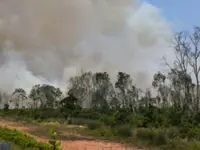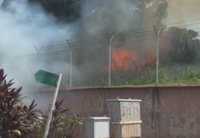
PETALING JAYA: The rise in the number of bush fires in the country is a “huge concern” and a clear signal that long-term plans are needed to deal with the situation, says Ecotourism and Conservation Society Malaysia president Andrew Sebastian.
“A total of 13,775 cases is unprecedented. As an environmentalist and naturalist, I am very concerned,” he said, referring to the bush fires recorded in the first quarter of this year.
This number has already far exceeded the 7,984 cases in the whole of last year.
“We need serious long-term plans. It is a big threat and in general, it will also affect food security and local biodiversity,” he said.
The problem, he said, affects both humans and biodiversity.
“We have this recurring in the last 20 and 30 years, especially peat soil fires in Selangor which seem to be a yearly occurrence.
“In the short to medium term, the surrounding ecosystem will be affected.”
He also noted that the El Nino weather pattern did not help matters.
“With El Nino in play this year and for the foreseeable future, we have to deal with it as these extreme weather patterns have been hitting us for the past few years already,” he said.
Universiti Malaysia Terengganu Science and Environment Faculty lecturer and climatologist Dr Chung Jing Xiang said the El Nino pattern of hot and dry weather provided favourable conditions for bush fires to occur.
“One of the findings we get is that the dry condition, which is often associated with El Nino, would become the new normal for the future,” he said.
He also noted other risks such as haze, as the lack of rain would further exacerbate conditions.
“Rain is an important ‘washout agent’ to remove the fine particles. With a prolonged dry and hot weather condition, the dust that we deposit into the atmosphere will remain out there longer, degrading our air quality,” he added.