Jan-April figures of 13,775 close to double that of total fires in 2025
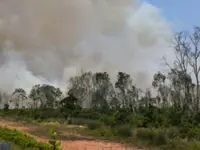
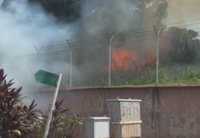
PETALING JAYA: At least 13,000 bush fires have been recorded in the country within the first four months of the year, a number which is nearly double the total recorded throughout last year.
Fire and Rescue Department director-general Datuk Seri Nor Hisham Mohammad (pic) described the sharp increase as an “alarming trend” and attributed it to the hot and dry weather conditions.
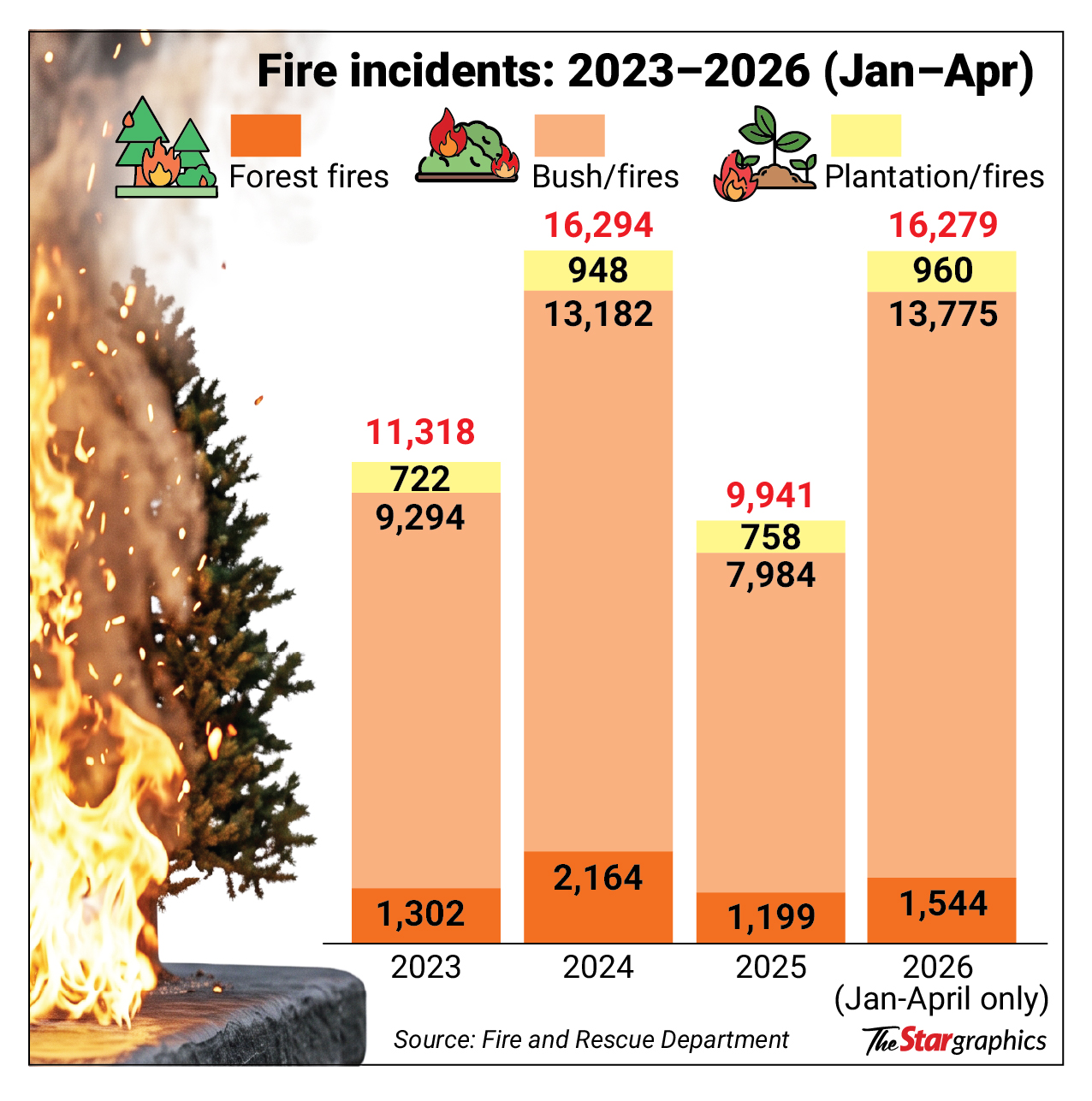
“Although the data only covered the period up to April, the 13,775 bush fires have already surpassed the total recorded throughout last year,” he said.
ALSO READ: Firefighters battle hidden hazard of peat fires
There were 7,984 cases in 2025.
In 2023, the number of bush fires reached 9,294 cases, followed by 13,182 cases in 2024.
ALSO READ: Surge in bush fires sparks long-term warnings
According to the department, bush fires refer to open blazes involving vegetation such as shrubs, grass and undergrowth.
They are categorised separately from forest fires and plantation fires.
“The trend for bush fires reached a downward turn last year but this was short lived as the number of cases spiked significantly this year,” he told The Star.
Nor Hisham said the increase is believed to have been driven by hot and dry weather conditions, particularly in Kedah and Johor, as well as the El Nino phenomenon and human-related open burning activities.
“The increasingly hot weather has caused vegetation, scrubland and peatland areas to become extremely dry, allowing fires to spread rapidly,” he said.
“The El Nino phenomenon, which reduces rainfall, has also heightened the risk of large-scale fires, while the burning of agricultural waste, open disposal of rubbish and human negligence remain among the main causes of such blazes.”
Nor Hisham said the 960 plantation and farm fires recorded in the early part of this year have also surpassed the total cases in 2024 (948) and 2025 (758).
To address the problem, the department is monitoring 83 hotspots nationwide that are at high risk of major fires.

“Hot spot monitoring will be carried out through the Asean Specialised Meteorological Centre website, while Air Pollutant Index (API) readings will be tracked via the Air Pollutant Index of Malaysia portal. Additional information will also be obtained from the National Fire Operations Centre from time to time.”
The department has also intensified patrols and the preparedness of fire-fighting assets, including water-bombing operations.
Data also showed that open burning cases involving areas of two hectares and above affected 5,990ha of land as of June 9, compared with 1,862ha throughout last year. For comparison, the total area affected by open burning reached 11,686ha in 2024.
Nor Hisham said enforcement and monitoring will be stepped up through regular patrols in hot spots and areas prone to open burning.
“We will also mobilise our machinery and firefighting equipment for open burning operations, while department aircraft may be deployed for firefighting through water bombing operations if necessary,” he said.
“In cases where residents are affected by water supply disruptions, water tankers can be mobilised to provide additional assistance.”
Nor Hisham urged state governments to activate their State Disaster Management Committees in stages based on weather conditions and the average number of open burning calls received.
“This is aimed at strengthening preparedness and response measures in the event of worsening haze conditions and an increase in open burning incidents.
“Such activations should be guided by the National Haze Action Plan and the National Open Burning Action Plan, taking into account prevailing weather patterns and fire-related emergency calls.”
He urged the public to refrain from carrying out open burning activities and to immediately report any fires to the authorities.