KUALA LUMPUR: Malaysia’s foreign policy will remain independent, proactive and non-aligned, says Prime Minister Datuk Seri Anwar Ibrahim.
This approach, he said, was deliberate and shaped by Malaysia’s history, present and future.
He explained that Malaysia’s foreign policy over the years was based on an approach that is “principled, yet not constrained by rigidity; ambitious and bold without being reckless; fiercely independent, without forsaking the spirit of conviviality and collaboration”.
“Our goal is to strengthen existing partnerships, build new ones, and keep our economic ties broad-based, resilient and forward-looking. In a more uncertain global environment, diversification is not just an economic strategy; it is a national necessity,” he said in his keynote address at the 39th Asia-Pacific Roundtable yesterday.
Anwar said Malaysia would take principled positions on issues such as Palestine, Islamophobia and territorial sovereignty but would not take sides between major powers.
“We take principled stances and positions but not sides,” he said, adding that the use of force or coercion, whether military or economic, would only create resentment and unintended consequences.
During a question-and-answer session, Anwar said issues that arise, especially with neighbouring countries, should be resolved through negotiations, including disputes in the South China Sea.
He said that in discussions with many Western countries, an issue often raised was the possibility of conflict or the threat of war in such waters.
“Does Malaysia take this matter lightly? Of course not,” he said.
The Prime Minister pointed out that the ongoing engagement process is meaningful and actively implemented.
Malaysia, he said, would continue to handle any disputes with neighbours through sustained diplomatic engagement and economic collaboration.
On Asean, Anwar said Malaysia’s future was inextricably linked to the bloc and that Asean’s centrality must remain the cornerstone of its foreign policy.
He said the bloc must continue to serve as the primary platform for Malaysia to advance not only its interests, but also regional peace, prosperity and stability.
Future engagements on Myanmar, he said, must be more proactive, comprehensive and pragmatic through Asean centrality.
Anwar said Asean leaders had deliberated during a recent meeting in Cebu on whether efforts on Myanmar could be bolder or more creative.
“This is why Asean should continue to engage all sides in Myanmar – the authorities in Naypyidaw, opposition political parties, ethnic armed groups and local NGOs,” he said.
“It cannot be overstated that the eventual political settlement must be a Myanmar-owned and Myanmar-led process, not one imposed externally.”
He also said the Thai-Cambodian situation must be handled with clarity and conviction while maintaining a united front among Asean members and working, where possible, with like-minded dialogue partners.
Anwar said Malaysia should not be overly constrained by consensus when there is room to advance regional efforts, and Asean should continue finding mechanisms for active engagement while recognising the need for collective action.
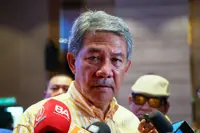
On June 25, Foreign Minister Datuk Seri Mohamad Hasan told the Dewan Rakyat that Malaysia had not recognised Myanmar’s new government following its election but remained in communication to prevent a diplomatic vacuum that could allow external powers to interfere in Asean affairs.
He said Malaysia’s engagement with Myanmar did not amount to recognition of its new administration and remained anchored to Asean’s Five-Point Consensus.