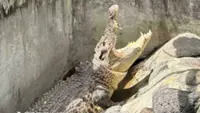
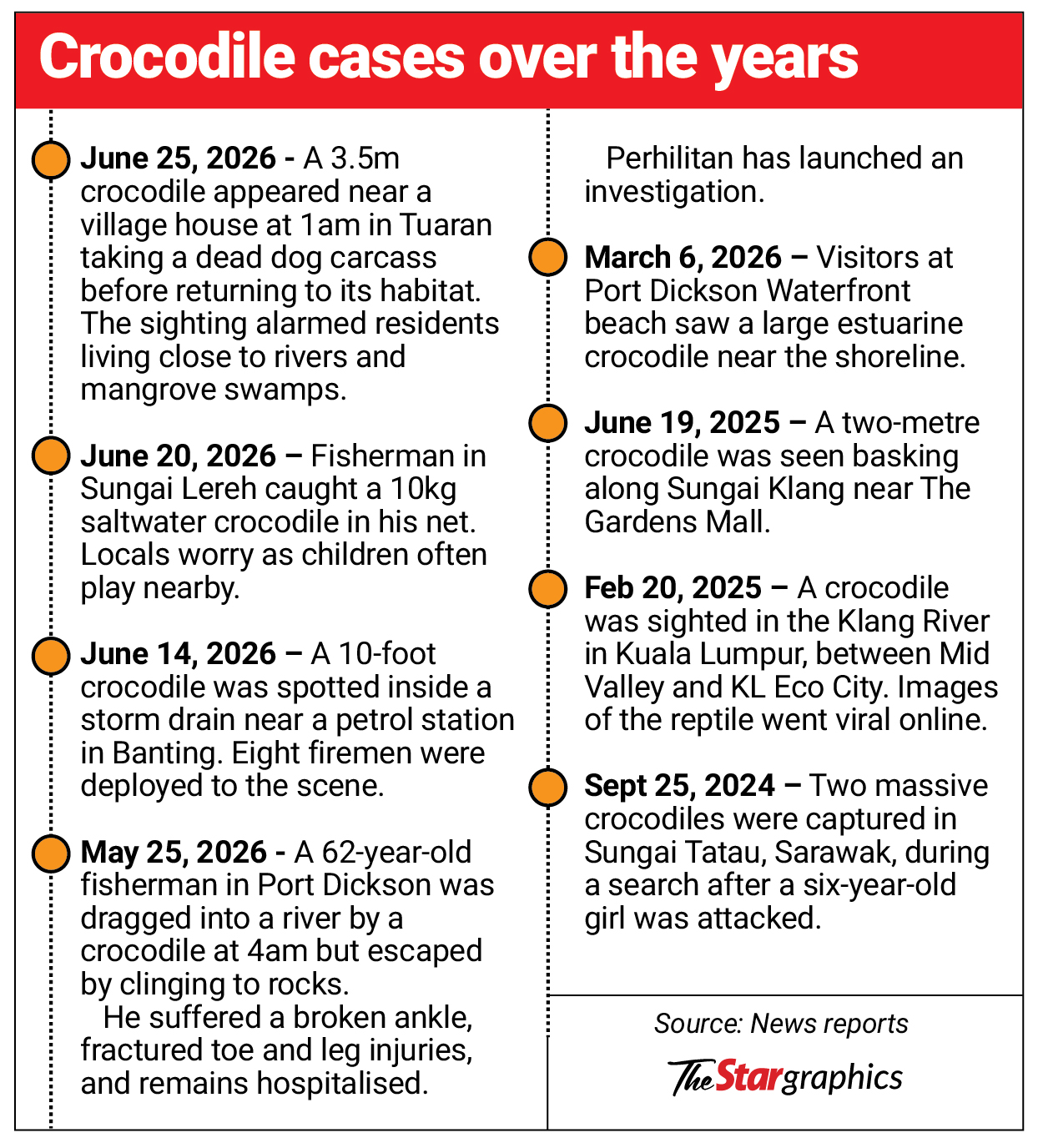
PETALING JAYA: When a local fisherman in Sungai Lereh pulled a 10kg saltwater crocodile from his net on June 20, it was a sharp reminder that the reptiles are moving ever closer to where people live.
According to the news report, Klebang assemblyman Datuk Lim Ban Hong said crocodiles have been seen along the riverbank near flats where children play.
Wildlife experts said crocodile sightings are occurring due to the reptiles’ shrinking habitats and polluted rivers.
They are further urging greater public awareness and stronger management of sightings to protect both crocodiles and humans.
ALSO READ : 334 crocs captured in Peninsular Malaysia since 2024
Dr Sai Kerisha Kntayya, crocodile conservation officer at the Danau Girang Field Centre in Sabah, said habitat loss is one main factor that causes crocodiles to emerge at human hotspots.
“Crocodiles are losing their habitat due to new developments and oil palm plantations and other agriculture activities,” she said when contacted by The Star.
“With heavily polluted rivers, their natural food like fish and prawns are dying as well. So these crocodiles are leaving their home to find new rivers to survive,” she explained.
“Another reason is people throw food in rivers, which can attract crocodiles. They begin to associate human food as their food,” she said.
Sai noted that there should be more awareness programmes so people know what to do when they spot a crocodile.
She further advised that people shouldn’t handle the crocodile but rather immediately report the sighting and let the Department of Wildlife and National Parks (Perhilitan) handle the reptile.
“In Sabah there are so many crocodiles that encounters can happen almost every week.
“When a crocodile is sighted at a beach, the area should be evacuated and monitored for three days,” she said, adding that they don’t roam around the same place for too long.
“Captured crocodiles will be sent to crocodile farms. But Sabah needs more rangers, and Perhilitan officers should study more on the biology and movement of crocodiles in depth,” she said.
Similarly, Malaysian Nature Conservation Organisation president Prof Dr Santharasekaran Subramaniam said crocodiles are increasingly appearing near human dwellings, including drains close to new housing projects.
Hence, he stressed that public safety should come first.
“Fishing activities should be avoided at night or early morning when food competition with crocodiles is highest.
“There should also be more signboards placed at fishing spots with reporting numbers and warnings against throwing leftovers into rivers”, he added.
Meanwhile, a long-time conservationist who has been active for over 30 years and wished to remain anonymous said wildlife is getting the chance to return to the riverine system, and that it goes beyond crocodiles.
“When society is much more aware of the environment and does not hunt, wildlife stands a chance of coming back, and crocodiles are also part of the wildlife entourage that recovers.
“For example otters in Singapore, deer in the United States, and beavers in Britain, he said.”
He recalled that crocodiles were once common in Malaysia during the 1800s and early 1900s, but bounties placed on them later caused their numbers to drop sharply.
“These animals date back to the time of the dinosaurs, making them some of the Earth’s longest survivors,” he said.
He said if there is a sighting the best course of action would be to report to the relevant departments, namely Perhilitan in Peninsular Malaysia, the Sabah Wildlife Dept in Sabah and the Sarawak Forestry Corporation in Sarawak.
“The Sarawak state government has developed the Sarawak Croc Watch app to monitor crocodile sightings and manage human-crocodile conflicts,” said the conservationist.
He also advised the public not to approach crocodiles as they are not ‘cute’ and to refrain from feeding them.
“Do not keep wildlife as pets, as this contributes to their decline in the wild and also exposes pet owners to zoonotic diseases if the animals are not screened for viruses and others,” he said.