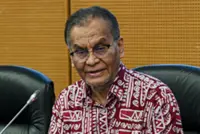
KUALA LUMPUR: The Health Ministry is studying a proposal to establish a National Cerebral Palsy Registry to strengthen the delivery of services for patients with cerebral palsy (CP) in the country, the Dewan Rakyat was told.
Health Minister Datuk Seri Dr Dzulkefly Ahmad (pic) said the proposal aims to expand patients’ access to rehabilitation facilities, including through collaboration with the Social Security Organisation (PERKESO) rehabilitation centres.
He said the move will optimise existing rehabilitation facilities through a whole-of-government approach to ease congestion and address the shortage of specialist rehabilitation services at Health Ministry facilities.
Dzulkefly said legal hurdles must first be resolved as PERKESO’s rehabilitation centres currently operate under the Employees’ Social Security Act 1969 (Act 4), which limits treatment to contributors, while the ministry operates under the Private Healthcare Facilities and Services Act 1998 (Act 586).
“I believe it is crucial that we address these constraints immediately. PERKESO’s rehabilitation sector provides world-class, high-technology services, including neuro-robotics and the Walk Again programme.
“I have proposed that discussions be expedited to enable the Health Ministry to implement the Health Services Outsourcing Programme (HSOP).
“Through this programme, we can make full use of PERKESO’s state-of-the-art facilities not only for contributors, but also for other patients who are not covered under the scheme,” he said during Question Time in the Dewan Rakyat yesterday in reply to Bandar Kuching MP Dr Kelvin Yii.
Yii had asked about the government’s action plan to reduce cases of cerebral palsy and strengthen support for patients with mild cerebral palsy.
Dzulkefly said his ministry recorded 1,076 cases of cerebral palsy treated at its clinics and hospitals between 2016 and 2025.
He said the causes of cerebral palsy generally fall into three stages: prenatal, perinatal and postnatal, with prenatal causes commonly linked to infections, which is why the Health Ministry provides measles, mumps and rubella vaccination to women before pregnancy as rubella infection can cross the placenta and affect the foetus.
Dzulkefly said the ministry remained committed to strengthening early screening, intensive treatment and multidisciplinary rehabilitation to ensure children with cerebral palsy receive timely intervention.
He also praised the work of NGOs such as the Cerebral Palsy Children’s Association, saying they had demonstrated that many children with cerebral palsy have normal cognitive function.
“If early intervention can be carried out promptly through a whole-of-government approach involving the Health Ministry, the Education Ministry, the Women, Family and Community Development Ministry, and the Human Resources Ministry, we can ensure these children remain productive.
“This will enable them to pursue education, secure employment, build families and contribute their full potential to society and the nation.”
Dzulkefly said the ministry assists cerebral palsy patients in obtaining rehabilitation equipment through the Medical Assistance Fund, the Malaysian Medical Welfare Fund and the National Cancer Council, based on clinical assessment and patients’ eligibility.
“For patients who do not meet the eligibility criteria, counselling services and prescriptions for equipment are also provided to facilitate access to assistance from NGOs and relevant agencies,” he said.