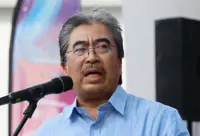
KUALA LUMPUR: Malaysia’s trade with the United States rose 10.1% in the first four months this year, even as a bilateral trade pact remains unratified and Washington continues to review new tariff measures under its trade laws, says Datuk Seri Johari Abdul Ghani (pic).
The Investment, Trade and Industry Minister said trade between the two countries for the January-April period rose to RM137.16bil, which comprised exports worth RM101.54bil and imports valued at RM35.63bil.
Responding to a question from Opposition Leader and Larut MP Datuk Seri Hamzah Zainudin in Parliament on the status of the Agreement on Reciprocal Trade (ART) between Malaysia and the United States, Johari said the pact, signed on Oct 26 last year, had yet to be ratified by either side.
“Bilateral trade had already grown by 12.3% in 2025 to RM365.07bil, up from RM325.16bil in 2024.
“The figure comprised exports of RM232.89bil and imports of RM132.18bil,” he told the Dewan Rakyat yesterday.
Johari also highlighted the scale of US investment in Malaysia, saying 1,018 projects involving American companies had been implemented as of 2025, with cumulative investments of nearly RM179.1bil and the creation of 225,041 jobs.
On tariff developments, he said the US Supreme Court ruled on Feb 20 that reciprocal tariffs imposed by Pressident Donald Trump under the International Emergency Economic Powers Act (IEEPA) were unlawful, including the 19% tariff imposed on Malaysian goods from Aug 1, 2025.
Following the ruling, the reciprocal tariffs imposed under the IEEPA were rendered void.
But Trump later introduced a new global tariff of 10% on imports into the United States under Section 122 of the Trade Act of 1974, effective Feb 24 this year.
Johari said the measure was temporary, as Section 122 only allows tariffs of up to 15% for a maximum period of 150 days.
“Based on the provision, the 10% tariff is expected to expire on July 24 this year,” he noted.
He said the United States later initiated investigations under Section 301 of the Trade Act of 1974 on March 11 and 12 involving several trading partners, including Malaysia.
He said the first investigation concerns allegations that industries in 16 economies received government support that led to excess production and exports being dumped into the US market.
The second investigation focuses on 60 economies accused of failing to enforce import bans on goods produced using forced labour.
Johari said Malaysia had participated actively in both investigations by submitting written comments, attending public hearings and taking part in consultation sessions.
“On June 2, the United States announced preliminary findings from the forced labour-related investigation, placing Malaysia among 54 economies found to have no formal legal restrictions on the importation of goods produced through forced labour.
“The US Trade Representative proposed a tariff rate of 12.5% for countries without such laws and 10% for those with legal provisions in place,” the minister added.
However, Johari said Malaysia had been proposed a 10% tariff rate in recognition of its commitment to implementing provisions under ART, including those related to forced labour.
He stressed that no additional tariff had yet been imposed, as the investigations remain ongoing and affected countries have been invited to submit written feedback and participate in public hearings before a final decision is made.