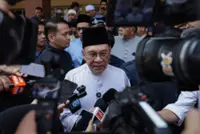
JOHOR BARU: Delays in resettling refugees, particularly Rohingya refugees, to third countries have contributed to a growing refugee population in Malaysia, says Datuk Seri Saifuddin Nasution Ismail.
The Home Minister said the number of refugees successfully resettled to third countries was significantly lower than the number of cards issued by the United Nations High Commissioner for Refugees (UNHCR).
"Under the refugee management ecosystem, the UNHCR is responsible for managing their resettlement.
"The problem is that the number of refugees successfully resettled to third countries is far lower than the number of cards issued by the UNHCR.
"As a result, while waiting for resettlement, these refugees remain within our communities. That is what we are facing today," he told a press conference after the Drug-Free Aspirations Roadshow Programme at SMK Puteri Wangsa here on Saturday (June 13).
Saifuddin was commenting on the "Catch Rohingya" campaign circulating on social media.
He also pointed out that refugees have a different status from illegal immigrants, who can be dealt with directly under the Immigration Act.
"Refugees are not the same as illegal immigrants. They fall under a different category because they are fleeing conflicts in their home countries.
"There are push factors in their countries of origin and pull factors in our country," he said.
Saifuddin said that to address the security implications arising from the situation, the government is currently carrying out its own data collection exercise and no longer relies solely on data from the UNHCR.
"When we have our own data, we will be able to take enforcement action if there are any violations of Malaysian laws by this group.
"They remain subject to domestic laws, and firm action will be taken if they breach the country's regulations," he said.
Saifuddin described the refugee issue as a long-standing legacy problem and rejected attempts to place the blame solely on the current administration.
He said the government remains committed to managing the issue based on both security considerations and humanitarian principles.
"We welcome reasonable and constructive proposals from academics, social activists and others who may have ideas that can help address this issue," he added.