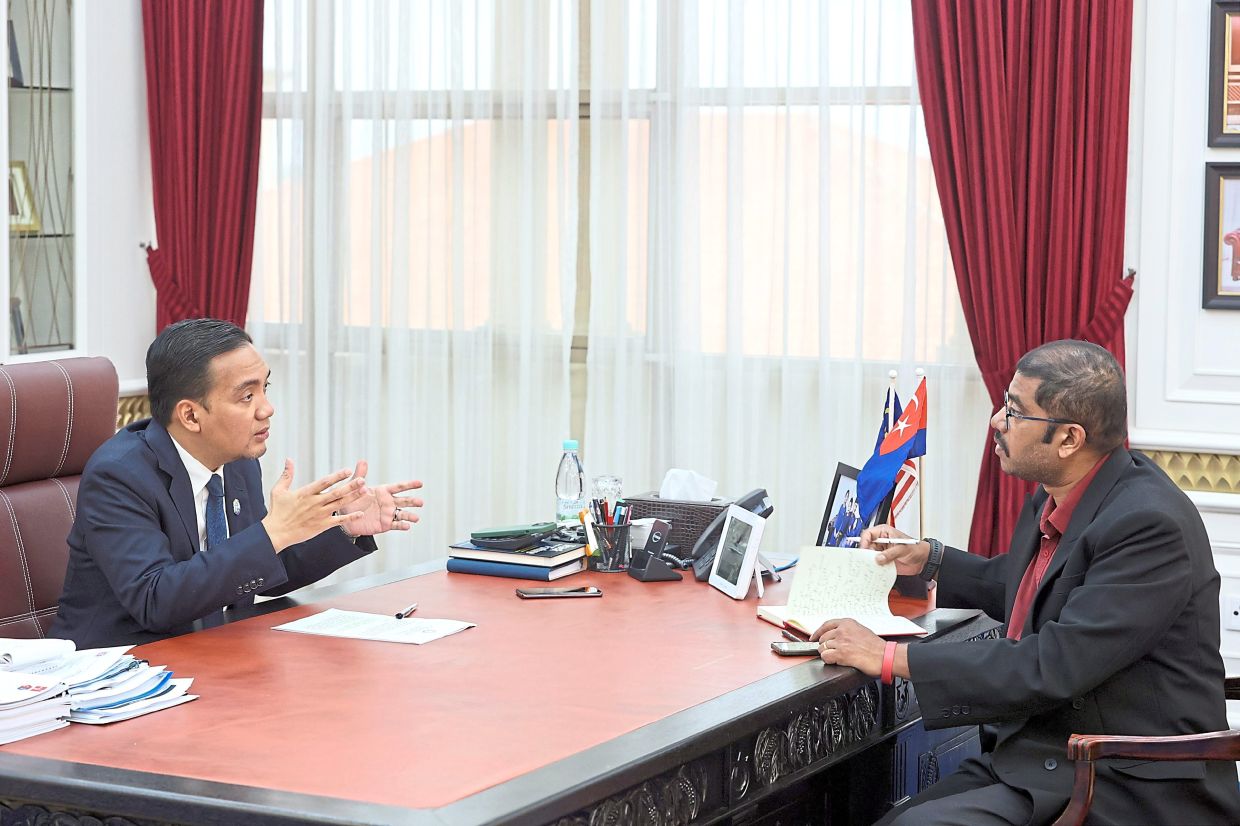
IN an exclusive interview with The Star senior editor Nelson Benjamin, Johor Mentri Besar Datuk Onn Hafiz Ghazi highlights the state’s economic surge, record-breaking investments and strong royal guidance, while also outlining infrastructure initiatives and efforts to enhance the well-being of Johoreans across various sectors.
Over your past few years as Mentri Besar, how have your relationships with the Yang di-Pertuan Agong and the Johor Regent developed? How often do you meet them, and what topics do you usually discuss?
My relationship with His Majesty (Sultan Ibrahim, King of Malaysia) has strengthened and matured over the years. Although His Majesty is now the Yang di-Pertuan Agong, Tuanku’s care for Johor has remained consistent. His Majesty continues to pay close attention to the state’s development, the well-being of the rakyat and the direction of the state government.
I have an audience with His Majesty almost every week, usually on Tuesdays, to discuss state matters and seek His Majesty’s advice on policies, development priorities and issues affecting the rakyat.
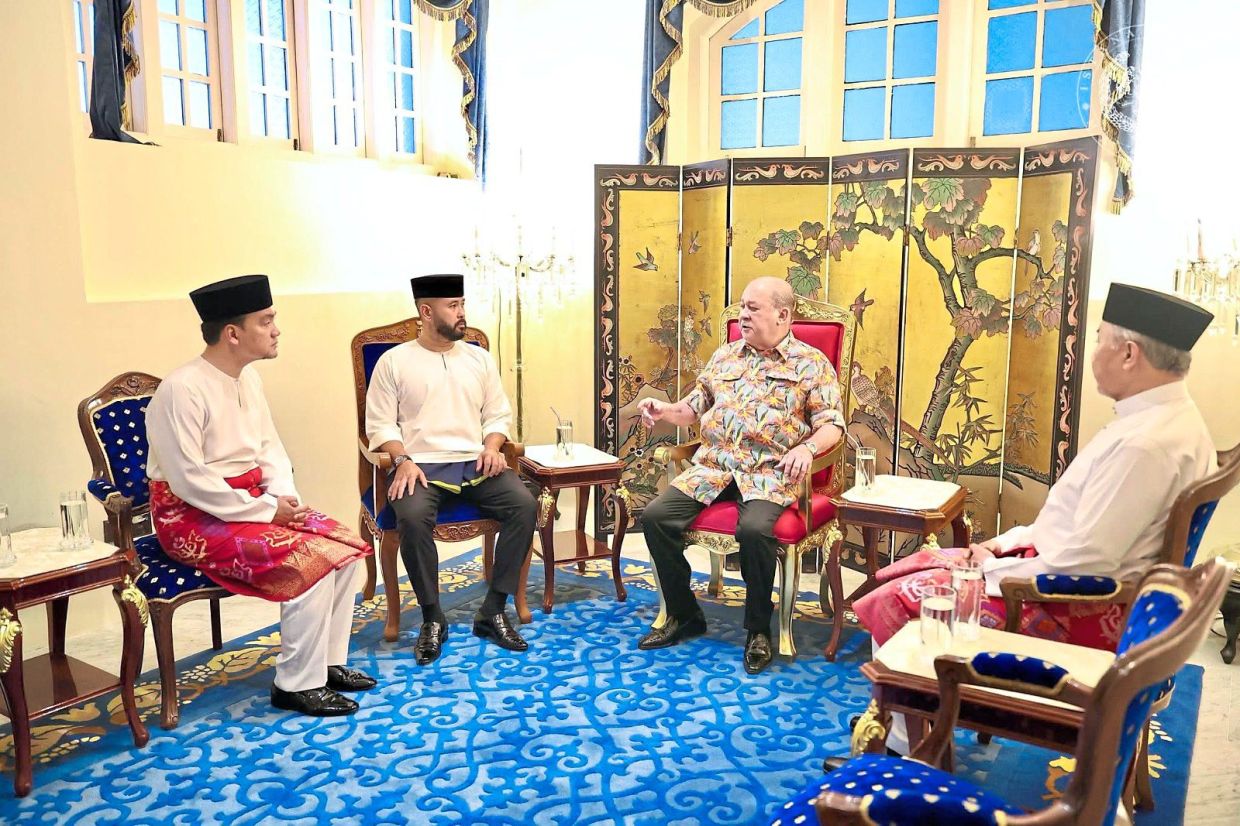
My relationship with Johor Regent Tunku Ismail Ibni Sultan Ibrahim is also very positive and close. I meet the Tunku Mahkota two to three times a week, in addition to phone calls and other discussions.
Tunku Ismail has been very supportive and always gives his views, advice and guidance on matters concerning Johor. Most of our discussions centre on Johor’s development agenda, investments, infrastructure, public service delivery, education, youth and sports, and, most importantly, how we can ensure that Johor continues to move forward while the rakyat fully benefit from that progress.
For me, this guidance is extremely important. As Mentri Besar, I shoulder the responsibility of administering the state while also valuing the wisdom, care and advice of the Johor Royal Institution in ensuring that every decision is made in the best interests of Johor and the rakyat.
Johor is currently experiencing an exciting period, especially with the significant developments and investments pouring into the state. Could you please share some of the main highlights from the past year?
Johor continued its exceptional growth trajectory throughout 2025, capitalising on the strong momentum created in previous years.
The state once again led the nation in approved investments, reinforcing Johor’s position as Malaysia’s premier investment destination.
Based on current performance, Johor’s economic growth is expected to remain strong at around 6.4% – similar to 2024 levels, if not higher.
This is driven by sustained investor confidence, rapid industrial expansion and early momentum from catalytic initiatives such as the Johor–Singapore Special Economic Zone (JS-SEZ) and the Forest City Special Financial Zone.
This economic momentum translated into tangible outcomes for the rakyat. Johor recorded its highest-ever state revenue at over RM2.6bil, while investment and economic activity continued creating significant job opportunities across manufacturing, services, logistics, the digital economy and emerging industries.
Beyond economic performance, 2025 was also a year of institutional and delivery milestones. Johor made history as Malaysia’s first Smart State, achieving this five years ahead of the original 2030 target under the Johor Smart City Blueprint.
At the grassroots level, the state successfully completed 613 infrastructure and community projects worth RM765mil through the Mesyuarat Tindakan DUN (MTD), ensuring that growth is not only reflected in macroeconomic indicators, but also directly experienced by communities throughout Johor.
What is most encouraging is that Johor’s transformation is no longer just about ambition. It is increasingly visible in execution, delivery and growing confidence from both investors and the rakyat.
What are the key highlights for this year, and what are your plans to maintain or improve this performance?
The momentum continues this year. As of April 30, our state revenue has already reached RM1bil, an increase of RM307mil compared to the same period last year.
To maintain this performance, I have approved 358 MTD projects worth RM43.5mil this year to address local issues such as drainage, roads and public facilities.

My plan is to continue the policy of returning surplus state revenue directly to the people through high-impact initiatives.
We are also working on major infrastructure projects that His Majesty has advised us to prioritise, such as the widening of the North-South Expressway, the Senai-Desaru Expressway and the development of Hospital Sultanah Aminah 2 to expand our economic base.
Our Hospital Sultanah Aminah general hospital in Johor Baru was also listed among the World’s Best Hospitals 2026.
How do you ensure Johoreans reap the benefits of Johor’s growth, especially when many are struggling with the high cost of living in the state? What current and future initiatives are in place to support the people?
I am deeply aware and humbled by the challenges faced by the people. Therefore, we are returning surplus revenue through several key programmes:
> Under Bantuan Kasih Johor (BKJ), we have allocated RM138mil for 22 initiatives benefiting more than 600,000 people. This includes one-off aid for senior citizens (RM200), non-working housewives (RM200), first-time newlyweds in 2024 and 2025 (RM400), as well as registered small traders (RM300).
> For Jualan Kasih Johor, I have increased the budget to RM45.4mil, offering the “Combo Kasih” package for RM15 which includes a whole chicken, a tray of eggs and two litres of cooking oil, for more than 750,000 families.
> Under Perumahan Kasih Johor (PKJ), we have set aside RM137.8mil for housing assistance, including one-off grants for first home purchases (RM5,000), moving into a first home (RM2,000), and rental assistance (RM2,500).
> The Infaq Jumaat Johor programme, inspired by Tunku Ismail, provides RM1,000 weekly to 538 mosques and surau to support local community needs.
> We have also successfully resolved 99.23% of Federal Land Development Authority (Felda) land title applications involving 27,429 settlers to ensure their family legacies are secure.
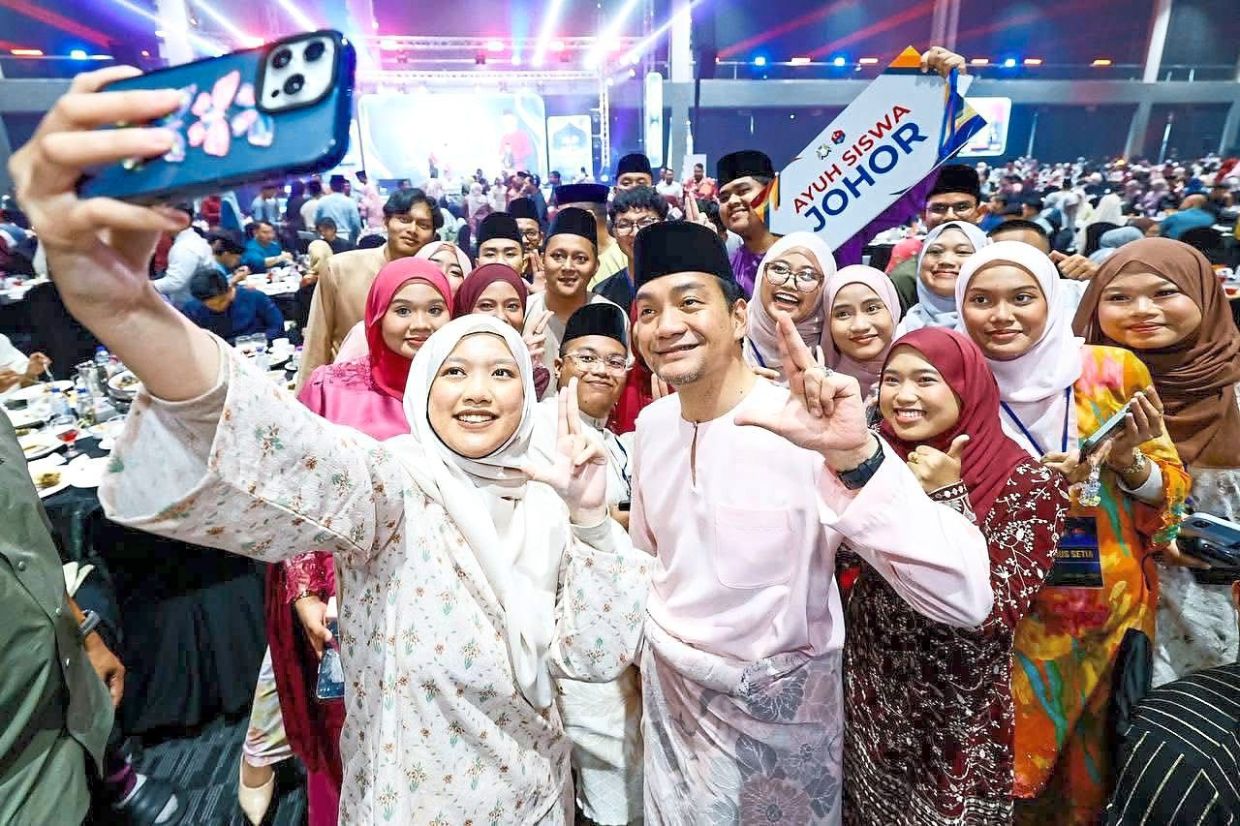
> We have also ensured that all our councillors and village chiefs organise over 1,100 events under the Raya Sekampung initiative. This is not just a gathering across the state, but also an opportunity for people to interact with their local leaders and raise their grievances at the grassroots level.

You have been keen on developing local talent, such as sending Johor Civil Service (JCS) officers to top global universities. How has this benefited the state, and what are your future plans for talent development, especially in relation to the JS-SEZ?
As the backbone of our state administration, JCS officers serve as the vital bridge between the government and the people.
To strengthen their capabilities, the Johor government has facilitated senior officers to undergo executive and professional development programmes at leading international institutions, such as Ivy League universities in the United States and the United Kingdom.
These include MIT Sloan School of Management, Imperial College London, Harvard Kennedy School, Oxford University, National University of Singapore (NUS), NUS Lee Kuan Yew School of Public Policy and Nanyang Technological University (NTU).
These programmes are funded by the state government through a strategic collaboration between Akademi Perkhidmatan Tadbir Negeri Johor and Permodalan Darul Ta’zim.
This initiative has helped expose our officers to global best practices in governance, investment facilitation, economic planning, and public sector leadership. More importantly, it has strengthened the culture of critical thinking, fast decision-making and adaptability within the JCS, which is essential in navigating today’s increasingly complex global economy.
At the same time, we are currently engaging with Harvard University to explore the development of specialised executive programmes in Johor itself. Our aspiration is to create a continuous leadership and talent development ecosystem that is globally benchmarked but locally relevant to Johor’s future needs.
In supporting the growth of the JS-SEZ, talent development remains one of our key priorities. We recognise that investors today are not only looking for infrastructure and incentives, but also for a highly capable workforce and an efficient government delivery system.
That is why we are continuously improving ease of doing business by reducing bureaucracy and accelerating approvals through initiatives such as the Johor Fast Lane and the establishment of the Invest Malaysia Facilitation Centre Johor (IMFC-J).
Moving forward, IMFC-J will keep strengthening coordination between state and federal agencies, including the Home Affairs Ministry, Finance Ministry, Investment, Trade and Industry Ministry and other key institutions, to facilitate investments and streamline incentives under one roof.
By complementing Singapore rather than competing against it, we believe Johor can build a strong and sustainable economic ecosystem that creates high-quality jobs, attracts global investments and ultimately delivers better income opportunities for the people of Johor.
While data centres are expected to help further boost Johor’s economy, how is the state government balancing this with environmental concerns? How do you plan to ensure that such developments do not lead to resource depletion, particularly water, especially as the state faced two major water-related crises last year?
While I am proud that Johor has attracted 42 data centre projects involving total investments of RM164.45bil and the potential to create more than 6,000 jobs, we remain fully committed to sustainable growth.
Johor has set a national precedent as the first state to integrate wastewater recycling within Tier 4 data centre operations, combining digital infrastructure with sustainable resource management.
To ensure water security, I established the Johor Data Centre Development Coordination Committee to oversee these projects and ensure they adopt renewable energy and alternative water solutions.
Our strategy is to reduce pressure on the state’s treated water supply by using alternative sources such as reclaimed, raw and desalinated water for industrial cooling systems.
We have already formalised agreements for the production of reclaimed water at plants in Ulu Tiram and Iskandar Puteri, as well as for the use of raw water from Sungai Tebrau for Kempas Tech Park. By pioneering these alternative water solutions through Johor Special Water and partners such as Indah Water Konsortium, we are protecting our resources while reinforcing Johor’s reputation as a leader in the green industry.
As Johor continues to foster a closer relationship with Singapore, there may be concerns about the state being too accommodating to its neighbour, especially with regard to the JS-SEZ. How do you balance this, and what are your other plans for cooperation with Singapore?
I believe the JS-SEZ will be the catalyst for Johor to become a developed state, but it must be a win-win situation for Johor and Singapore. We cannot operate as rivals. Instead, we must complement one another to ensure all economies involved benefit.
This is a national interest project, and our focus is on creating a business-friendly ecosystem and high-quality job opportunities that benefit our people first.
It has been almost four years since your appointment as Johor Mentri Besar. How would you rate your own performance so far, as well as that of your exco line-up? Are you satisfied, and what are your regrets or areas you feel could have been handled better?
I do not think this position is for me to rate myself. This is an amanah (trust). At the end of the day, the rakyat will judge, and more importantly, God will judge how we have carried out this responsibility.
But if you ask whether Johor is in a stronger position today, I believe the foundation is much stronger. Johor recorded RM110bil in approved investments in 2025, the highest in Malaysia’s history. Our GDP grew by 6.4% in 2024, the highest among all states, and state revenue reached about RM2.67bil in 2025, also the highest ever for Johor.
These achievements are the result of teamwork – the exco line-up, civil servants, agencies, local authorities, investors, the federal government and the rakyat of Johor.
Am I satisfied? I am grateful, but I also know there is still so much more that we can and must achieve. That is why our focus has always been clear: when Johor grows, the rakyat must feel it.
Programmes such as Bantuan Kasih Johor, Jualan Kasih Johor, Semarak Subuh, Infaq Jumaat, Perumahan Kasih Johor, Sifar Miskin Tegar, Baucer Kasih Johor and Menu Kasih Johor are all part of that effort to ensure the benefits of Johor’s progress reach the people directly.
If there is anything I wish could have been better, it is the speed of execution. Johor has great potential, but potential means little if it does not translate into real benefits for the people.
So I am humbled by what has been achieved, but I remain very conscious that there is still much more to do. For me, this responsibility is not about personal legacy. It is about doing as much as we can, for as many people as possible, in the time God has given us.