TUCKED within a pre-World War II shophouse along Jalan Trus in the heart of Johor Baru city lies a family business that has quietly become part of Johor royal tradition for more than two decades.
For third-generation artisan Yeow Boon Teck, 44, crafting traditional kekabu pillows is more than simply preserving a family trade started by his grandfather in 1964.
It is also about continuing a special connection with His Majesty Sultan Ibrahim, King of Malaysia, that began in the 1990s when the Ruler was still the Tunku Mahkota of Johor.
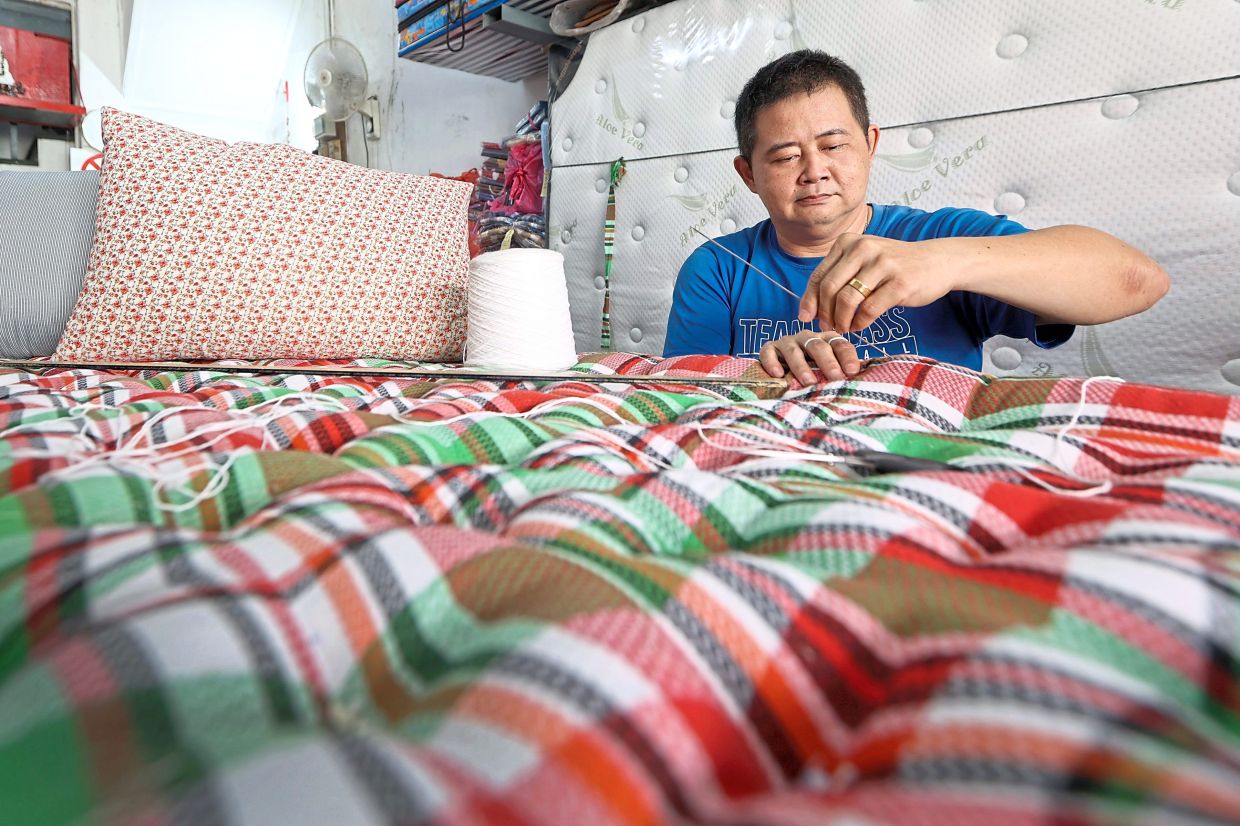
Inside the old shop, stacks of fluffy kapok fibre, known locally as kekabu, fill the space as workers carefully hand-stitch pillows and mattresses using techniques passed down through generations.
Yeow said the business was founded by his late grandfather before his father took over operations. Yeow himself eventually continued the family legacy in 2000.
He admitted that joining the family trade was never part of his original plans.
“Back then, my interest was actually in arts, which I was studying before my father told me to continue the family business,” he said in an interview.
Over time, however, the craft became deeply personal to him.
Yeow said the family’s royal connection began after a friend who owned an antique shop frequently visited by Sultan Ibrahim introduced their business to the Johor palace.
“At that time, His Majesty wanted to obtain kekabu pillows directly from the maker rather than purchasing them through a third party,” he said.
Soon after, palace officials visited the shop to place an order.
Yeow recalled how nervous his family felt, as they had never produced pillows for the Johor palace before.
“At that point in time, my father was in charge of the shop, and we were worried because this was our first royal order,” he said.
Nevertheless, the family completed the order according to Sultan Ibrahim’s preference.
Since then, Yeow said the palace has remained one of their most loyal customers.
“After that first order, we have continued making kekabu pillows for His Majesty to this day,” he said.
Yeow said Sultan Ibrahim frequently places orders for pillows used at royal palaces in Johor, as well as at His Majesty’s official residence in Kuala Lumpur.
The pillows are also prepared for use on Sultan Ibrahim’s private plane and during the annual Kembara Mahkota Johor programme.
Yeow said Sultan Ibrahim would usually order four to eight pillows at a time.
However, when Sultan Ibrahim became the Yang di-Pertuan Agong, the family received one of its biggest royal orders.
“A couple of years ago, we received an order for 15 pillows to be sent to Kuala Lumpur,” he said.
For Yeow and his father, the long-standing royal support remains something they deeply cherish.
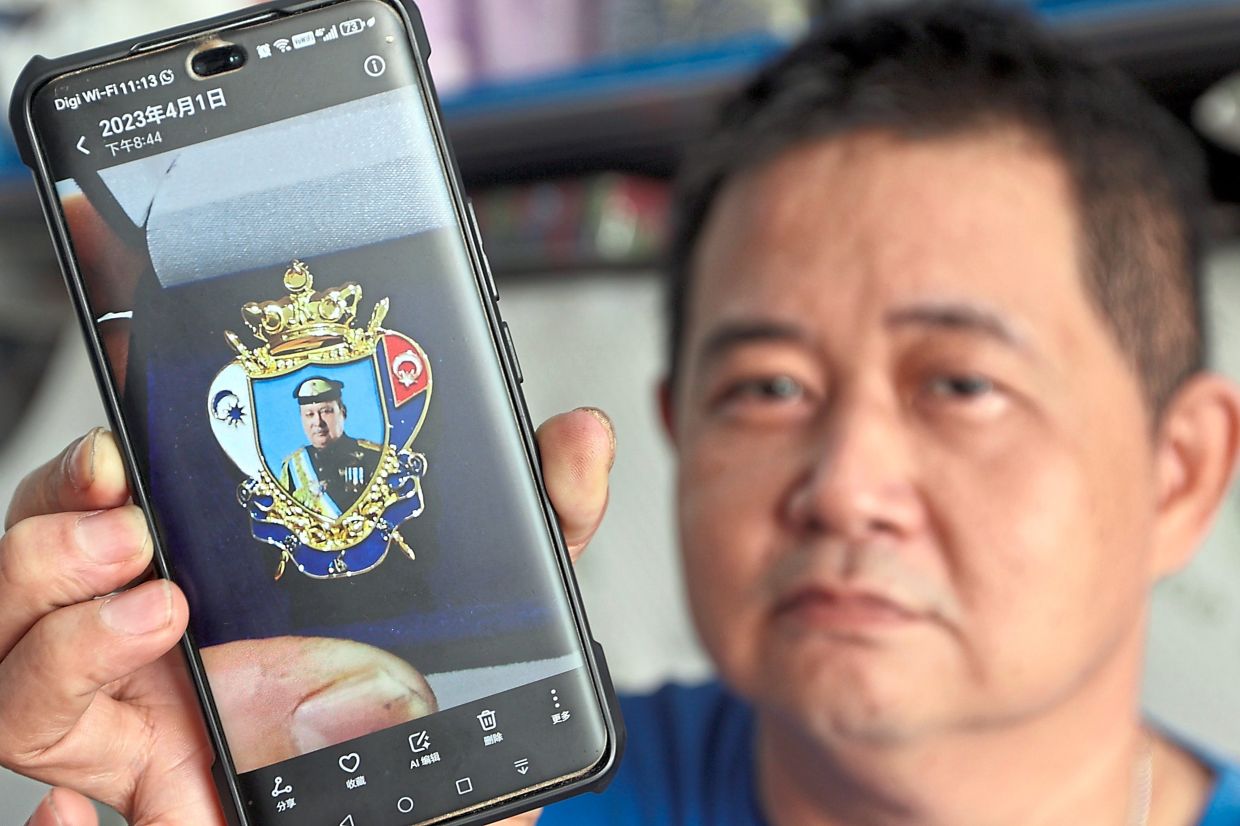
He said that about three years ago, both of them received a special gift from Sultan Ibrahim in the form of a pin and a wristwatch.
“We still treasure the gifts very much until today,” he said.
Yeow described Sultan Ibrahim as his family’s “best customer” throughout the years.
“Sultan Ibrahim is not very particular when placing orders because we already know the type of pillow and comfort that His Majesty prefers,” he added.
The pillows are made using kekabu, the soft cotton-like fibre taken from the fruit pods of the kapok tree, scientifically known as Ceiba pentandra.
Yeow said although kekabu products were once common in Malaysian homes, the material has become increasingly difficult to source locally.
“There are not many kapok trees left in Malaysia now, so we have to order the fibre from Myanmar and Thailand to meet demand,” he said.
Apart from local buyers, Yeow said the shop also receives orders from overseas customers, including from Singapore, Australia and Japan.
He said a standard pillow typically requires about 1kg of kekabu fibre, while a mattress can use up to 10kg.
Despite the rise of synthetic bedding materials, Yeow believes traditional kekabu products continue to have their own loyal following because of their comfort and natural qualities.
“Kekabu fibre is lightweight, naturally cooling, soft and fluffy. It is also resistant to moisture and pests,” he said.
Before synthetic materials became widely available, kekabu pillows and mattresses were highly popular in Malaysian households, particularly in traditional homes.
Even today, Yeow said many customers still prefer kekabu pillows because they are breathable and comfortable in hot and humid weather.
He added that pillows filled with kekabu fibre are believed to offer a range of comfort and wellness benefits, thanks to the material’s natural and lightweight qualities.
Among the commonly cited benefits are improved airflow, reduced heat retention and a softer sleeping experience compared with some synthetic alternatives.
Yeow said kekabu pillows are also valued for their ability to remain airy and comfortable throughout the night.
“With proper care, a kekabu pillow can last up to three years,” he said.
For Yeow, however, the business represents more than just preserving a traditional craft.
It is also about honouring the trust placed in his family by generations of customers, including Sultan Ibrahim.
As Malaysia continues to embrace rapid modernisation, the humble family-run shop along Jalan Trus remains a quiet reminder that some traditions, much like the softness of a handmade kekabu pillow, continue to endure over time.