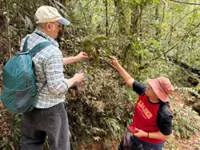
KOTA KINABALU: Before fast food chains, restaurants, fusion cuisines and the diverse menus seen on Friday (May 29), meals were meant more for sustenance and less for indulgence.
Historically, people foraged for edible shrubs, herbs and vegetables while fishing and hunting for meat before the advent of planting, cultivation and livestock rearing.
In respect of this history, the Kaamatan International Week brought an array of traditional food to visitors who arrived at the Kadazandusun Cultural Association (KDCA) grounds on Friday.
The traditional items were featured under the Jungle Food Labs programme.
Its Chairman Andrew Ambrose said the programme allowed visitors to understand and taste dishes and local beverages made by locals from Kg Sunsuron in Tambunan.
Dubbed the "living menu", visitors had the chance to taste venison porridge, freshwater fish soup, hinopot wagas (leaf-wrapped yam rice) and village chicken broth.
Other items included ikan pinasakan (traditional sour and savoury reduced fish), kerabu pakis (wild fern salad), pinagod (leaf-wrapped and steamed dessert) and rice coffee.
For side dishes, options like nonsom bambangan (fermented wild mango), nonsom tuhau (fermented wild ginger) and tonsi bosing (jungle squirrel meat) were served.
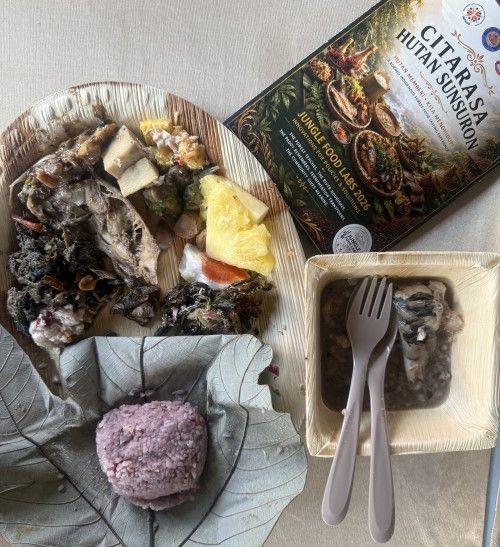
The spread also featured nansakan tomuning (giant squirrel meat), kinoring bonong (smoked jungle frogs) and bosou sayur (fermented vegetables).
Ambrose said this year’s Jungle Food Labs, held under the theme Sunsuron Forest tastebuds, spotlights the food wisdom of the Dusun Tambunan community.
He added that it also highlights the broader indigenous food traditions of Borneo.
He explained that the event framed food not merely as cuisine, but as an interconnected system of knowledge encompassing gathering, planting, fermenting, smoking, sharing, healing and ecological respect.
"Traditional food systems face serious and growing threats from changing lifestyles, chemical dependency and pesticide pollution," he said.
"They also face the loss of customary farming lands and market or legal systems that restrict communities’ ability to protect and exchange heirloom seeds," he added.
Ambrose warned that when pesticides poison the soil and water, they damage food memory alongside crops.
"When traditional farming lands are taken away or converted, communities do not only lose land," he said.
"They lose their food system, their identity and their future," he added.
He noted that the protection of heirloom seeds was a matter of particular urgency.
He warned that indigenous communities risk becoming strangers to the seeds of their ancestors if seed rights become controlled solely by corporations or market systems.
"This is why we must defend the right of communities to protect, plant, exchange and pass on their traditional seeds," he stressed.
Apart from the Food Labs, the entire KDCA ground is filled with stalls selling local, contemporary and fusion food and drinks.
Those who wish to sample a rare variety of food under one roof can continue visiting and enjoying the festival atmosphere until late Sunday (May 31).