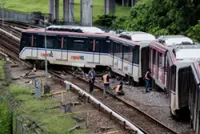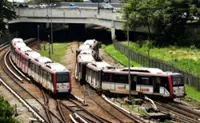
PETALING JAYA: The latest LRT derailment in Kuala Lumpur has reignited concerns over the reliability of Malaysia’s public transport system, with experts and commuter groups calling for stricter safety and maintenance reviews as parts of the rail equipment age.
They said the government’s task force investigating the incident should not only determine the immediate cause, but also examine broader issues involving maintenance practices, operational readiness and long-term asset management.
Universiti Putra Malaysia Road Safety Research Centre head Assoc Prof Dr Law Teik Hua said repeated disruptions in the Klang Valley rail network suggested that the issue is not merely isolated technical failures, but an increasing strain on a heavily utilised urban rail system.
“The fact that disruptions happen too regularly implies that some asset lifecycle issues may be surfacing, including delayed maintenance windows, ageing equipment, ineffective replacement procurement or lack of redundancy,” he said in an interview yesterday.
Law said modern rail systems depend heavily on preventive and predictive maintenance involving signalling systems, rolling stock, tracks, communications systems and power supply infrastructure.
He said there should not be a direct assumption that older rail systems are unsafe, pointing out that many mature rail networks overseas continued operating reliably despite their age.
“The key question is whether there is a balance between safety and maintenance needs, compared to the pace of infrastructure development and ageing processes,” he said.
Law noted that public confidence in rail reliability could erode if disruptions became too frequent.
“It is difficult to convince people to shift away from private vehicles if rail transport is seen as less reliable than expected.”
Federation of Malaysian Consumers Associations chief executive officer Saravanan Thambirajah said commuters had grown increasingly frustrated by recurring breakdowns and delays affecting public transport services.
“Public transportation should be the backbone of the country’s mobility network and economic productivity, not a source of daily anxiety and uncertainty for consumers,” he said.
Saravanan said authorities and operators should prioritise comprehensive safety audits, preventive maintenance reviews and independent technical inspections across the entire public transport network rather than focusing only on the affected line.
He also called for stronger transparency and public accountability, including the release of investigation findings together with clear timelines for improvements.
“Public trust can only be rebuilt if commuters see concrete action and long-term commitment rather than temporary solutions.”
Malaysian Road and Transportation Safety Association adviser Nik Mohd Salim Nik Mohd Salleh said agencies overseeing rail operations and infrastructure must work more closely to ensure commuter safety.
He said scheduled maintenance, inspection methods and railway track integrity assessments should be reviewed periodically by taking into account ageing factors and newer technologies.
“This is to ensure that wear and tear within railway systems remains within acceptable safe conditions for daily operations while also remaining cost-effective for maintenance,” he said.
Meanwhile, Malaysian Public Transport Users Association president Ajit Johl said commuter groups had long raised concerns about maintenance issues within the public transport system.
He urged caution against speculation before investigations and technical audits were completed, but stressed that maintenance and protection of rail infrastructure must remain a priority.
Ajit also reiterated calls for stricter action against theft involving public transport cables and rail infrastructure, saying such acts could severely disrupt operations and compromise safety if left unchecked.
“Until a proper audit and findings are completed, it would be difficult to draw conclusions.”