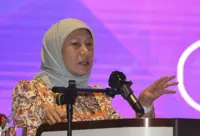
KUALA LUMPUR: A total of 92 complaints have been filed with the Tribunal for Anti-Sexual Harassment (TAGS) as of April 26, with 69 cases successfully resolved, says Datuk Seri Nancy Shukri.
The Women, Family and Community Development Minister said this achievement proves the tribunal effectively speeds up the process of delivering justice to victims.
She said sexual harassment is a form of misconduct that profoundly impacts victims emotionally, psychologically and socially, and should not be taken lightly.
“Therefore, advocacy and community education efforts are very important to change the way of thinking, strengthen understanding and build a safer, more inclusive and respectful culture," she said on Tuesday (May 19).
Nancy was speaking at the launch of the Zero Tolerance for Violence Programme: Say No To Sexual Harassment.
Police statistics show a worrying upward trend with 477 cases recorded in 2022, increasing to 522 cases in 2023, and jumping to 788 cases in 2024, before rising further to 1,038 cases in 2025.
“This continuous increase clearly illustrates that this issue is becoming more serious and requires firm action and comprehensive awareness among the community to curb it from continuing to spread,” she said.
Later, Nancy told reporters that reports of sexual harassment against men are also on the rise, with more than a thousand cases brought up at advocacy programme counters. She noted that these numbers differ from those officially reported to the police.
“This shows that sexual harassment is genderless because it happens to both men and women.
“One of the cases reported to me personally involved a man facing harassment by another man during a fitting room incident in a shopping mall, which left him uncomfortable," she said.
Nancy added that TAGS is currently handling three cases involving male victims, some of whom have already received awards.
“So, men out there, don’t be disheartened thinking there is no justice for you,” she said.
Additionally, she pointed out that the increase in reports reflects a positive change in the community's attitude, showing that victims are now brave enough to come forward, demand their rights and reject the normalisation of harassment.