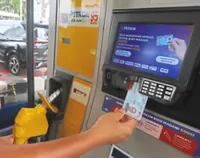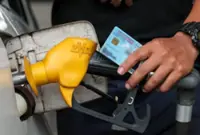
KUALA LUMPUR: The Budi Madani RON95 (Budi95) initiative is seen as a useful demand management tool that helps Malaysia understand national usage patterns, says Deputy Finance Minister Liew Chin Tong.
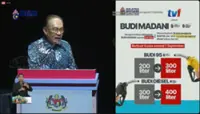
He noted that under the initiative, introduced last September, each person was initially allocated 300 litres per month, before it was reduced to 200 litres per month.
“I think the nation’s number one concern is how to ensure that we have a consistent supply for as long as possible, even if the situation (in the Middle East) drags on,” he said.
He added that clear communication and securing broad public support to reduce consumption as much as possible while ensuring long-term supply could help address the fiscal issue to some extent.
Liew said this during a fireside chat titled “Malaysia’s Response to Global Energy Crisis: Build Back Better”.
Ensuring continuous access to fuel, even at reduced levels, is important, as political and social stability will enable Malaysia to manage the crisis more confidently, he said.
In the Bernama report, he emphasised that Malaysia is entering the crisis from a position of relative strength, noting that while many countries have seen downward revisions in growth projections after February, Malaysia’s outlook remains resilient.
“Malaysia’s economic growth consensus is expected to be between 4.5% and 5.0% (as announced by Bank Negara), higher than the government’s projection of 4.0-4.5% announced last October.
“We are entering this crisis in a position of strength. However, we must be mindful that this crisis is likely to last longer than initially expected,” he said.
He added that Malaysia must adopt a build-back-better approach by first defining the desired post-crisis end state and then working backwards to determine the steps required to achieve it.
Separately, Liew denied a news report claiming he announced that Malaysians may see their Budi95 allocation slashed to 150 litres from the current 200 litres.
“It’s unfortunate that what I said was taken out of context.
“What I said is that the Budi95 mechanism is a good tool as it provides us with data to understand the travel pattern of Malaysians,” he said in a social media post yesterday.
“The top priority of the government and everyone in the society is to ensure that we have sufficient supply for as long as possible. At some point, we should build consensus to support the effort to reduce fuel consumption,” he added.
“I hope all would consider the full context of what I said.”