
PETALING JAYA: The Government Innovation Initiative (GII), a flagship national effort to accelerate Malaysia’s transition into an artificial intelligence (AI) nation by 2030.
Digital Minister Gobind Singh Deo said the initiative aims to move public sector innovation beyond concept development and into practical implementation by translating real government and citizen concerns into deployable AI-driven solutions.
He said the initiative also seeks to shift the government away from siloed problem-solving towards a more integrated, data-driven approach that enables multiple ministries and industry players to collaborate on shared challenges.
“Moving forward, I think we need to start thinking of a new way in which we do things, because it’s going to result in you getting a much better quality product.
“It’s also going to result in you dealing with so many problems at once. And ultimately it’s really about reducing cost,” he said in a special interview at Menara Star on Friday.
Gobind said the GII represents a structural shift in governance, particularly in how public sector challenges are defined and resolved.
He explained that under the traditional system, each authority would address problems independently, which often leads to duplicated efforts, multiple tenders and fragmented solutions.
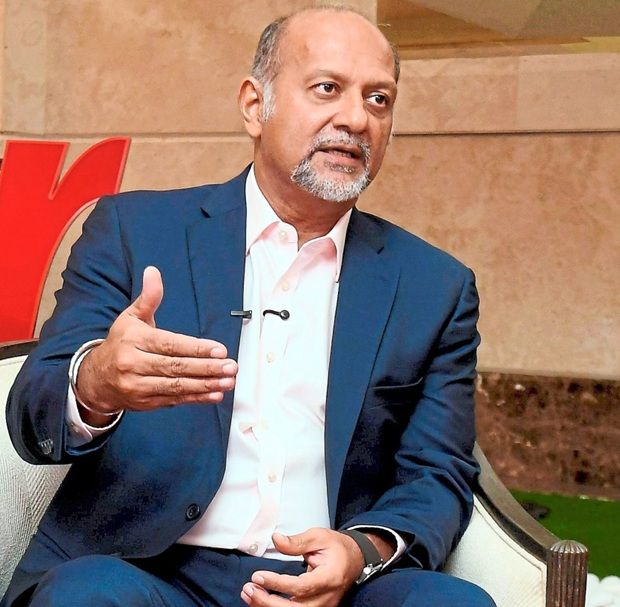
Using a case of traffic congestion as an example, Gobind said authorities would previously work in isolation by preparing proposals, estimating costs and implementing projects on their own, and often, there are issues such as delays and changes to contracts.
With GII, he said the approach is more collaborative, bringing together ministries, government agencies, industry players and communities to test ideas and jointly develop solutions to shared problems.
Gobind added that private sector innovators typically require two key inputs: data and resources.
In return, they can develop solutions that address multiple issues, including flood-prone areas, illegal dumping sites, accident hotspots and even crime-prone zones along the same corridor.
“They can point out areas between A and B where often people leave waste ... areas where you commonly find accidents ... and security concerns.
“So you see how this new approach is where you’re going to be able to do so much more in one exercise.”
He said one of the key goals of GII is to eliminate duplication in government procurement and improve value for money.
“If you go back to the way that you did things in the past, you will have five different tender processes with five different groups and they’re all going to be doing the same thing.
“That’s where you have costs that are unnecessarily expended. And we want to try and lessen that. That’s what that technology does. You get more value for your money,” he said.
Gobind added that savings generated through better coordination could be redirected to other national priorities.
“Ultimately, it’s really about reducing cost,” he said.
“Because if we can look at how we reduce cost ... you will have reserves that you can use for other projects.”