JOHOR BARU: Despite its growing relevance and significance, Technical and Vocational Education and Training (TVET) continues to be seen as a fallback option by many, say educators.
This is due to deep-rooted societal stigma, which remains a key barrier to attracting more young people to TVET.
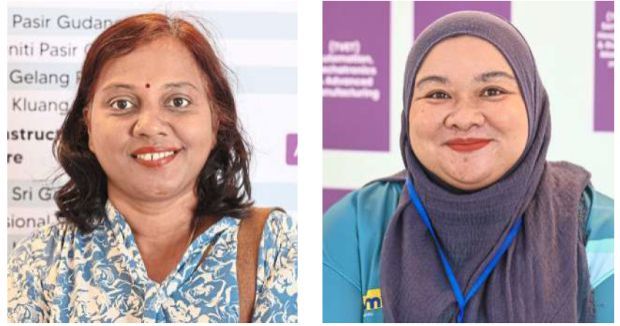
Johor Baru TVET Mara lecturer Nor Shazwani Shamshudin said that while interest from parents and students has been rising recently, TVET is still viewed as a second option.
“The long-standing perception is that TVET is a pathway for those who are unable to secure placements in other areas.
“This stigma is still very much how society views TVET,” she said in a recent interview.
Despite this trend, Nor Shazwani said there is also an increasing number of high achievers, including those who scored straight As in their Sijil Pelajaran Malaysia (SPM), who are opting for TVET as their first choice.
“This may not yet be the norm, but it is a good sign that Malaysians are beginning to see the importance of TVET,” she added.
The English lecturer noted that, over the past two decades, there has been a growing interest among parents with university or industry backgrounds in encouraging their children to pursue TVET.
“Parents with experience in tertiary education or in fields involving technical workers are more keen to have their children take up TVET courses.
“This may be partly because they are aware of the relevance of TVET in today’s world, as well as the promising job prospects and salaries it offers,” she said.
Nor Shazwani has been using her social media to help parents who lack access to such information better understand the significance of TVET.
Another person leveraging social media to promote TVET is L. Veliyemah, a lecturer at a tourism training institute in Ulu Tiram.
The lecturer, who has over 15 years of experience, said many parents are still in the dark about the advantages and importance of TVET courses, despite efforts to promote such programmes.
“It is unfortunate because TVET could help increase the nation’s employment rate,” she said.
Veliyemah added that she is doing her part by sharing as much information as she can on TVET and the job opportunities it offers graduates.
“I try to visit as many education and job fairs as I can so that I can share the information, in the hope that it will reach as many people as possible,” she added.
Besides the stigma, she said the lack of information about TVET also makes it difficult to attract more people to the skills training programmes.
In January, Deputy Prime Minister Datuk Seri Dr Ahmad Zahid Hamidi, in a written parliamentary reply, said TVET graduates’ employment rates had reached over 95% for most fields.
Ahmad Zahid, who also heads the national TVET agenda, said that the highest employment rates among TVET graduates came from arts and humanities (96.9%) and services (96.6%) programmes.
Information and Communica-tion Technology (ICT) graduates saw an increase in employment from 95.4% in 2023 to 96.5% in 2024, he added.