PETALING JAYA: Maithilli Devi Nermala Devi woke up but kept her eyes closed. She walked shakily towards the altar in her home and, once there, she finally opened her eyes.
Her first view, on Tamil Puthandu, or new year, was that of a mirror placed in her prayer room and the idols there.
“There was a tray of fruits, new clothes, money, gold and a few prayer items set before the altar which my mother and I had prepared the night before,” said the 25-year-old staff nurse from Butterworth.
“Then we took a bath, donned new clothes and headed to the temple. Once we were back, we had a tasty vegetarian meal comprising five to six dishes.”
That was yesterday.
Maithilli, who is also partly Malayalee, will also celebrate Vishu today.
“Tonight, we will prepare the ingredients to make 11 vegetarian dishes for Vishu. Then, we will bathe Lord Krishna’s statue and have prayers.
“The mirror will be placed beside the statue too. When we wake up, the mirror will show us praying as we welcome the new year,” she said.
Shalini Iyngkaran was also up at 5.45am, with her mother leading her to the prayer room.
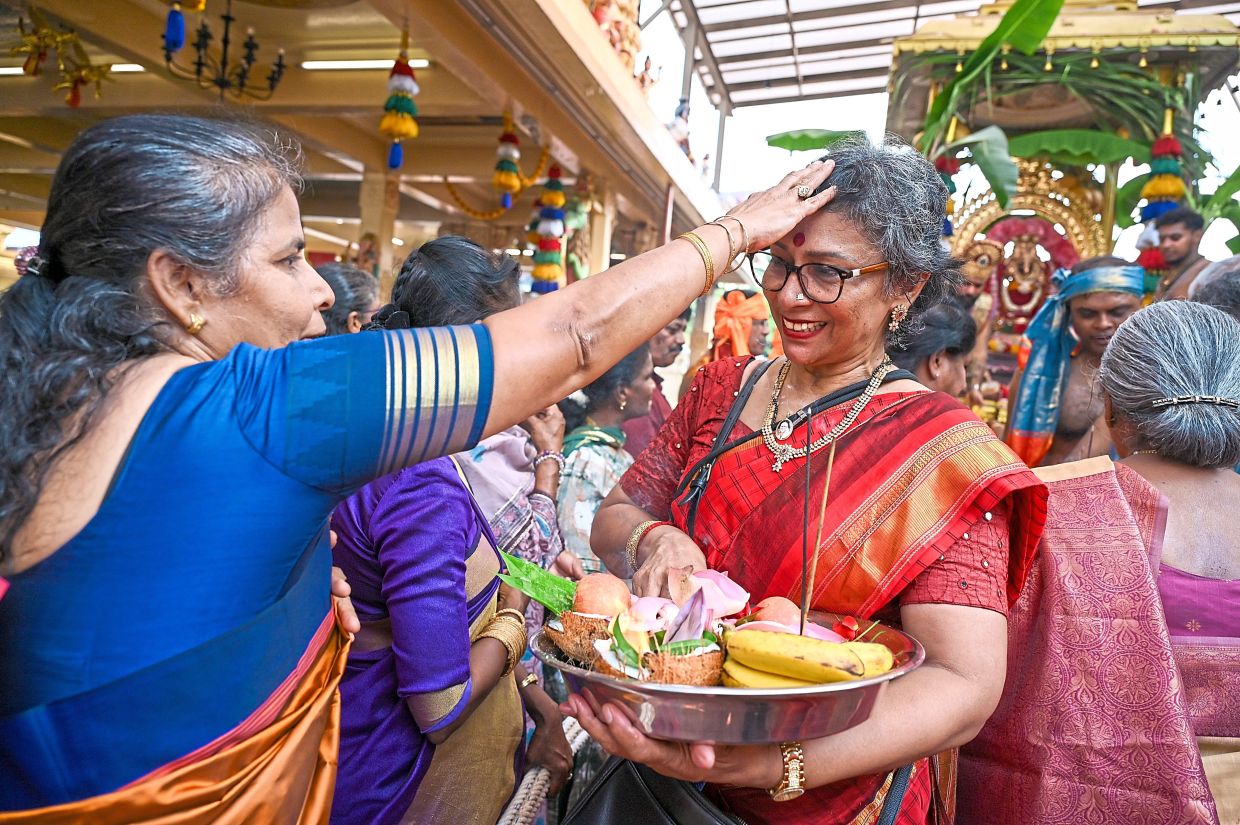
“When I opened my eyes, the prayer room and the offerings are what I see first,” said the 25-year-old event planner from Cheras.
“Then, I got ready and helped my mother prepare the vegetarian meals.
“We had a relatively simple meal with only about three items including kesari (a sweet Indian dessert),” she said.
While Tamils celebrated their Chithirai Puthandu new year yesterday, the Malayalees celebrate Vishu today.
On this day, they perform prayers at home or visit temples.
Households are also decorated with kolams (decorative designs made from rice flour).
The day, which typically begins with a ritual bath and prayer, with offerings like fruits, sweet meats and vegetarian food.
Hindus put on new new clothes and visit the temple, where the almanac is read out.
The new year is not to be confused with Ponggal festival, which is the Tamil harvest festival or Onam, the Malayalee harvest festival in August.
Vishu also starts with Vishukkani, a sacred arrangement featuring items such as gold, fruits, rice and holy texts placed before the statue of Lord Krishna.
These items are usually prepared by the oldest women in the family who will lead the family members blindfolded, one by one, to view the items.
Viewing this as the first sight of the day is believed to bring luck and abundance.
Elders will then give out “Vishu Kaineetam” or money packets to younger ones and later enjoy a vegetarian feast.