
Collective action urged to tackle issues faced by community
Tamil Puthandu symbolises a call for renewal in thought and action as well as collective responsibility, says Malaysia Hindu Sangam president Ganesan Thangavellu.
“A new year should not merely mark the passage of time but serve as a fresh beginning in strengthening unity, safeguarding rights and fostering meaningful progress within the community,” Ganesan said in a statement, as Tamils around the world celebrate their New Year today.
Beyond the festivities, he highlighted urgent concerns for the community.
“This year’s celebration comes amid pressing issues faced by the Hindu community, including temple land ownership disputes, administrative challenges, concerns over religious sensitivities and uncertainties surrounding community rights.
“In such circumstances, it is crucial for the community’s voice to be clear, firm and united.”
Ganesan said the ongoing initiatives to address temple-related concerns, particularly land matters and efforts undertaken through the National Hindu Temple Steering Committee (NHTSC) had reached a significant stage.
“This is not merely a time for resistance but a time to create solutions.
“It is also a time to act based on law, order and the rightful protection of our interests.”
He also called on the community to build a secure future for the preservation of the culture for the next generation.
“A strong future is not only a present necessity, but a guiding principle for the years ahead.”
Ganesan hoped the Tamil New Year would bring not only happiness, health and prosperity to every household but also clarity of thought, greater awareness of rights and the courage to act.
Tamil families begin the day by viewing auspicious items at dawn, including gold jewellery, fruits such as bananas and mangoes, betel leaves and a mirror to see their reflection.
This is followed by a ritual bath, the wearing of new clothes, a visit to the temple and the reading of the almanac, which contains predictions for the year ahead.
The day typically ends with a grand vegetarian meal comprising arusuvai (six tastes), namely sweet, sour, bitter, salty, spicy and astringent; symbolising the idea that life is a blend of different experiences.
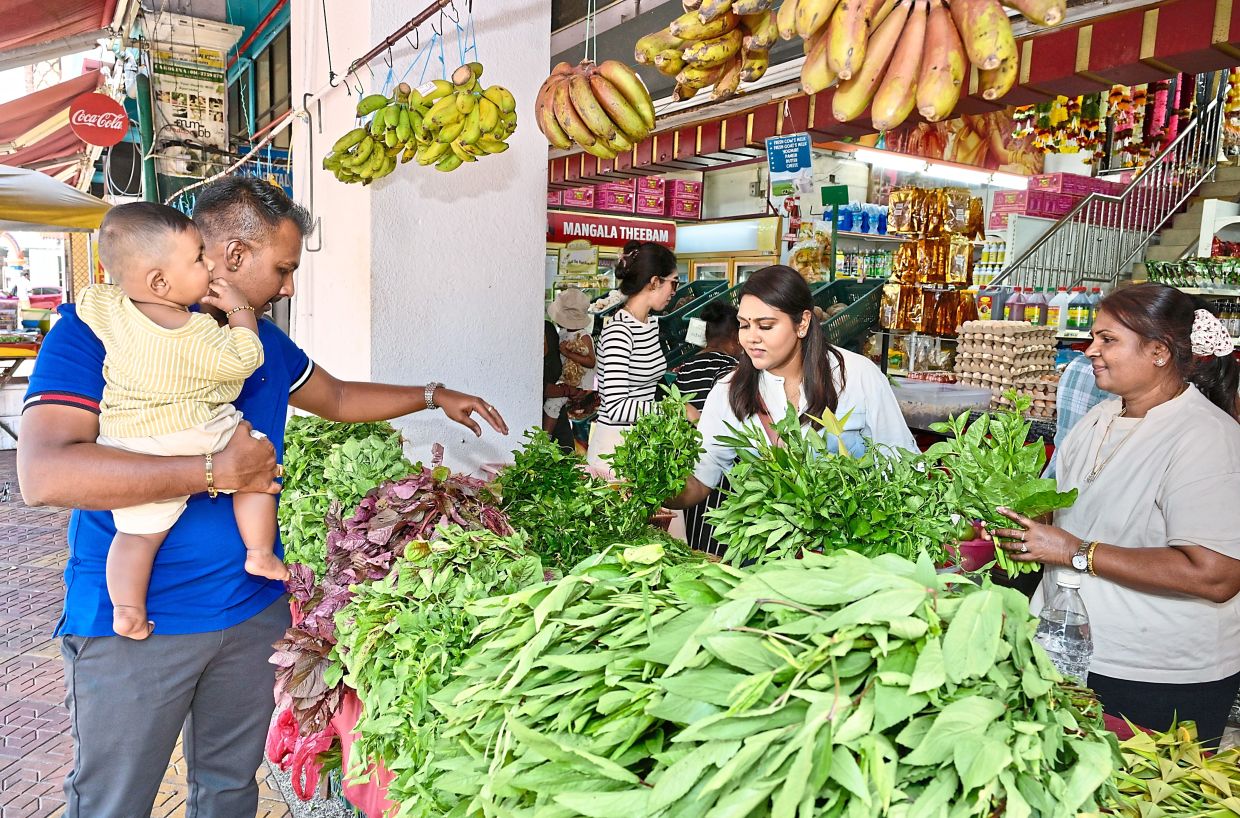
Yesterday, families were out shopping for prayer paraphernalia, flowers, sweets and vegetables in preparation for the prayers.