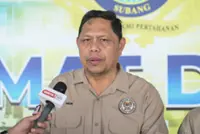
SUBANG: Cloud-seeding operations are carried out based on requests by state governments to ensure stable dam water levels due to current hot weather conditions, says the National Disaster Management Agency (Nadma).
Its deputy director-general (operations) Datuk Dr Abdul Gapar Abu Bakar said every application submitted through the state disaster management committee would be assessed before operations are conducted.
“We will consider every application. For example, if Perlis submits a request and Kedah is also facing the same issue, then we will conduct the operation simultaneously.
“If there is any application, we will conduct the operation,” he said, Bernama reported.
Abdul Gapar said that over the past three years, Nadma, together with agencies such as MetMalaysia, the Royal Malaysian Air Force, the Public Works Department and the Irrigation and Drainage Department, had conducted 21 cloud-seeding operations nationwide.
Of the total, 11 were conducted in 2024, one in 2025 and nine this year, involving several dams, including the Bukit Merah dam in Perak, Muda (Kedah), Machap (Johor) and the Timah Tasoh dam in Perlis.
“We managed to produce rain through every operation and helped bring the water levels of the dams back to normal,” he said.
For upcoming operations, the agency has received early information on the need for cloud-seeding in Sabah and Sarawak, as several areas are beginning to experience dry weather.
He said the hot and dry weather is expected to persist until either May or June, following the monsoon transition from the north-east monsoon, which ended in March, to the south-west monsoon.
MetMalaysia deputy director-general (operations) Ambun Dindang dispelled confusion about the use of hazardous chemicals in cloud-seeding operations.
He said it merely mimics the natural process of salt molecule condensation from the sea to land and uses only a normal salt solution.
“We just want to add more salt solution so that it rains faster in the target areas. That’s all. It is not dangerous because the salt we use is the type that we use in our food daily,” he said.
Ambun stated that the success of cloud-seeding operations relies on three crucial atmospheric factors – the presence of towering cumulus clouds, weak winds coming from various directions and a high content of moisture in the atmosphere.