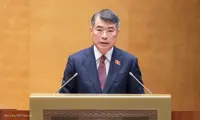
KUALA LUMPUR: The implementation of the work-from-home (WFH) policy for civil servants beginning next Wednesday (April 15) will not disrupt the nation’s economic activity, but instead aims to ensure productivity is maintained, said Economy Minister Akmal Nasrullah Mohd Nasir.
He said unlike the WFH implementation during the Covid-19 pandemic, which was aimed at curbing the spread of the virus, the current policy focuses on sustaining productivity without affecting economic operations.
"That is why working from home does not mean hindering economic activity, but rather the intention is to ensure productivity is not disrupted and that civil servants remain committed to carrying out their duties from their respective homes or locations,” he told Bernama.
He said this when met on the sidelines of the Ruang Bicara programme aired by Bernama TV titled ‘Addressing the Energy Crisis: Ensuring Economic Stability’ on Thursday (April 9).
Commenting on public concerns over the possibility of panic buying, Akmal Nasrullah said the government had taken early measures by reviewing supply issues since the activation of the National Economic Action Council (MTEN) early last month.
He said among the aspects given attention was the assurance of food supply as well as essential goods.
"For example, rice supply is expected to be sustained for up to nine months, while other items will depend on production factors,” he said.
He added that fresh supplies such as vegetables require continuous production, while protein sources including chicken and eggs are also being monitored along with animal feed supply.
In this regard, he urged the public not to engage in panic buying, which could disrupt the stability of existing supply.
"…from the outset, we have acted proactively to ensure sufficient supply. However, the caveat is that we must collectively maintain confidence and avoid any hoarding or panic buying that could shock existing stock levels,” he said.
Earlier, during the programme, he said the challenge of ensuring economic messages are understood and accepted by the public requires a clearer, more consistent and easily comprehensible communication approach amid current challenges.
He said communication efforts, including the consistent use of short videos, are being implemented to explain economic issues to the public, despite the challenge of balancing informative content with broader appeal.
"…for this to be understood, it needs to be explained step by step and may take time… my expectation is that I will need about two months to go down to the ground, explain, build confidence and so on, until decisions can be made with reasonable support,” he said. — Bernama