PETALING JAYA: The large disparity between the price of subsidised and non-subsidised diesel has become a huge incentive for smugglers and thieves, say those in the logistics industry.
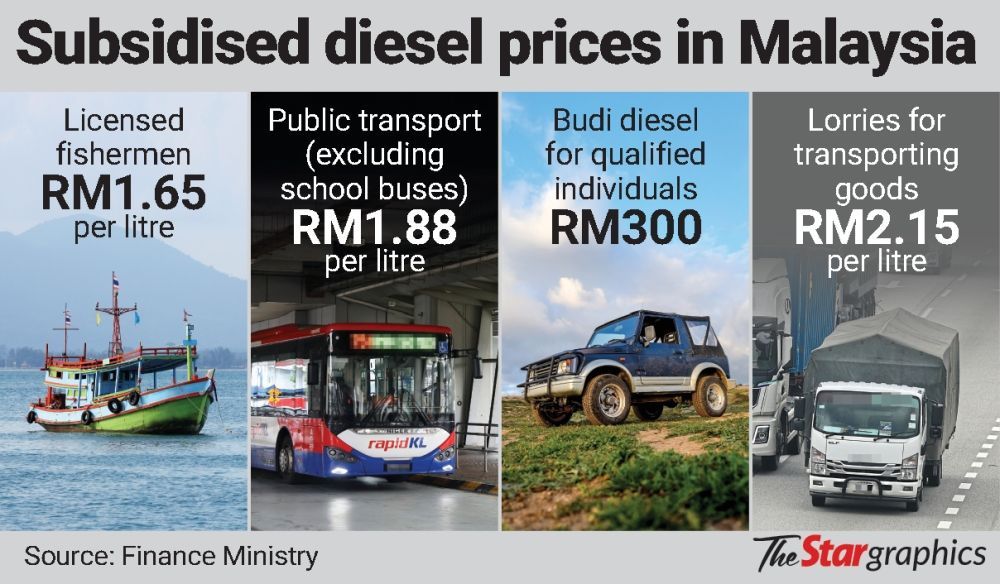
Subsidised diesel is sold at RM2.15 per litre while the diesel at the pumps are sold at floated prices – currently at RM6.72 (up from RM6.02 previously).
“From an industry perspective, this not only undermines the integrity of the subsidy mechanism but also creates an uneven playing field,” the Association of Malaysian Hauliers (AMH) said.
“Legitimate operators are placed at a disadvantage, while leakages in the system result in substantial fiscal losses to the government,” AMH secretary-general Mohamad Azuan Masud said.
“AMH believes that while targeted subsidies are necessary, the mechanism must be continuously refined to minimise leakages, ensure that benefits reach the intended sectors and avoid unintended consequences such as market distortions and illicit activities.”
The Star understands that a lot of propositioning is taking place in the marketplace, with some unscrupulous people urging those with substantial quotas of subsidised diesel, including some AMH members, to sell some to them.
On this scenario, Azuan emphasised that any misuse or diversion of subsidised diesel is not reflective of responsible hauliers, including AMH members.
“However, the widening gap between subsidised and market prices is creating strong incentives for such activities, and this needs to be addressed alongside enforcement,” he said.
Recent changes in diesel prices are also affecting the cash flow of hauliers, even those who quality for subsidised diesel.
“The price changes have hurt operators, particularly in terms of credit arrangements with oil companies,” Azuan said.
This is because credit limits for hauliers are typically based on the (floated) pump price, rather than the subsidised price.
“This reduces the available credit, causing some operators to exhaust their limits much earlier – sometimes within a week – despite the usual 30-day credit term.
“As the subsidy adjustment is only reflected at the end of the month, operators are often required to make early payments to continue using fleet cards, which affects cash flow for some,” he said, adding that fuel is a major component of operating costs.
Others include driver wages, consumables like engine oil, spare parts and tyres, along with maintenance.
“While container hauliers are currently recipients of diesel subsidies – which helps cushion the direct impact, we are still facing cost pressures from rising prices of other operational inputs,” he said.
With over 300 member companies, AMH feels the diesel subsidy has provided some level of support, particularly in stabilising prices of essential goods.
“However, the benefit is more pronounced for end consumers and cargo owners, rather than addressing operational challenges faced by hauliers,” Azuan said.
On possible price increases that will be passed on to their customers, AMH said it stands guided by the Competition Act 2010 (MyCC), which prohibits the association from advising members on pricing or tariff matters.
“However, we understand that some operators have adjusted their service rates to reflect increased costs.”