SUBANG JAYA: A few non-governmental organisations want an immediate establishment of a Royal Commission of Inquiry (RCI) and stronger public safety protections for communities living near fossil fuel infrastructure.
At a press conference to mark the first anniversary of the Putra Heights gas fire here, the organisers – Greenpeace Malaysia, RimbaWatch and Artivist Network – also launched a policy brief entitled “Putra Heights One Year On: Unanswered Questions Remain”, alongside a documentary screening and community sharing session reflecting on the experiences of affected residents.
The policy brief highlights some key issues that were insufficiently addressed by the Parliamentary Special Select Committee (PSSC) on Infrastructure, Transport and Communications, including questions on pipeline zoning, soil monitoring, buffer zones, public access to safety information, and the environmental and health impacts of the incident.
“The independent, appointed commission must conduct a full investigation into the root causes of the incident, including absolute transparency on what procedures were adopted for pipeline monitoring in urban areas, and ensure the results of these investigations are made public in full.
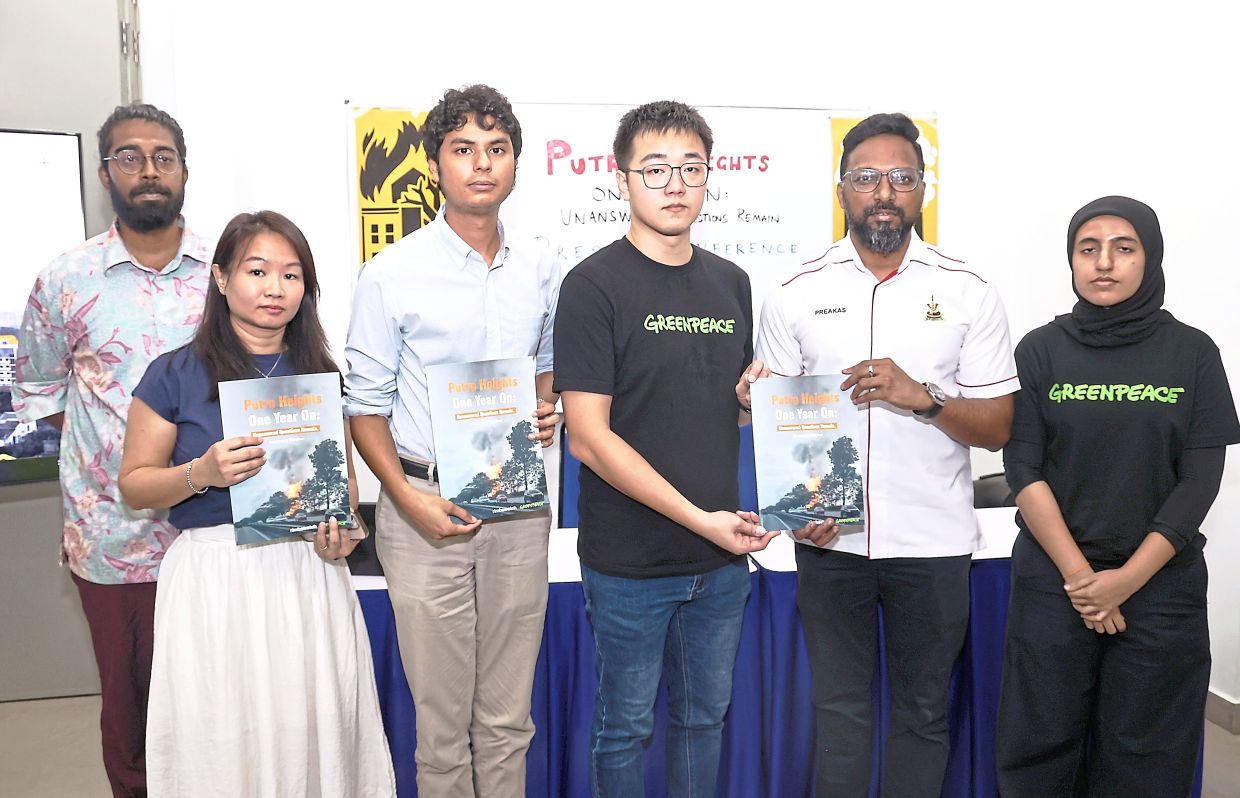
“This must include an urgent, non-negotiable review of existing city plans and pipeline maps to ensure they comply with current safety regulations and buffer zone requirements,” said RimbaWatch director and co-founder Adam Farhan.
Also present were Greenpeace climate and energy campaigner Hamizah Shamsudeen and Artivist co-founder and Asian director Amalen Sathananthar.
The event held at the Putra Heights mosque here yesterday also saw calls for the Energy Commission (EC) to be the Lead Safety Agency.
“The EC must establish and enforce minimum pipeline safety standards, including buffer zones based on the Potential Impact Radius (PIR) formula.
“It must ensure the Occupational Safety and Health Act 1994 and EIA Guidelines include mandatory buffer zones and technical risk assessments for offsite populations,” he added.
The groups also argued that there is a lack of unifying regulatory framework in Malaysia which explicitly sets a legal requirement for a minimum buffer zone width for high-pressure gas pipelines.