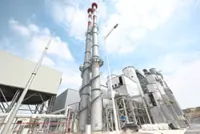
MELAKA: The ongoing conflict in the Middle East is triggering major ripple effects across global energy markets, strengthening the case for Malaysia to accelerate waste-to-energy (WtE) development as a renewable power source.
Housing and Local Government Minister Nga Kor Ming said the government plans to build 18 WtE plants nationwide through the National Solid Waste Management Department (JPSPN), with a projected capacity of up to 600 megawatts by 2040.
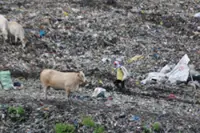
"This initiative will not only ease the burden on landfills but also contribute to renewable energy generation and significantly reduce carbon emissions.
"It also supports the National Energy Transition Roadmap (NETR) target of achieving 70 per cent renewable energy capacity by 2050,” he said at the groundbreaking ceremony for the Sungai Udang WtE project on Thursday (April 2).
Present were Melaka Chief Minister Datuk Seri Ab Rauf Yusoh, State Secretary Datuk Azhar Arshad, Housing and Local Government Ministry secretary-general Datuk M Noor Azman Taib, National Solid Waste Management Department director-general Datuk Dr Mohd Azhar Abd Hamid and Kumpulan Malakoff Corporation Berhad chief executive officer Syahrunizam Samsudin.
Nga said the Sungai Udang facility will be Malaysia’s second WtE plant, following the success of the first in Ladang Tanah Merah, Negri Sembilan.
The project, developed on a 3.96-hectare site via open tender, involves an investment of RM660mil and is expected to be fully operational by 2029, with a 34-year concession including a three-year construction phase.
Once completed, the plant will process up to 1,000 tonnes of solid waste daily and generate 22 megawatts of renewable energy, enough to power around 46,000 homes. It is also expected to cut more than 259,000 tonnes of carbon dioxide emissions annually, equivalent to removing about 56,000 vehicles from the road.
"The WtE technology can reduce up to 85 per cent of solid waste sent to landfills, while the remaining 15 per cent can be repurposed through circular economy approaches,” Nga said.
The push comes amid heightened global energy uncertainty following disruptions in the Strait of Hormuz, a key chokepoint handling about a fifth of the world’s oil and gas supply, as tensions between the United States and Iran continue to impact logistics and drive up crude prices. - Bernama