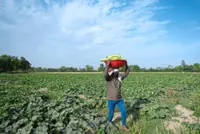
PETALING JAYA: Farmers are not asking for blanket subsidies but “reasonable support” to cope with sharply rising and imbalanced costs, says the Federation of Vegetable Farmers Associations.
Its president, Lim Ser Kwee, said recent changes to diesel pricing mechanisms, tighter enforcement and steadily rising fertiliser prices have significantly increased operating costs, with some smaller farmers already exiting the industry.
He noted that many vegetable farmers remain excluded from targeted diesel subsidy schemes despite relying on the fuel for machinery, irrigation and transport.
He also raised concerns over stricter enforcement on the use of diesel stored in containers, saying the lack of clear guidelines exposes farmers to enforcement action even when diesel is used for legitimate agricultural purposes.
On fertiliser, Lim said higher global prices have been passed directly down the supply chain, contributing to higher wholesale and retail vegetable prices, and increased market volatility.
Existing subsidy mechanisms for vegetable farming, he added, are no longer sufficient.
The federation has proposed including vegetable farmers in diesel subsidy schemes such as Budi95 via a simplified application process, introducing a permit system with clear rules for container-based diesel use, and rolling out fertiliser support or price stabilisation measures such as bulk purchase assistance, transport cost aid and ceiling prices for selected inputs.
Lim said the federation had submitted an urgent memorandum to Deputy Agriculture and Food Security Minister Datuk Chan Foong Hin, highlighting what it calls “growing structural risks” in the vegetable sector.
Meanwhile, Cameron Highlands Vegetable Growers Association deputy president Lau Weng Soow said both locally grown and imported vegetables have become more expensive, with neighbouring countries facing similar challenges.
“Prices will likely stay elevated in the coming months.
“This is not just happening in Malaysia; the region is experiencing the same pressures,” he said.
He said commonly consumed vegetables such as cucumbers, tomatoes, bayam and kangkung have been affected.
In response, Chan confirmed he had met Lim and other representatives in Putrajaya, saying that the ministry has prepared a proposal paper on the current energy crunch to be tabled at the National Economic Action Council.
He said the ministry is also looking at tightening import conditions to address vegetable oversupply from abroad and better protect local growers, while the government has raised the Budi Madani diesel subsidy from RM200 to RM300 a month to ease some of the burden.