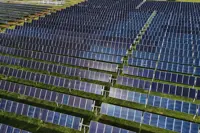
PETALING JAYA: Malaysia must accelerate its transition towards solar energy and reduce reliance on fossil fuels, says Asean Parliamentarians for Human Rights chairman Charles Santiago.
This is especially so in view of the global energy uncertainty driven by geopolitical tensions in the Middle East, he said.
He pointed out the sharp global pivot towards renewable energy.
Investments in solar and battery storage have surged dramatically in recent weeks, he added.
“In just 24 days, about US$70bil (RM274.68bil) has been invested globally into solar panels, battery storage and related technologies.
“This reflects a sudden and urgent recognition of the need to move away from fossil fuels,” he said at a media conference on Friday on the impact of the US-Iran conflict on climate change, held in conjunction with the Asean and South Asia preparatory meeting for COP31.
Santiago, who is former Malaysian Water Services Commission (SPAN) chairman, cautioned that while oil supply may stabilise in the short term, gas shortages could persist for several years due to disruptions in key production centres, particularly in the United Arab Emirates.
He acknowledged Malaysia’s progress under its National Energy Transition Roadmap, adding that renewable energy made up 31% of the national energy mix in 2025, up from 23% in 2020.
However, he said the current target of 35% by 2030 was insufficient.
“Malaysia should be bold and aim for at least 50% renewable energy by 2030,” he said.
Strategic adviser and Asia lead of India’s Fossil Fuel Treaty Initiative Harjeet Singh said structural inequalities driven by wealthy nations have contributed to both the climate crisis and geopolitical instability.
“This crisis, whether we look at debt or inequality, is caused by systems created and promoted by the Global North. We are all victims,” he said.
He said military emissions, which account for more than 5% of global greenhouse gas emissions, are not adequately captured under the Paris Agreement and are likely increasing amid ongoing conflicts.
Coordinator of the Asian People’s Movement on Debt and Development Lidy Nacpil said scaling up renewable energy is faster, cheaper and more strategic than expanding fossil fuels.
“Building a coal plant takes four to five years, while solar or wind can be completed within one to two years.
“It’s quicker, more practical and cheaper in the long run,” she said.