
PETALING JAYA: Electric vehicle (EV) demand in Malaysia is gaining traction as global tensions and rising fuel prices push consumers to consider alternatives to petrol-powered cars, industry experts say.
Malaysia Electric Vehicle Owners Club president Datuk Shahrol Azral Ibrahim Halmi said the Middle East conflict will have an impact on EV demand here.
ALSO READ: Many mulling switch to electric vehicles to manage expenses
“Clearly the disruption in the oil and gas supply and its effects are on top of mind for a lot of Malaysians, and we are seeing a lot of increased interest in EVs online.
“Existing EV owners are quick to point out that the electricity prices aren’t as volatile as petrol prices, and in some cases, homeowners can generate their own electricity using solar panels at home,” he said when contacted.
He said that prolonged geopolitical tensions and rising fuel prices would accelerate the shift to EVs faster.
“Consumers’ decisions are mostly driven by the economics of their situation, and if they feel that petrol prices will rise in the future, they would be more keen to accept the slight changes in lifestyle that EV ownership would entail.
“It’s hard to say right now if EV sales will increase this year.
“While there is interest in managing their future petrol expenditures, consumers are also generally cautious over the direction the overall economy is going.
“Potential car buyers may choose to postpone their purchase until they are more comfortable with their long-term finances.
Electric Vehicle Association of Malaysia president Datuk Dennis Chuah said higher global oil prices may encourage more consumers and fleet operators to consider electric vehicles.
“This is because EVs provide greater energy cost stability and lower operating expenses compared to petrol vehicles.
“Historically, spikes in fuel prices tend to increase interest in alternative mobility solutions.
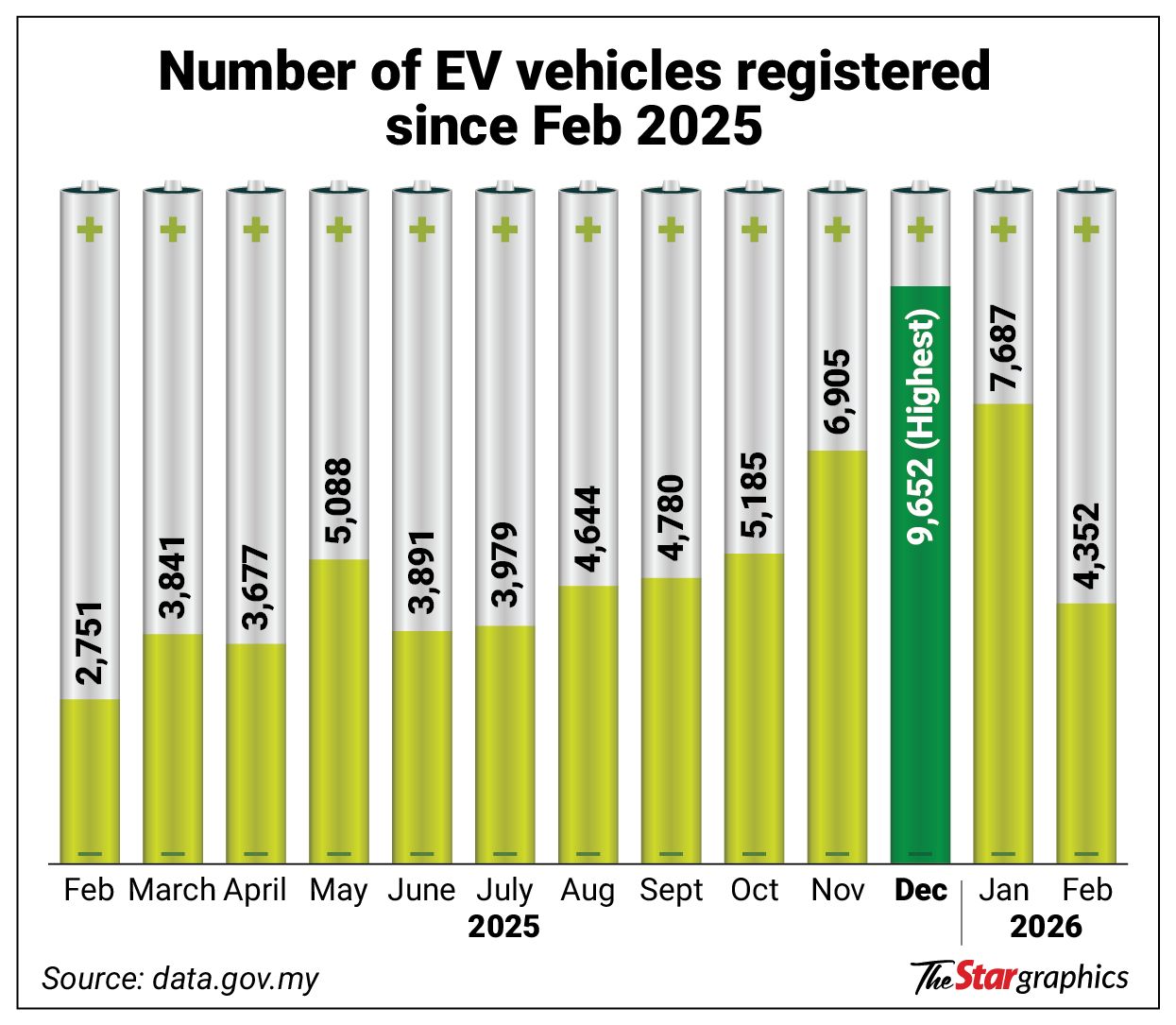
“Fuel price increases can accelerate interest in EVs; the overall EV adoption trend in Malaysia is still primarily driven by government incentives, charging infrastructure expansion, and increasing availability of EV models in the market,” he said.
Chuah expressed optimism that EV adoption here will continue to grow, as there is strong interest from both consumers and businesses.
“As more manufacturers introduce more affordable EV models and charging infrastructure continues to expand, we expect EV adoption to remain on a positive growth path.
An industry observer said electric vehicle uptake is expected to increase in the coming years, especially owing to more affordable models introduced by national car manufacturers.
“For now, we are seeing more higher-end models on the road. With the rise of cheaper models, we can see an upward trend,” said the observer.
General Insurance Association of Malaysia chief executive officer Chua Kim Soon said the majority of accident claims related to electric vehicles have been towards body damages.
“However, there are not many claims in general, mainly owing to their numbers on the road. As we move along, we need to see how the market evolves as well,” he said.