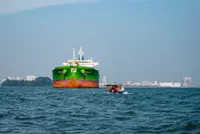
PETALING JAYA: As tensions threaten one of the world’s most critical maritime chokepoints in the Middle East, analysts say the spotlight could increasingly turn to South-East Asia, where the Strait of Malacca serves as a vital artery for global trade and energy flows.
They warn that the rising strategic importance of the strait underscores the need for stronger cooperation among Asean nations to safeguard regional sovereignty and stability in one of the world’s busiest shipping routes.
Asean and Middle East geopolitical expert Dr Abdolreza Alami said any prolonged disruption in the Strait of Hormuz would inevitably redirect global attention towards South-East Asia and Strait of Malacca.
“The reason is clear: about 30% of global trade and over 80% of oil imports for countries such as China and Japan pass through this strait,” he said.
Alami said the United States already views control and security of the waterway as part of its Indo-Pacific strategy, maintaining influence through its presence in Singapore and by providing intelligence and technical assistance to littoral states.
“In a scenario where Hormuz becomes an active conflict zone, Washington will have even greater motivation to oversee the security of alternative routes for its Asian allies,” he said.

At the same time, China will likely intensify its focus on securing the strait due to what analysts call the “Malacca Dilemma”, referring to Beijing’s heavy dependence on energy supplies passing through the narrow waterway.
Alami said this could heighten strategic competition between the United States and China in South-East Asian waters.
“In a situation where the importance of the Strait of Malacca is increasing, the only way to preserve the sovereignty and interests of regional countries is to strengthen collective cooperation,” he said.
He called for deeper integration among Malaysia, Indonesia and Singapore in coordinated patrols, including stronger information sharing, improved crisis management mechanisms and more standardised legal frameworks.
Alami also urged Asean countries to invest in maritime monitoring capabilities, pollution control systems and emergency response infrastructure to reduce dependence on external assistance that could come with political conditions.
Beyond security measures, he said Asean must adopt a unified diplomatic stance in international forums, defending the principle of “innocent passage” under the United Nations Convention on the Law of the Sea while opposing unilateral military intervention.
International relations analyst Dr Zokhri Idris said maritime security cooperation among Asean members remains relatively limited, with many countries currently addressing such issues individually rather than through a regional framework.
“At the moment, Asean countries approach maritime security individually. We do not approach it as a region,” he said.
He said this partly stems from the absence of a dominant maritime power within Asean, which has led some countries to conduct exercises with stronger external naval powers.
However, Zokhri said the situation could change if Asean develops a regional maritime governance framework that all members agree to follow, adding that the ongoing negotiations on a Code of Conduct for the South China Sea could provide a starting point.
He warned that if the Strait of Malacca becomes even more critical to global trade and energy flows, the region could face heightened geopolitical contest involving major powers such as China and the Aukus partnership of Australia, Britain and the United States.
Such tensions, he said, could also undermine Asean centrality and potentially drive up regional inflation if disruptions affect shipping costs and supply chains.