Beneath the diplomatic parlance, countries in the region are reassessing their security strategies as tensions rise.
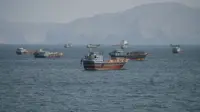
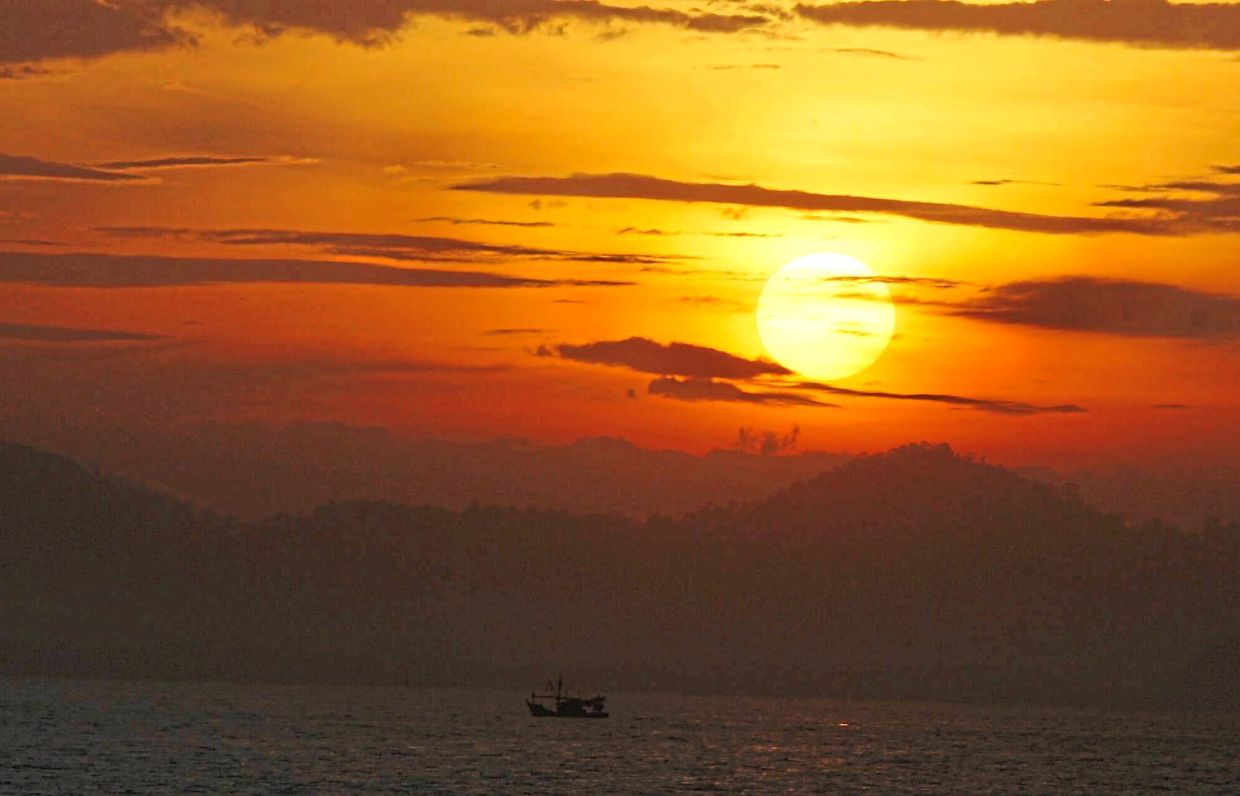
WITH the continued blockade of Iran’s Strait of Hormuz, it is no surprise that the spotlight has shifted to the world’s most congested waterway – the 900km Strait of Malacca.
The shortest sea route from East Asia to the Middle East and Europe, it currently channels 22% of the world’s maritime trade, including oil and gas from the Middle East to East Asia.
More than 102,500 commercial vessels sailed through the channel last year, 8,200 more than the 94,300 recorded in 2024.
Girdled by Thailand, Indonesia, Malaysia and Singapore, the Strait of Malacca is also the world’s largest oil transit choke point.
It is more than 10 times narrower than Hormuz, with its tightest stretch measuring less than 3km.
Its volume of the oil trade flow has long surpassed Hormuz.
For comparison, Malacca Strait notched 29% of the maritime oil trade with 32.2 million barrels per day (bpd) last year, against the 26% via Hormuz at 20.9 million bpd.
As for liquefied natural gas, Hormuz did better with 21% or 11.4 billion cubic feet per day (bcf/d) compared with the 17% (9.2 bcf/d) recorded for Malacca Strait.
There is no doubt that the significance of the Malacca Strait is being augmented by the ongoing geopolitical climate, heightening concerns over maritime security.
Beneath calm diplomatic parlance, countries in the region are reassessing their security strategies amid rising tensions and uncertainty.
Malaysia has taken the position that the strategic waterway would remain peaceful and that there was no need nor justification for any foreign power to intervene or take control of it.
Defence Minister Datuk Seri Mohamed Khaled Nordin was quoted as saying last week that the littoral states – Malaysia, Indonesia, Singapore and Thailand – were fully capable of managing the security of the strait.
He echoed Foreign Minister Datuk Seri Mohamad Hasan’s earlier remarks emphasising the importance of safeguarding sovereignty over the waterway, and that no unilateral decisions should be made regarding the strait in line with Asean’s consensus-based approach for the region’s maritime stabi- lity.
The reality is something else.
Two weeks ago, a Chinese expert in regional security warned that the United States was shifting towards a full “global maritime blockade strategy, with the likelihood of targeting the Strait of Malacca next, through which 80% of China’s oil and 90% of its sea trade flows.
East China Normal University research fellow Gu Dingguo told the South China Morning Post that the crisis reflected Washing- ton’s greater emphasis on implementing its maritime security strategy.
Gu named the Hormuz, Malacca, the Taiwan Strait and the South China Sea as high-risk zones for Beijing, as the real and unchanging priority of the US remains containing China and Russia at sea.
Predicting that the Malacca Strait was next in line, he said it was no coincidence that the recent American-Indonesian defence agreement was signed.
The Hormuz crisis, he said, was a test on how America planned to strangle China’s economic lifelines.
Gu urged Beijing to build up its naval forces and establish maritime communication mechanisms with all countries, noting that China’s vulnerability was worsened by its dependence on a few key maritime gateways, which the US could potentially block.
His remarks came in the wake of a US statement on April 16 that any vessel around the globe carrying supplies to or from Iran would be a potential target.
Chairman of the US Joint Chiefs of Staff General Dan Caine told the media on April 16 that the strategy to interdict Iran-linked ships would extend into the Indo-Pacific region, warning that the US navy would actively pursue any Iranian-flagged ves- sel or any vessel attempting to provide material support to Iran.
A day earlier, Indonesia’s foreign ministry had announced that there was no policy granting unrestricted access to its airspace to any foreign party.
In a letter to the country’s defence ministry, it warned that a proposal to give the US military blanket permission to fly over Indonesian territory risked entangling Jakarta in potential South China Sea conflicts.
Reuters quoted foreign ministry spokesperson Yvonne Mewengkang saying the proposal was still under internal consideration and that intra-ministerial coordination was a common and necessary part of the country’s policy-making process.
The letter was sent before Indonesia’s defence minister Sjafrie Sjamsoeddin and his American counterpart Pete Hegseth signed a major defence cooperation partnership on April 6.
In response, an Indonesian defence ministry spokesperson said overflight clearance was not “a pillar of cooperation agreed upon within the partnership” with the US.
In another significant development, Thailand is speeding up plans for its long-delayed Land Bridge mega project, position- ing it as a strategic alternative to the world’s most congested and vulnerable maritime routes.
Deputy Prime Minister and Transport Minister Phiphat Ratchakitprakarn said the project, valued at US$31bil (nearly one trillion baht or RM122.5bil), aims to link the Gulf of Thailand and the Andaman Sea via a new logistics corridor.
Phiphat described the current global situation as a “window of opportunity” for Thailand to step into a larger role in global shipping.
“Thailand has debated projects like the Kra Canal for over 50 years without concrete progress,” he said.
“Now is the moment to make the Land Bridge a reality.”
The Land Bridge project would include two deep-sea ports on both coasts (Ranong and Chumphon), a highway and dual-track railway linking both sides, and an integrated logistics systems designed to reduce shipping times between the Indian and Pacific Oceans.
It is still a long way from being realised, but the Land Bridge would reroute regional trade, shift economic opportunity away from some Asean hubs, raise environmental and social risks across the region, and also reshape geopolitical leverage between major powers.
Media consultant M. Veera Pandiyan likes this quote by Mark Twain: “God created war so that Americans would learn geography.”
The views expressed here are the writer’s own.
Already a subscriber? Log in
Get 20% OFF The Star Digital Access
Cancel anytime. Ad-free. Unlimited access with perks.