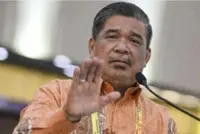
MELAKA: Prime Minister Datuk Seri Anwar Ibrahim does not centre his leadership solely on Malay voters but instead promotes a broader national outlook, prioritising support for vulnerable communities across all backgrounds, says PKR deputy secretary-general.
Aidi Amin Yazid said earlier political frameworks, which appeared to safeguard the interests of marginalised Malays, had, in reality, resulted in the emergence of a small elite network of politicians and business figures who benefited disproportionately.
“The PM is not focusing solely on Malay voters but is reshaping the perspectives of privileged Malaysians who may not fully grasp that the foundation of a thriving nation lies in nurturing the most vulnerable members of society,” he said in an interview on Thursday (March 5).
He was responding to constant criticism on the pace of reforms under the Madani government, despite introducing a series of policy changes and governance initiatives.
According to Aidi, genuine progress requires policies that address the weakest links in the social fabric while creating a fair and equitable playing field for all Malaysians.
He noted that several unresolved issues still require attention, adding that the Prime Minister’s broader ideals are sometimes misunderstood due to differing public expectations and political narratives.
Aidi said Pakatan Harapan was formed based on inclusive governance aimed at advancing progressive and moderate policies for the nation.
“Collectively, Pakatan represents Malaysians who aspire to see governance that is fair, forward-looking and centred on the well-being of all communities,” he said.
He added that rebuilding collective strength among supporters would require party leaders, particularly at the grassroots level, to emphasise values and understanding rather than imposing political viewpoints.
"This is not merely an ideological contest over political narratives but about engaging the people through genuine dialogue and ensuring that their concerns are heard,” he said.
Aidi also cautioned against oversimplifying the political preferences of younger voters or reducing Malaysia’s political dynamics to ethnic lines alone.
"It may be beneficial for our political leaders to remember not to oversimplify the categories of youth voters and ethnic support,” he said.