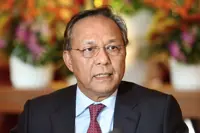
KUALA LUMPUR: Individual income tax collection is expected to rise 9.4% to RM49.07bil next year on the back of steadier wage growth and more people entering the tax net, says Deputy Finance Minister Liew Chin Tong (pic).
He said the number of registered individual taxpayers is projected to grow by 13%, supported by low unemployment and pay adjustments for civil servants under the Public Service Remuneration System (SSPA).
“The upward revision in projected tax collection is attributable to more stable wage growth, which has led to a 13% increase in the number of registered individual taxpayers, as well as low unemployment and salary adjustments for civil servants under the SSPA,” he told the Dewan Rakyat on Monday (March 2).
Liew was responding to Chong Chieng Jen (PH–Stampin), who asked about individual and corporate income tax, as well as Sales and Service Tax (SST) collection for 2025 and projections for 2026.
Citing the Federal Government Fiscal Outlook and Revenue Estimates 2026 report, Liew said revised estimates for 2025 individual and corporate income tax collection are RM44.86bil and RM97.03bil respectively.
“The projected collections for Sales Tax and Service Tax in 2025 are RM25.6bil and RM30.3bil respectively,” he said.
For 2026, corporate income tax is expected to increase to RM103.35bil, up 6.5% from 2025, while Sales Tax is forecast at RM26.6bil and Service Tax at RM33bil, he added.
Liew said higher corporate earnings, particularly from the services and manufacturing sectors, together with the phased rollout of e-invoicing from August 2024, are expected to boost government coffers.
“Higher corporate income, especially from the services and manufacturing sectors, as well as the phased roll-out of e-Invois starting August 2024, is expected to contribute to higher corporate tax collection, reduce leakage and improve tax compliance,” he said.
He also said actual direct and indirect tax collection for 2025 can be verified when the Federal Government’s 2025 Financial Statements are published on the Accountant-General’s Department website in the early fourth quarter of 2026.
On a supplementary question from Chong on whether enforcement and audits on small and medium enterprises (SMEs) would be relaxed to help them adjust to e-invoicing, Liew said the government had already eased the transition.
“The implementation phases for e-invoicing have been relaxed from six months to one year,” he said, adding that the threshold has also been raised.
“E-invoicing is seen as a burden, but it is also part of the digitalisation process, which previously was not emphasised.
“The threshold value has also been raised to RM1mil, instead of RM500,000 as before,” he said.