PETALING JAYA: The Public Sector Data Digitalisation policy (PPDSA) will have a positive impact on the delivery of government services, said experts and consumers.
They also said it is important to ensure gradual implementation as public feedback is vital for the continuous improvement of the digitalisation policy.
Cybersecurity researcher Mohammad Ezaly Iman Ramli said the PPDSA will create a one-stop platform for all data and services, accessible to consumers.
But, he said, it is important to ensure that legacy systems in the public service aren’t entirely replaced overnight.
“The best approach is for this process to be implemented gradually, rather than abruptly cutting off legacy systems to force everyone to use the new system.
“Feedback and improvements should be carefully noted to enhance the system continuously,” he said.
Mohammad Ezaly also said it would be challenging to streamline all processes into a single platform as hurdles are expected in terms of development, infrastructure, network capacity and cybersecurity.
“This is not impossible. Countries such as Estonia, Singapore and Denmark have achieved this.
“However, it took 10 to 20 years for their systems to be implemented and reach maturity,” he said.
Among the potential issues identified by Mohammad Ezaly were centralised data breach risks, which he noted could be addressed through careful cybersecurity management.
Federation of Malaysian Consumers Associations (Fomca) vice-president Datuk Indrani Thuraisingham said the PPDSA marks a major shift in how Malaysians interact with government services.
For consumers, Indrani said this new platform will lead to faster access to services, a one-time data submission, better-targeted assistance and subsidies, reduced corruption and reduced leakages.
But, Indrani said, the PPDSA will be beneficial for Malaysians only if it is inclusive, secure and accountable.
Indrani said the digital divide issue must be addressed, as a significant portion of Malaysians, especially the elderly, rural communities, low-income groups and the digitally illiterate, still depend on physical counters and paper documents.
“A paperless policy must not become a service-less policy for these groups. Physical service options, assisted counters and community digital help desks must remain,” she added.
Consumer Association of Penang (CAP) president Mohideen Abdul Kadeer welcomes the PPDSA, but noted that the non-digital option should also be made available for communities that do not have access to digital services or are digitally illiterate.
“I have seen in KL public housing where the authorities switched to cashless payment for the monthly rent.
“It created a lot of difficulties for the elderly who do not have a credit card or digital payment access.
“They are being penalised for non-payment while the system is not flexible enough to deal with their situation,” said Mohideen.
Malaysia Association of Standards Users secretary-general Saral James Maniam said government systems should align with internationally recognised standards on information security management, privacy information management and identity management.
“These standards require structured risk assessments, access controls, encryption, audit trails and incident response mechanisms,” she said.
Saral also said that there must be clear safeguards against misuse to protect Malaysian consumers from any potential data breaches.
From Feb 9, the public service began implementing a paperless approach for simple administrative matters, in line with efforts to accelerate digitalisation in government administration.
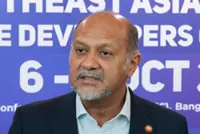
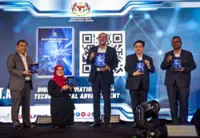
Digital Minister Gobind Singh Deo launched the PPDSA on Tuesday to accelerate the adoption of digital, automation and technological advancement (DATA) in the public sector.