
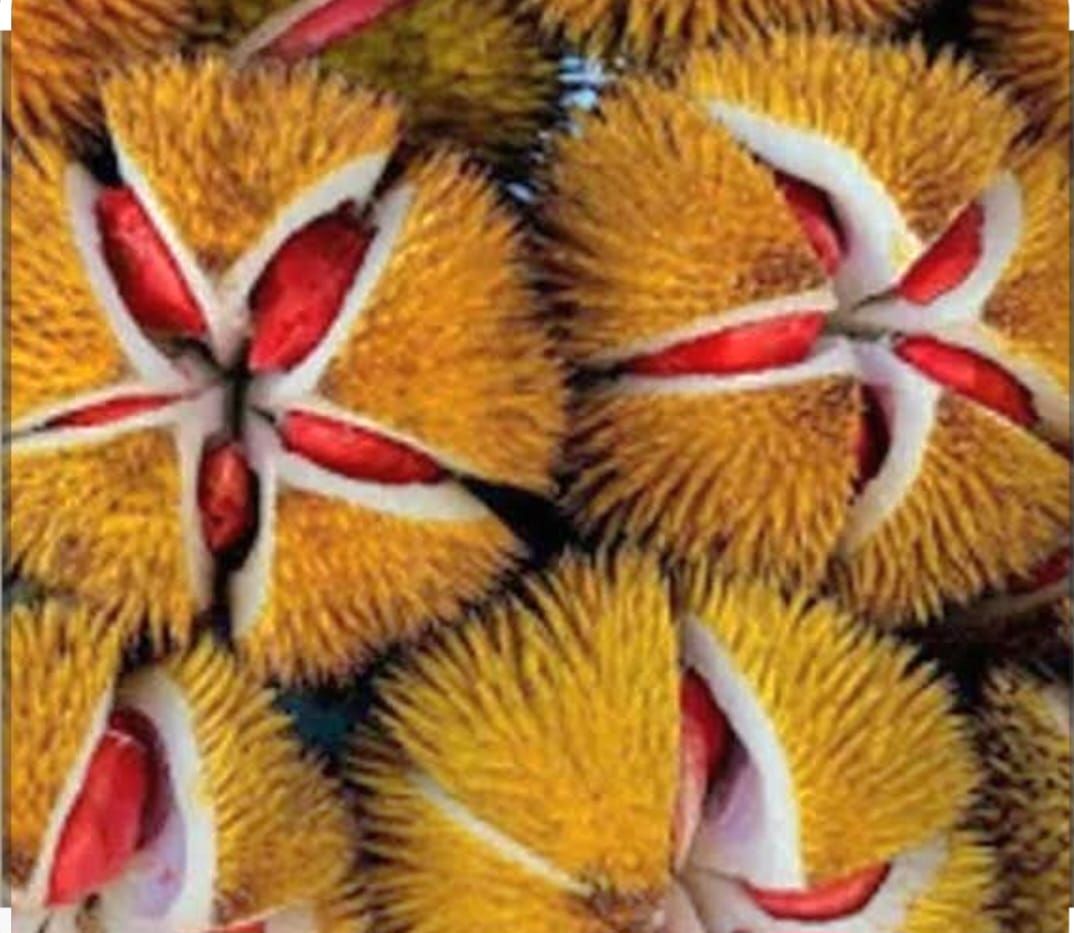
KOTA KINABALU: Borneo’s exotic "Durian Merah" has the potential to become a new popular food product in the country and also be developed into an agro-tourism product, says Kuamut assemblyman Datuk Masiung Banah (pic below).
He said the state Agriculture Department should carry out further study on this nutritious tropical exotic fruit for its health and nutritional benefits, as well as use new technologies to develop high-quality seeds that could make it commercially viable.
For starters, he proposed that the state Agriculture, Fisheries and Food Industry Ministry (Maffi) to conduct a study to produce high-quality durian merah seeds that could be the size of a shady and low-bee tree compared to current traditional tall trees bearing the fruits.

He said the durian merah filling was not only a traditional food among the ethnic Sungai people in Tongod, Kinabatangan, Telupid and Beluran, but also a sought-after food for exotic fruit lovers in Sabah and Sarawak.
He noted that the durian merah filling was usually sauteed while adding a little flavouring to make 'sambal', and it is the most popular menu in the northern part of Sabah, in addition to having the potential to penetrate the food market in the Asian region.
Masiung, who is chairman of state-owned Sedco Group, urged Maffi to conduct research on new agronomic grafting varieties to produce shady seeds as well as promote them as domesticated crops in the agricultural industry in the Sabah Region.
Masiung was confident that Maffi minister, Datuk Jamawi Jaafar, who has extensive experience in the durian-based agriculture industry, is able to highlight the red durian variety as a modern traditional crop.
Masiung said the durian merah becomes the main crop in the state, the production of the exotic fruit will increase, and the market will expand.
He explained that the heritage crops that are the traditional favourite foods of the Sungai community in the four northern districts of Sabah are seasonal crops.
“The unique thing is that the durian merah fruit will not fall even if the fruit is ripe. The big and tall trees needed to be climbed to pick the fruit,” he said, describing the bright red flesh as less sweet with a drier texture and smells less pungent than typical durians.