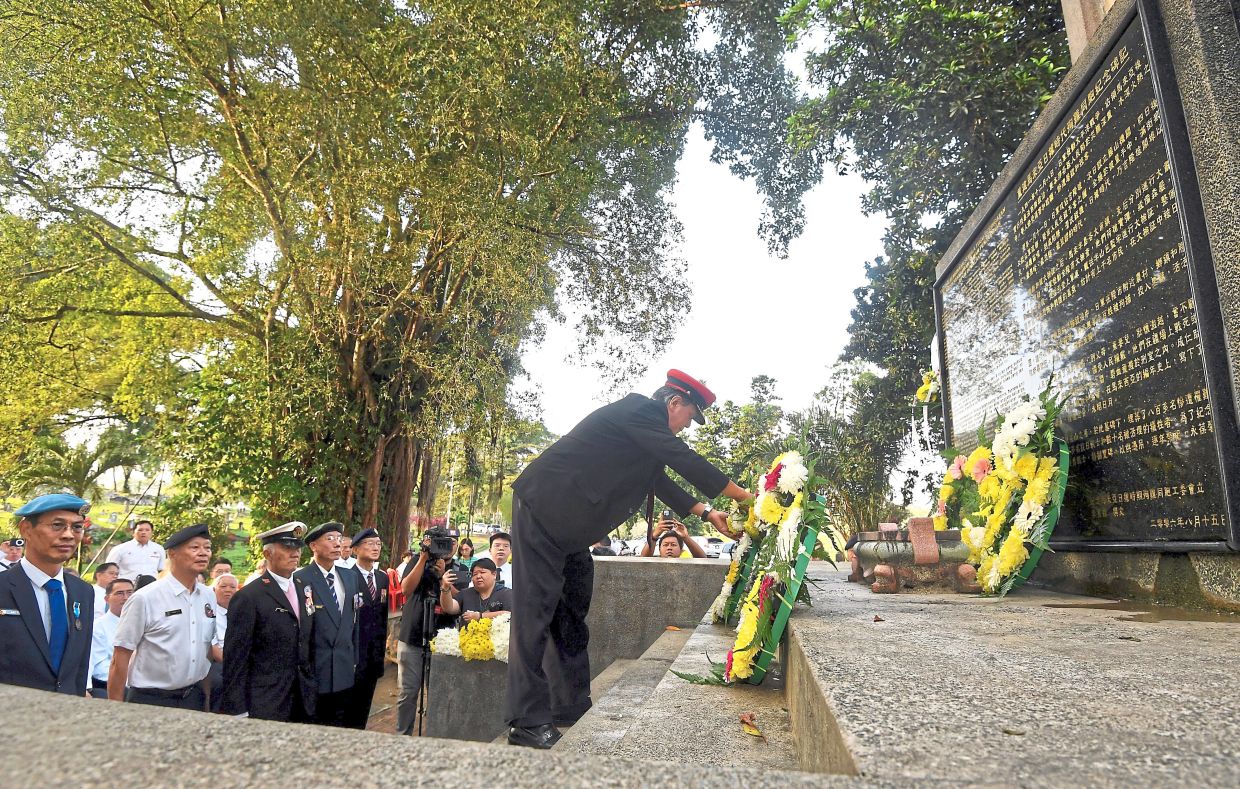
KUALA LUMPUR : In the stillness of the early morning at the KL Hokkien Cemetery, about 80 people gathered at a memorial monument yesterday.
With speeches delivered, wreaths laid and the mournful tune of the Last Post drifting through the air, they were there to honour Malayan civilians and servicemen who were massacred during the Japanese Occupation more than eight decades ago.
Organised by the The Kuala Lumpur and Selangor Chinese Assembly Hall (KLSCAH), the simple hour-long annual ceremony known as Remembrance Day, carried a poignant message that war does not pay and only leaves behind devastation, loss and lasting scars on those who lived through it.
KLSCAH president Ngan Teng Ye said the site bears silent witness to the countless lives lost during the Japanese Occupation between 1942 and 1945.
“More than 800 victims killed during the period are buried here. Some have names but many do not. Remembering this painful period remains deeply relevant today as armed conflicts have not disappeared from our world as tensions have emerged, including in South-East Asia.
“May the departed rest in peace and may peace never be taken for granted,” he said in his speech.
Malaysian Armed Forces Chinese Veterans Association (Macva) president Lt-Kol (Rtd) Wong Ah Jit said that while growing up, he was horrified by the stories his late parents told him of the atrocities that befell Malayans during during World War II, especially the Chinese community.
“This event is also a reminder of the price of war. Nobody wins. Peace must be upheld and valued. In this day and age, war should never be an option to resolve disputes.
“With the great advancements we have made in communication, we should use dialogue to find solutions rather than resorting to conflict,” said the 75-year-old retired officer who served the army for 24 years and came for the event with about a dozen members of the Macva.
Also present at the memorial was British High Commission defence advisor Col James Green and Australian High Commission assistant defence advisor Lt-Col Glenn Sheridan.
The cemetery is also the resting place for the remains of more than 500 resistance fighters who lost their lives opposing the Japanese during the occupation.