
How a small idea grew into a sustainable lifeline for Sabah elephants
KINABATANGAN: When a hungry baby elephant wandered into a school canteen in Telupid looking for food, it set off more than just alarm bells.
It inspired a movement to restore balance between people and wildlife in Sabah.
That incident in 2018 moved Sabahan hotelier-turned-conservationist Alexander Yee, who went on to establish the RESPonsible Elephant Conservation Trust (Respect).
“I realised the elephant wasn’t lost – it was hungry.
“The forest around Telupid had been degraded by years of logging, so food sources were gone.
“The poor animal was just looking for something to eat,” he related.
A native of Kudat who was raised in Kota Kinabalu, Yee returned after spending two decades abroad to operate his own bed and breakfast.
“I met a village chief from Kinabatangan who stayed at my lodge, and he asked me to help his village set up something similar.
“That’s how I ended up in Kinabatangan, and that’s where I first saw how deeply our livelihoods are tied to the environment,” he said.
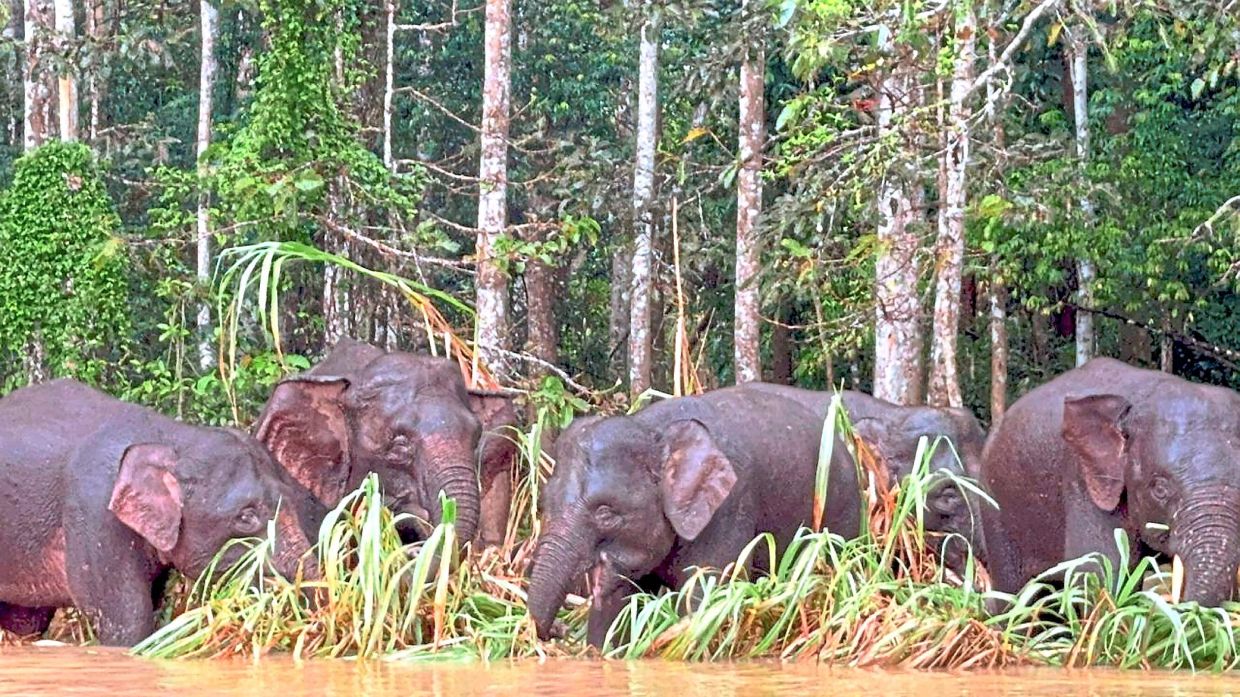
Located along Sabah’s east coast, the Kinabatangan district is home to one of the state’s richest floodplain ecosystems – a haven for Bornean elephants, orang utans and proboscis monkeys that coexist alongside rural villages and community-run lodges.
From managing a turtle conservation project on Libaran Island to leading initiatives along the Kinabatangan River, Yee’s journey eventually led him to the founding of Respect in 2021.
Through the trust, he set out to ease human-elephant conflict by turning degraded lands into safe, food-rich corridors.
“When we look at the degradation of the elephants’ habitats, we don’t think about not having a roof for the elephant. In fact, we go further than that.
“We think about the habitat not having food sources. So, we went in and planted food for the elephants, including various types of grass, like Napier grass,” he said.
Beyond feeding elephants, the initiative has also brought stability to communities long affected by crop destruction.
Farmers who once suffered losses to roaming elephants now work alongside Respect as caretakers of these pastures.
The project pays the villagers’ monthly wages while reducing conflict, transforming fear into stewardship.
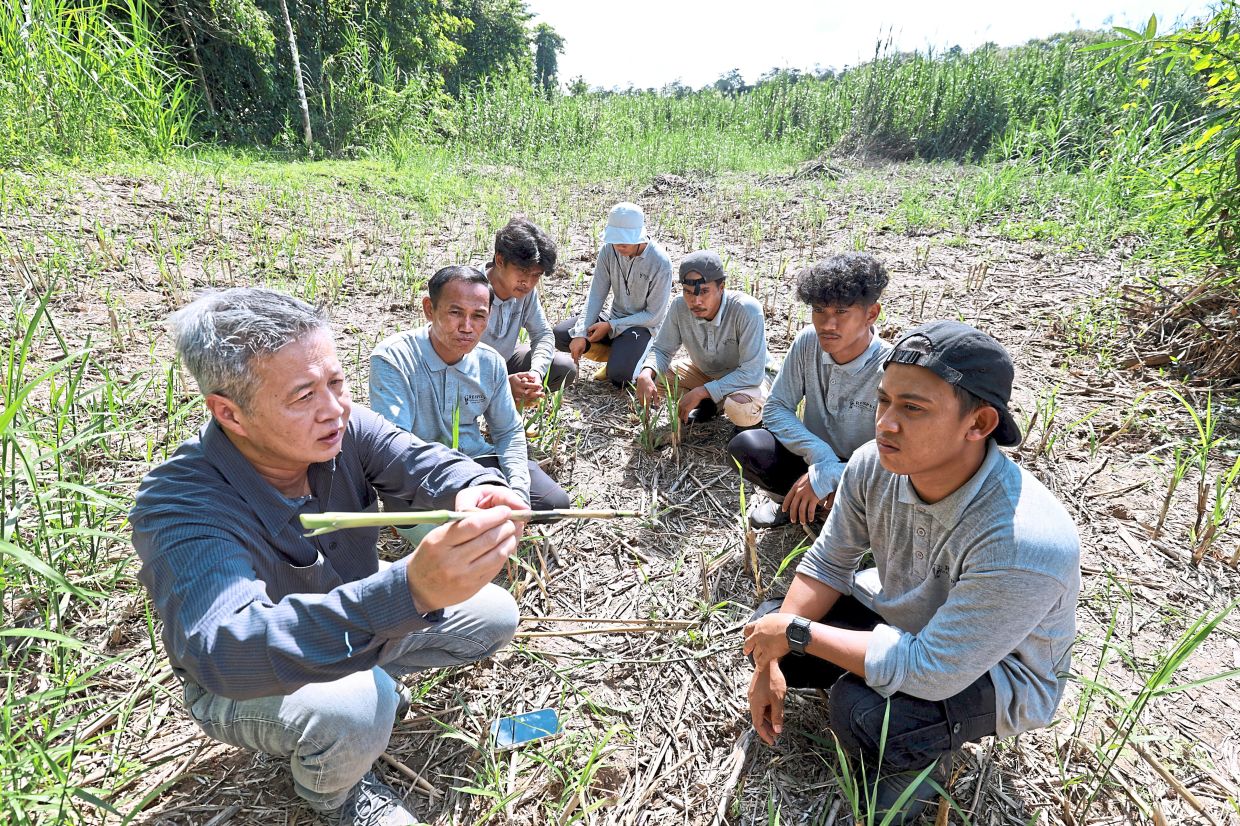
What started as a small pilot in Telupid has since grown into two major projects in the lower Kinabatangan – a food pasture and a food corridor – supported by the Sabah Tourism, Culture and Environment Ministry, the Sabah Wildlife Department and funders such as Saraya Corporation Japan and Intrepid Travel, the world’s largest adventure travel company.
“Within two months of planting, elephants came and consumed the grass. Since then, we’ve had one herd come by every two or three months. We thought, ‘this is workable,’” Yee said.
In July, Respect recorded a herd of seven elephants that stayed for two days.
The next herd visit in September brought 14 adults and a calf – an encouraging sign that the elephants were returning regularly.
“We would deem the increase in visits from the elephant a measure of success,” Yee said.
The trust currently employs nine villagers from Kampung Batu Putih and Kampung Bilit to maintain the grass corridors.
“It is hard work. You have to dig a hole, put in the grass cutting and cover it,” he explained.
“However, the soil here is fertile, and the whole team feels happy and motivated when they see the elephants return. It keeps them going.”
Yee said the villagers now take pride in seeing elephants near their lands, even giving them names based on their physical markings and personalities.
“When they see a familiar herd, they’ll say, ‘Oh, this one is back again.’
“That sense of ownership and connection to the wildlife is what we want to nurture,” he added.
In recent months, Kampung Bilit has reported no elephant intrusions, while nearby villages further downstream have continued to face conflicts.
“We can safely say that they have been well fed down here, which is why they do not go into the village,” Yee noted.
Respect’s conservation plots also serve as outdoor classrooms.
Schoolchildren from surrounding villages are brought in to learn about coexistence, sustainability and the role of elephants in maintaining forest balance.
“It’s not just about the grass. It’s about planting awareness that grows with every generation.”
For Yee, conservation is about changing how people see their place in nature.
“The biggest misconception is that humans own this world.
“When you build a road through a forest, it’s not the elephant crossing the road – it’s the road crossing the forest,” he said.
Respect’s work has already shifted mindsets. Villagers have stopped striking gongs to chase the elephants away.
“People are beginning to understand that elephants aren’t a nuisance – they’re part of the ecosystem,” he said.
Yee, who also sits on the board of WWF-Malaysia, said the approach may soon extend to Peninsular Malaysia, including the Gerik Highway in Perak.
“Why not plant food near viaducts so wildlife has a reason to cross safely?” he said.
Through partnerships with universities and research institutions, Yee hopes to scale up such initiatives and gather data on elephant movements and behaviours.
“The science can help us plan better corridors and understand how to share space effectively,” he said.
After 15 years in conservation, Yee said the toughest challenge is still changing human attitudes.
“The most challenging part is dealing with humans. Elephants, at least, are predictable,” he said.
He added that consistent funding and long-term planning are crucial for sustaining the trust’s efforts.
“You can’t just plant and walk away. We need five to 10 years of care for these pastures to become truly self-sustaining. That’s where collaboration and awareness make all the difference.”
His motivation, however, remains simple.
“We’re just passing through this world. We should leave it, if not better, at least the same for the next person.”
As Respect enters its next phase – expanding food corridors, running workshops and securing long-term funding – Yee measures success not in awards but in peaceful coexistence between people and wildlife.
For Yee, the true reward lies in watching nature heal itself – in seeing elephants return, forests recover and people take pride in protecting what surrounds them.
“When you see balance restored, you realise this is what respect truly means.”
For Yee and his team, Respect is more than just a name; it’s a way of life, embodied in each individual blade of grass.
For their noble efforts, Respect has been named one of the 10 winners of the Star Golden Hearts Award (SGHA) 2025.
SGHA is an annual award by The Star that honours everyday Malaysian unsung heroes.
For details, visit sgha.com.my.