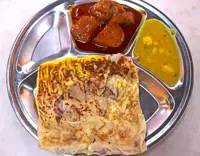
PETALING JAYA: “Boss, roti canai satu, teh tarik kurang manis!”
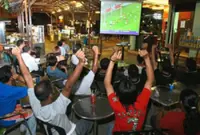
This familiar shout out across mamak tables may soon be a thing of the past.
Indian and mamak restaurants are now embracing digital ordering and cashless payments.
Faced with a manpower crunch, these eateries are going high-tech with digital menus that can be scanned with a QR code provided at the table.
Customers also have to make cashless payments before their orders are served.
Q Bistro Restaurants, which operates 23 outlets in the Klang Valley and two in Johor, is said to be the first mamak chain in the country to go fully digital with the QR code menus and cashless payments, starting with its Puchong branch last week.
The chain’s group managing director, Riyasutin Mohamed Dulkif, said the move was not only driven by the manpower shortage but also aimed at gradually reducing dependency on foreign workers.
“While the digital menu will be convenient to many, there are those who prefer the old way of placing their order. For these diners, we will assist them and they can still make payment at the cashier.
“But we hope to educate them to go digital. There are also plans to incorporate artificial intelligence (AI) features to further enhance the system,” Riyasutin said.
Restaurant owners are also torn between the old and the new. Many say that customers, who are used to waving to the waiters, find it hard using the QR code.
Some say the shift to digital could also dampen the lively and communal atmosphere Malaysians have long loved and enjoyed at mamak restaurants.
Malaysian Muslim Restaurant Owners Association (Presma) president Datuk Mohamed Mohsin Abdul Razak said the adoption of AI and digital solutions are part of a long-term plan to reduce dependence on foreign workers.
He said digital technology allows restaurants to simplify order processing, tracking inventory and monitoring staff performance.
Mohamed Mohsin, who was elected to the post last month, said Presma has engaged several tech companies to develop an all-in-one system that supports everything from opening new outlets to the daily management of restaurants.
He estimated that about 60% of mamak restaurants in the Klang Valley and other urban areas have begun using QR systems for food orders.
Local customer acceptance has been slow, however, with many still preferring the traditional face-to-face service.
“We are working to gradually shift this culture so our food sector can become more efficient and modern. Many operators will need between five and 10 years to fully transition to the new system,” Mohamed Mohsin added.
As for the shortage of foreign manpower, he said that while the association is grateful to the government for allowing replacement workers to fill positions left vacant in restaurants, the complicated process has left employers exasperated.
With Visit Malaysia 2026 approaching, he said staffing is crucial.
“I hope the government can ease the process for new and replacement workers. Some restaurants are operating with a staff shortage of between 30% and 40%,” Mohamed Mohsin said.
Malaysian Indian Restaurant Owners Association (Primas) president Datuk J. Govindasamy@Suresh also lamented the slow approval process to get replacement workers.
“We hope the government can expedite the process of bringing in the approved replacement workers to help alleviate our burden,” he said.
He also said the rising costs of goods and ingredients are taking a toll on restaurant owners.
“These increases have made it extremely difficult for restaurant operators to sustain their businesses and maintain affordable menu prices.
“While we have tried our best to absorb some of the costs, it has become almost impossible to continue doing so,” he said, adding that Primas members would keep any price hike minimal.