
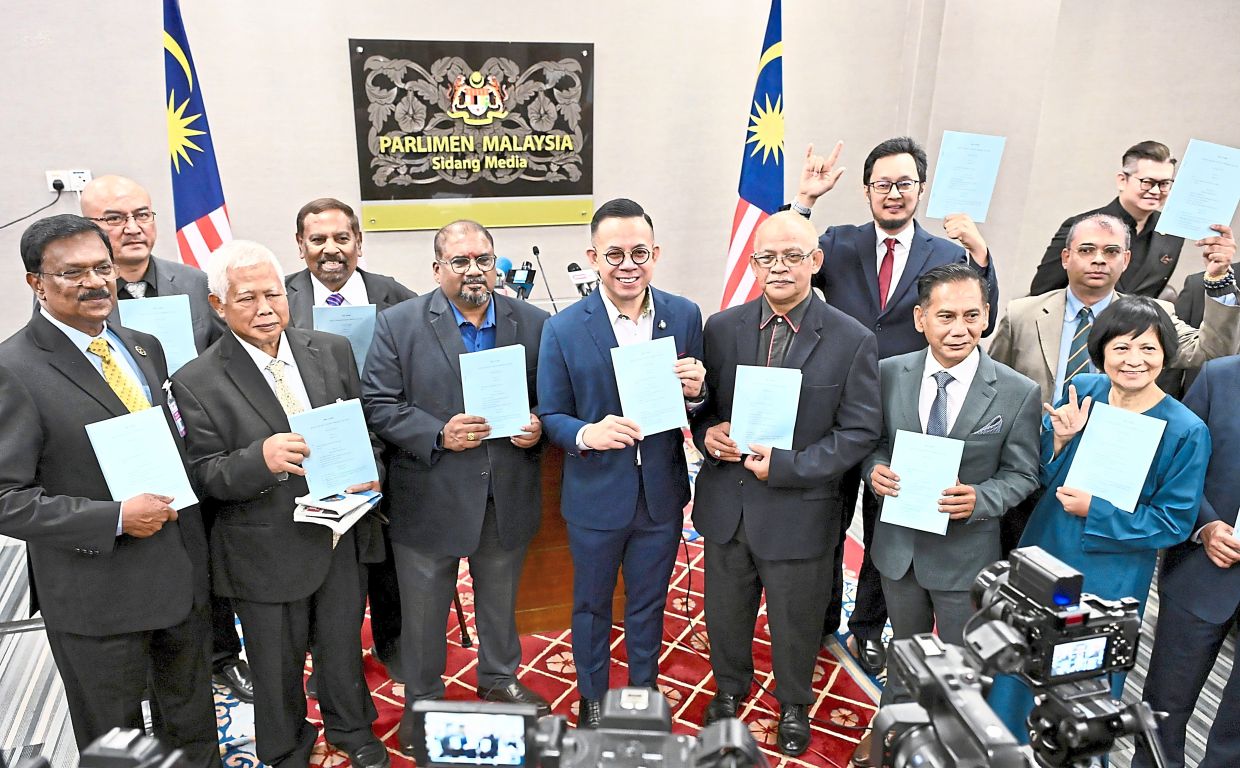
KUALA LUMPUR: The Gig Workers Bill, which will benefit some 1.2 million people, was the the result of a comprehensive and inclusive engagement process, says Human Resources Minister Steven Sim.
“This was not crafted in isolation, in the comfort of air-conditioned rooms in Putrajaya,” he said of the Bill, which was tabled in Parliament yesterday.
“We engaged not only in consultations within the government, involving multiple ministries, state governments, particularly Sabah and Sarawak. We also held nearly 40 stakeholder engagement sessions involving platform companies, employer groups, worker representatives, gig worker associations, trade unions and academics and others.
“In total, around 4,000 stakeholders participated in crafting this Bill,” Sim added.
The Bill revolves around four main components – the definition of gig workers, a dispute resolution mechanism, addressing payment issues and social protection for gig workers under PERKESO.
Sim said the drafting of the Bill followed the mandate given by the Prime Minister in March 2024 for his ministry to develop a protection mechanism for gig workers.
“This Bill is the first of its kind, dedicated to safeguarding the welfare of gig workers,” he told a press conference at the Parliament building yesterday.
Beside platform providers like e-hailing and p-hailing services, the Bill will also cover actors, film crew, singers, musicians, composers, lyricists, make-up artists, hair stylists and stylists.
Interpreters, translators, transcribers, stringers, caregivers, photographers and videographers are also included.
Under Clause 8, the Bill stipulates that gig workers have the right to be informed of their service terms, agreed tasks, rates, earnings and payment methods.
They cannot be unfairly terminated, and have access to dispute resolution. The Bill also aims to give rights for gig workers to be issued payslips.
A contracting entity cannot deduct from a gig worker’s earnings, tips, or gratuities unless it is to recover an overpayment made within three months, which is permitted by law or is approved by the Labour director-general.
Under Clauses 24 and 25, it provides for the setting up of a Gig Workers Tribunal to hear and decide disputes referred by a conciliator.
“The tribunal can grant awards it deems fair, including consequential losses or damages,” said Sim.
Under Clause 83, it outlines the duties of contracting entities, including submitting gig workers’ details to PERKESO and deducting their contributions as well as ensuring their registration under the Self-Employment Social Security Scheme.
The Bill also seeks to give rights to gig workers to join, participate in, or establish a gig workers’ association.
Sim said the ministry had, over the span of a year, reached out and opened channels for online public feedback and received more than 500 submissions.
“It was drafted based on the voices and feedback from all quarters.
“Of course, no law can satisfy every party completely, but this is a balanced, necessary step forward,” he said.