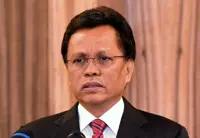
KOTA KINABALU: Sabah is well-positioned to advance in renewable energy, supporting the nation’s energy transition goals, according to the Energy Commission of Sabah (ECoS).
ECoS Chief Executive Officer Datuk Abdul Nasser Abdul Wahid (pic) highlighted Sabah's flexibility and efficiency in decision-making, business-friendly approaches, and strategic geographical location as key strengths.
He noted that flexibility and efficiency allow for faster, more coordinated action, while business-friendly approaches make Sabah welcoming to investors.
"We ensure that our processes are clear, transparent, and supportive of sustainable growth," he said.
Beyond renewable energy resources, Sabah aims to support Malaysia’s broader national agenda by contributing significantly to energy transition goals.
A focus of the session was the need to build a resilient and interconnected energy network.
"Given its strategic geographical location, Sabah is well-positioned to serve as a central hub for regional interconnection between Kalimantan, Sarawak, Brunei, and the Philippines, strengthening regional energy security and cross-border collaboration," he said.
These points were showcased at the recent Energy Asia 2025 conference in Kuala Lumpur, where speakers highlighted Sabah’s commitment to the energy transition, showcasing the state’s renewable energy ambitions and policy leadership, particularly in the power sector.
During the conference, Abdul outlined efforts by Sabah, Sarawak, and Peninsular Malaysia to harmonise clean energy policies, targets, and infrastructure planning.
The aim is to establish a more cohesive and efficient approach to nationwide power sector decarbonisation.
In a session titled "Energising Malaysia’s Growth," Abdul joined a panel of national energy leaders, including Tenaga Nasional Berhad President and CEO Datuk Megat Jalaluddin Megat Hassan, Sustainable Energy Development Authority Malaysia CEO Datuk Hamzah Hussin, and Sarawak Energy Group Chief Operating Officer James Ung Sing Kwong.
The leaders discussed how the region’s journey toward decarbonisation must not compromise energy security, reliability, or affordability, which are priorities for emerging and developed economies.
Speaking to the media on the sidelines of the conference, Abdul said the opportunity to speak at Energy Asia was valuable, allowing him to showcase Sabah’s strengths and offerings in the renewable energy sector.
Hosted by Petronas in collaboration with Knowledge Partner CeraWeek by S&P Global, Energy Asia 2025 concluded with a strong call to accelerate an energy transition that is just, inclusive, and grounded in practical solutions.
The event brought together more than 4,000 participants from 60 countries and 38 sectors, including policymakers, investors, innovators, and energy professionals to exchange ideas.
Through over 50 dialogues across seven sub-themes, the conference explored regional collaboration to strengthen energy security, advance renewables, drive decarbonisation, enable technology transfer, and foster economic and social development.