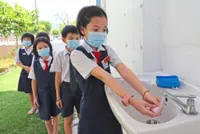
KLANG: A series of proactive and comprehensive measures has been initiated to address the rising cases of Hand, Foot and Mouth Disease (HFMD) in Selangor.
State Health Department director Dr Ummi Kalthom Shamsudin said the steps include early alerts, community engagement, institutional support, enhanced surveillance, targeted closure of institutions, continuous monitoring and transparency.
“We have observed a growing trend of HFMD cases in Selangor since late 2024, and an official alert was issued to all district health offices on Jan 2,” she said.
Multiple town hall sessions and briefings have been conducted across Selangor’s nine districts to educate childcare institutions and the public about HFMD prevention, Dr Ummi Kalthom explained.
She also noted that inter-agency meetings were held with the state’s education department, social welfare department, Islamic pre-schools, Selangor Islamic Religious Department, the National Unity and Integration Department and childcare operators to coordinate prevention and control efforts.
“Current data shows that most cases are caused by Coxsackie A16 (81.1%), which typically leads to mild illness. A small proportion of five cases involve the more severe Enterovirus 71.
“To date, no deaths have been reported in Selangor.”
Institutions and childcare facilities hit by HFMD were temporarily closed under the Prevention and Control of Infectious Diseases Act 1988 (Act 342).
“Sanitation protocols are enforced to reduce transmission, with most centres closed for at least three to five days to allow for proper disinfection.”
She also clarified that although Selangor has recorded the highest number of HFMD cases, the state’s incidence rate, when adjusted for population size, ranks sixth.
As of Epidemiological Week 17/2025, Selangor has recorded 27,118 cases, marking a more than 100% increase compared to the same period last year.
Malaysian Public Health Physicians’ Association president Prof Dr Jamalludin Ab Rahman said the rise is not unexpected.
“HFMD tends to occur in cycles every few years. It primarily affects young children and spreads easily in places like kindergartens and schools, particularly when they reopen after the holidays.
“The current surge follows the usual seasonal trend, as cases often rise during the south-west monsoon season due to changes in temperature, humidity and wind.
“Other countries in the region also experience similar patterns.”