Sabah farming project uses creepy-crawlies to make high-grade fertiliser


Yusof trying his hand at vermicomposting, which uses earthworms to convert waste material into compost.

KOTA KINABALU: For six months, 30 Sabah farmers will have earthworms as their "best friends" while they learn how to turn agricultural waste into high-quality bio-based fertiliser using vermicomposting techniques.

These participants will be trained under the Kembara Komuniti Programme “Kecilkan Jejak, Besarkan Impak” (Reduce Footprint, Increase Impact).

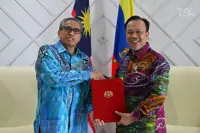
State Science, Technology, and Innovation Deputy Minister Datuk Mohammad Yusof Apdal launched the programme, themed "Ada Sisa, Jadi Bisnes Bah!" (Turn waste into business), in Kampung Melangkap Tiong, Kota Belud on Monday (May 20).

The farmers, members of the Kota Belud Farmers Association, are from Kampung Melangkap Kapa and Kampung Tanginambur.

By mastering vermicomposting techniques using African nightcrawler earthworms, Yusof said participants can produce crops such as durian, avocado, vegetables and legumes such as long beans that are more resilient to diseases and pests.

He said the programme would help participants improve the quality of their crops while also enabling them to sell vermicompost fertiliser for extra income.

He said participants have the potential to generate a net income of RM5,200 per month based on the sale of 2,000kg of vermicompost fertiliser.

“Their efforts will improve the standard of living in their villages and ensure a safe and secure food supply.

“I believe they will develop Kota Belud into a leading sustainable crop production centre in Sabah through the application of vermicomposting technology,” he said during the launch.

Yusof said the programme, organised by the Malaysian Bioeconomy Development Corporation (Bioeconomy Corp), promotes the use of science, technology and innovation (STI) among farmers.

The Kembara Komuniti Programme is a collaboration with Bioxpert Sdn Bhd (Bioxpert), a producer of organic vermicompost fertiliser and technology provider; Universiti Malaysia Sabah (UMS); and Bioeconomy Corporation as the industry driver.

Bioeconomy Corp chief executive officer Mohd Khairul Fidzal Abdul Razak said the programme was its commitment to unite stakeholders from the government, industry and academia.

“Through vermicomposting, farmers can recycle agricultural waste and produce bio-based fertiliser in just 30 to 60 days, compared to the 180 days or more needed with conventional composting methods,” he said.

He said vermicomposting utilises composting worms and decomposing microorganisms, offering a faster and more efficient process compared to traditional composting methods which rely solely on microorganisms.

“They are expected to obtain approximately 2,000kg of fertiliser from 2,200kg of agricultural waste.

“This increases agricultural productivity, reduces production costs, and establishes more sustainable agricultural practices and economic resources in Sabah, while fulfilling the goal of 'bioeconomy for all',” said Khairul.

He added that farmers will also be given access to wider markets, joint sales arrangements, and training in business management and marketing to improve the sustainability of their activities.

Follow us on our official WhatsApp channel for breaking news alerts and key updates!

Next In Nation

South China Sea code of conduct to be finalised this year, says Tok Mat
Stay on guard against cyber fraud with festive season drawing near, says consumer group
20 Immigration officers sacked for 'flying passport' offences, says DG
UTM to collaborate with Peking university
Australia deports M'sian with child sexual abuse material found on his phone
Seven nabbed during anti-human trafficking raid in Taman Maluri
Ex-army chief charged with money laundering involving RM2.1mil
Defence industry players welcome new national policy for self-reliance
Over 248,000 job offers given to rehabilitated addicts since 2020
Cops recorded 179 cases of drugs sold on digital platforms since 2023

Others Also Read