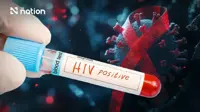
End the prejudice and stigma


IT was a secret, kept from his family for 10 years.

Bobby (not his real name) lived in denial about being HIV positive, afraid of how his loved ones would react if they knew the truth.

“I didn’t want to take medication because I was in denial. But then I got cancer, due to my weakened immune system from not being treated properly.

“It almost killed me,” he tells Sunday Star.

Warded in hospital for over a month, the 40-year-old architect was in the critical stage of his cancer.

The truth could no longer be concealed and his family members found out about his condition.

“I was surprised and overwhelmed because I didn’t expect my family to be so supportive and accepting of me,” he shares.

That was the turning point for Bobby, who got himself treated, overcame cancer and changed his mindset about HIV.

Today, he stands tall – leading a normal life, and has been undetectable of the virus for a year.

He still has to take medication and go for regular checks but otherwise, feels healthy and happier.

“I’m happy the way I am. I love travelling and want to see the world.

“But I want to give back to society and spread the awareness about HIV and AIDS. I urge people to get tested and don’t be afraid if you are HIV positive. It is treatable.

“AIDS isn’t a death sentence and you can lead a normal life,” says Bobby, who plans to further his studies in getting a Master’s degree.

He, however, hopes that society will be more open-minded towards those who have the disease, as Malaysians still tend to discriminate or judge people living with HIV (PLHIV).

The stigma prevails

While medical advancements have enabled PLHIV to carry on, such stigma they face does not help at all.

So perhaps it is apt that “Communities make the difference” is this year’s theme for World AIDS Day, celebrated today.

According to UNAIDS, it is the community’s leadership and advocacy that ensures the response towards PLHIV remains relevant and grounded.

But bearing stigma against PLHIV is one of the biggest and most persistent issues among our society in Malaysia, says Universiti Teknologi Mara infectious disease specialist Dr Rosnida Mohd Noh.

“There is still discrimination against them among Malaysians. Mostly, it is due to lack of knowledge and awareness about the disease.

“More needs to be done about increasing awareness on the U = U campaign to reduce such negative perception,” she adds.

The U = U (undetectable equals untransmittable) campaign is a concept that PLHIV with an undetectable level of HIV in their bodies cannot transmit the virus to others sexually.

It aims to reduce the stigma that such PLHIV poses as a “risk” to others.

This concept is based on evidence that effective HIV treatment lowers the amount of the virus in a person’s body fluids, reducing it to an “undetectable” level.

At this stage, a PLHIV cannot pass on HIV through sex.

However, the U = U concept is mainly for sexual transmission.

There has yet to be conclusive findings for other ways of transmission like sharing needles among drug users and others.

“We should also never transfuse blood from an HIV positive individual,” Dr Rosnida says.

Being “undetectable” does not mean a PLHIV is cured and they will still test positive for HIV.

Such PLHIV still requires regular medication to control their viral load.

On Thursday, it was reported that 94% of HIV cases in Malaysia were transmitted through sexual relations, based data from the Health Ministry.

Of the 94%, men having sex with men made up 57% of such cases while heterosexual transmission accounted for 37% of cases.

Another 3% was due to drug users sharing needles while the remainder 3% were from other ways.

Quoting projections, Dr Rosnida says more people in Malaysia are expected to be living with HIV in the future, based on the ministry’s Country Progress Report on

HIV/AIDS 2018.

“Transmissions through injecting drug users have gone down due to good management of this aspect.

“At present, sex is the main driver of how HIV is spread.

“But as it is now in Malaysia, we don’t really talk about sex. So, what more on how to prevent HIV and other sexually transmitted diseases?

“There is a need for more education not only about safe sex but also on HIV awareness,” she says.

Dr Rosnida says many people in Malaysia are still in the dark about information about HIV and how it is transmitted.

Putting an end to AIDS

Nevertheless, it is possible to end AIDS within our lifetime – and it can be done within the next 10 years or so, says Malaysian AIDS Foundation executive director Jasmin Jalil.

This can be achieved, thanks to antiretroviral therapy (ARV), which can sustain HIV viral suppression and strengthen immunity in patients.

“To eradicate AIDS within the next 10 years, we need to have at least 90% of PLHIV on sustained ARV and achieve viral suppression. Seeing the many successes we’ve had in controlling the epidemic in the past 10 years, Malaysia is primed to achieve this goal.

“We have the science and tools, but what’s setting us back is the lack of willpower for everyone to pull their weight,” he says.

“The epidemic has been around for almost 40 years now. It’s really time we play our part and end it.”

The biggest challenge in combating the disease now is the rise in sexually transmitted HIV.

“Unless we start having open discussions about sex and introducing more pragmatic measures at scale, we won’t be making any headway,” he says.

Such measures include promoting the use of pre-exposure prophylaxis (PrEP), a pill or medication to prevent HIV infections.

But on top of it all, it doesn’t help that stigma and discrimination against PLHIV is still prevalent, says Jasmin.

“We need to do away with it as it causes PLHIV to lose their job and even tear families apart.

“It breeds hostility against key populations and assigns blame on them,” he explains.

“In worst-case scenarios, it justifies hate-mongering and even outright violent treatment on the community.”

It is also detrimental when the fear of discrimination pushes away those diagnosed with the virus from starting treatment and causes their condition to progress to AIDS.“This is a deeply unfortunate outcome considering how incredibly effective the current regime of HIV treatment is,” he adds.

Jasmin also highlights that there is also a need for laws and policies to protect the basic human rights of PLHIV.

“The lack of legal protection has cost many healthy, productive PLHIV their jobs and access to lifesaving medicines.

“For them, the threat of stigma and discrimination is real, even in this day and age, and in almost every aspect of their lives,” he stresses.

“We cannot end AIDS without ending stigma and discrimination.”

Get 20% OFF The Star Digital Access

Monthly Plan

RM 13.90/month

RM 11.12/month

Billed as RM 11.12 for the 1st month, RM 13.90 thereafter.

Best Value

Annual Plan

RM 12.33/month

RM 9.87/month

Billed as RM 118.40 for the 1st year, RM 148 thereafter.

Follow us on our official WhatsApp channel for breaking news alerts and key updates!
HIV , AIDS

Next In Focus

The alarms that cried wolf
Should I stay or should I go?
Peace that never came
The cost of going it alone
A family ravaged by land mines
An island’s quest to remain alive
California’s pistachio payoff
What Trump’s climate boast leaves out
Out of sync, and it’s on purpose
‘It’s not my son’s fault’

Others Also Read