
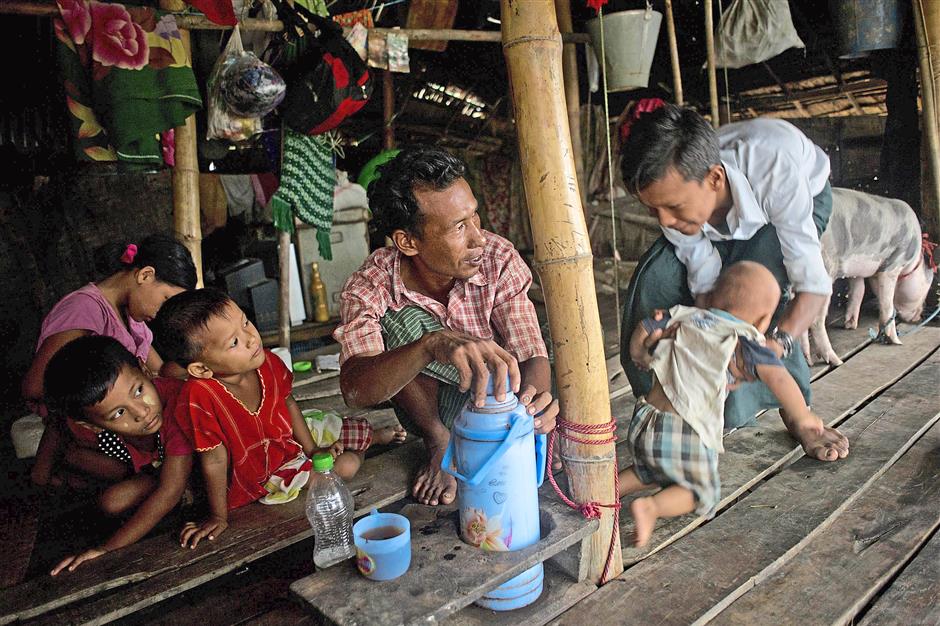
EVERY night Aung Myo Tun climbs onto the raised platform where he sleeps with his wife, six children and mother-in-law, listening in growing panic to the sound of water lapping around his house in Myanmar’s Irrawaddy delta.
“We are in trouble,” says the farmer, his face etched with tiredness from two weeks of guarding his family from the swirling river that has swallowed his village, as the country battles its worst flooding in years.
“We are watching the kids day and night. They are not old enough to swim,” the 39-year-old says, explaining the family now survives on donated food.
They are among thousands of beneficiaries of the mass mobilisation of ordinary people delivering aid – an example of the self-reliance that is partly the legacy of decades of neglect under military rule.
In Aung Myo Tun’s village, near Hinthada in central Myanmar, residents are used to slightly more than half a metre of seasonal flooding from the mighty Irrawaddy river nearby – they build their houses on stilts and plant special rice crops to grow above the waterline.
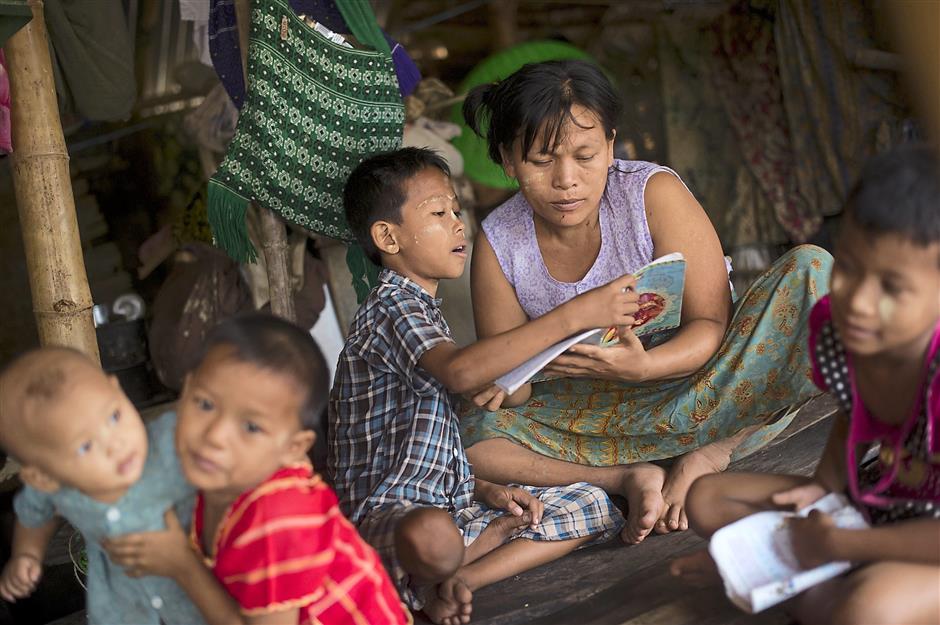
But the water has risen to almost 2m after heavier-than-usual rains this year caused landslides and flash floods across swathes of Myanmar, swelling rivers with debris-filled torrents that churned into the low-lying delta.
More than 100 people have been killed and a million affected since July, with four states declared disaster zones by authorities who have struggled to respond to the vast scale of the crisis.
As the waters rose up the bamboo stilts of his hut, Aung Myo Tun packed all nine family members – from his seven-month-old daughter to his 72-year-old mother-in-law – into his boat and sought refuge in a nearby village.
But when that area was also hit by floods, the family moved back home, building a raised platform for shelter above ankle-deep waters that have inundated the house.
“We are such a big family, it would be too difficult for us at the (official) shelter camps,” he says.
The farmer has started ferrying his children to school, now reopened, by boat, which he also uses to pick up donated rations cooked using rainwater collected during the day.
Like many across the country, he has not sought the government’s help in Myanmar’s worst natural disaster since Cyclone Nargis, which left at least 138,000 dead or missing in May 2008.
That crisis cemented the then ruling junta’s reputation for callous indifference – its leaders denied foreign aid for weeks and even suggested in state media that victims did not need help because they could forage for frogs and fish.
This time the country’s quasi-civilian government, which took power in 2011, has swiftly welcomed international help, deploying the military to deliver aid by truck and helicopter and setting up shelters in public buildings. But many local residents say they are reluctant to leave their homes and livestock.
Some huddled together with their animals inside stilted bamboo shacks, while others say there was little room at local monasteries already crammed with victims.
Despite reporting scant government aid, most do not fear hunger with regular deliveries of rice, noodles and bottled water couriered across the water by well-wishers, part of a vast supply chain reaching out across the country.
Poisonous snakes and waves, which often whip across the water during frequent storms, are more of a concern.
In the commercial hub Yangon, bands of fundraisers in “Save Myanmar” T-shirts wander through the city’s snarled traffic with collection bowls, while cartoonists and musicians have also raised cash.
“We are helping as much as we can,” says Hein Sit, 18, whose roadside team collected US$1,200 (RM4,800) in three days – an impressive display of generosity in a nation where even a US$3 (RM12) daily minimum wage proposal has proved controversial.
Local organisations “play a key role” but tend not to have a full overview, says Patrick Fuller of the International Federation of Red Cross and Red Crescent Societies (IFRC), as foreign aid groups boost their efforts to target the worst-hit areas.
Reaching remote and submerged communities can also come at great risk. Last Monday, the IFRC alone announced that a Myanmar Red Cross volunteer was swept away by fast-flowing waters.
Back at Aung Myo Tun’s village, rippling tides still surround what now resembles a dark green island in a vast ocean, its treetops grazing the water.
“We will only be all right after it recedes,” he says. – AFP
Already a subscriber? Log in
Get 20% OFF The Star Digital Access
Cancel anytime. Ad-free. Unlimited access with perks.