



A YOUNG man scrolling through TikTok might encounter videos telling him that he needs to be wealthy, successful and dominant to earn respect.
A young woman on the same platform, meanwhile, might find herself inundated with advice on how to look prettier, lose weight or keep a man interested.
Neither may realise that the content appearing on their feeds is reinforcing very different expectations of who they should be.
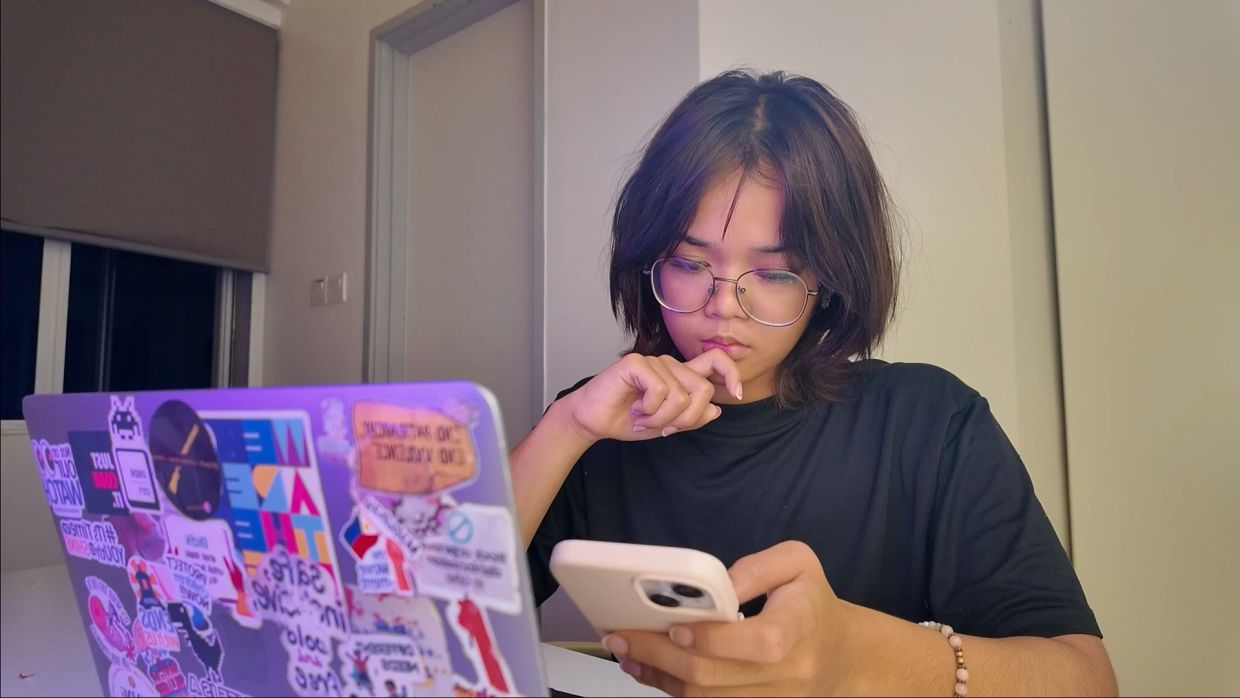
But these are precisely the patterns that researcher Farhan Shahmi and activist Ain Husniza Saiful Nizam uncovered when they set out to investigate how social media algorithms serve content to users based on gender.
Through an experiment involving six social media accounts, the pair found that recommendation algorithms appeared to develop gender-specific patterns even without users explicitly identifying their gender.
Their findings form the basis of The Gendered Feed, their short documentary that received a grant from the FreedomFilmFest 2026, which explores how social media algorithms can shape the content young people encounter online.
How recommendation systems form
Farhan, whose research focuses on social media systems and their effects on users, says the research was motivated partly by recurring gender stereotypes he had encountered in conversation with young people.
“The spewing of stereotypes is often very, very direct and pertinent.
“For example, men should be the breadwinner. They can’t really show their sadness; they can’t show their weakness.
“Women highlight that they cannot achieve greater things than men, either because of structural constraints or because they themselves feel unconfident to achieve this,” he says.
These observations, he says, prompted a fundamental question: where were young people learning such ideas about gender?
Farhan says the research also sought to examine how recommendation systems might contribute to shaping perceptions of social issues, a subject that continues to generate discussion among academics and policymakers.
To investigate, the pair employed a research method known as adversarial auditing, which involves systematically observing how digital platforms behave under different conditions.
They created six social media accounts, divided between male- and female-coded profiles, and monitored the content recommended to them over seven days, examining not only the types of videos appearing on the accounts but also how and when the content was delivered.
One of the biggest surprises, they say, was that the algorithms did not behave as linearly as they had initially expected.
Rather than steadily progressing from neutral material towards increasingly extreme content, the recommendation systems appeared to operate in cycles.
“What we found was consistent with a lot of academic conversations right now, where the amplification of gendered content was inconsistent but it’s there. It will happen in cycles,” says Farhan.
The algorithms appeared to spend the first day or two learning about the accounts, identifying possible interests and establishing recurring themes before experimenting with different content formats.
These included relationship advice, podcasts, religious content, artificial intelligence-generated dramas and sponsored posts.
The process was particularly interesting, says Farhan, because TikTok does not explicitly require users to identify their gender when creating an account.
Despite this, they observed similar recommendations appearing across the male-coded profiles and, separately, across the female-coded profiles.
Dominant men, desirable women?
For male-coded accounts, recurring themes included the expectation that men should be financial providers, remain emotionally strong and exercise authority in relationships.
The male-coded accounts also encountered sexualised content involving women, including AI-generated images depicting women being digitally undressed.
Farhan says such material appeared increasingly frequently and was observed only on the male-coded profiles.
Female-coded accounts, meanwhile, were more likely to receive recommendations involving beauty standards, body image and advice on becoming desirable to men, says Ain.
What made the findings particularly interesting was that gendered patterns also emerged in accounts that had not been primed with specific interests.
While some profiles were created using selected topical interests informed by earlier research, two accounts were established without such indications.
Yet these accounts eventually developed recommendation patterns resembling those of their respective gender-coded counterparts.
These observations suggest that recommendation pathways could diverge based on relatively small signals, says Farhan.
Another unexpected finding concerned the prevalence of AI-generated content, which Ain says frequently reproduced conventional gender stereotypes regardless of its format.
Among the examples were AI-generated dating coaches, which offered different advice depending on whether their intended audience was male or female.
Unlike conventional relationship advice videos, these featured entirely AI-generated characters rather than real people.
Engineered to keep us watching
Ain adds that similar patterns appeared in AI-generated entertainment, including short dramas featuring anthropomorphic fruits.
Despite their seemingly innocuous presentation, many of these videos followed storylines in which female characters were humiliated, mistreated or subjected to violence, while male characters were portrayed as aggressively masculine.
“It doesn’t matter whether it’s a fruit video or a cat video, all of them follow the same pattern and even the AI drama ones,” she says.
This is particularly concerning, she says, because it is very easy to produce such content with little thought.
Unlike traditional videos, which require creators to plan, record and edit their material, AI-generated content can be produced using prompts, allowing similar narratives to be replicated rapidly.
She also raises concerns about the visual presentation and sequencing of such videos that are designed to hold viewers’ attention, even when the content itself was repetitive or absurd.
“It is engineered in a way that makes us keep watching it,” she says.
The pair stress that their observations did not amount to a simple progression in which users were continuously pushed towards more extreme material.
Instead, their findings pointed to a more complex recommendation process, in which different themes and formats appeared repeatedly as the system continued to test users’ interests.
For Farhan, this demonstrated why studying individual viral videos was insufficient to understand how recommendation algorithms operate.
Their research, he says, highlighted the importance of examining the wider structure of recommendation systems, including the patterns through which content is delivered over time.
The documentary seeks to make these otherwise largely invisible processes more understandable to ordinary social media users.
Question your feed
Their ultimate aim, they say, is to encourage viewers to become more conscious of the recommendations appearing on their feeds and to question the assumptions behind them.
“It’s not a simple recommendation for people to not believe everything online. We’ve heard that dozens of times.
“Rather, we’re inviting people to come with these sorts of questions: Why am I seeing this? What behaviour is the algorithm trying to push towards me? What assumptions about men or women are being repeated to me?” says Farhan.
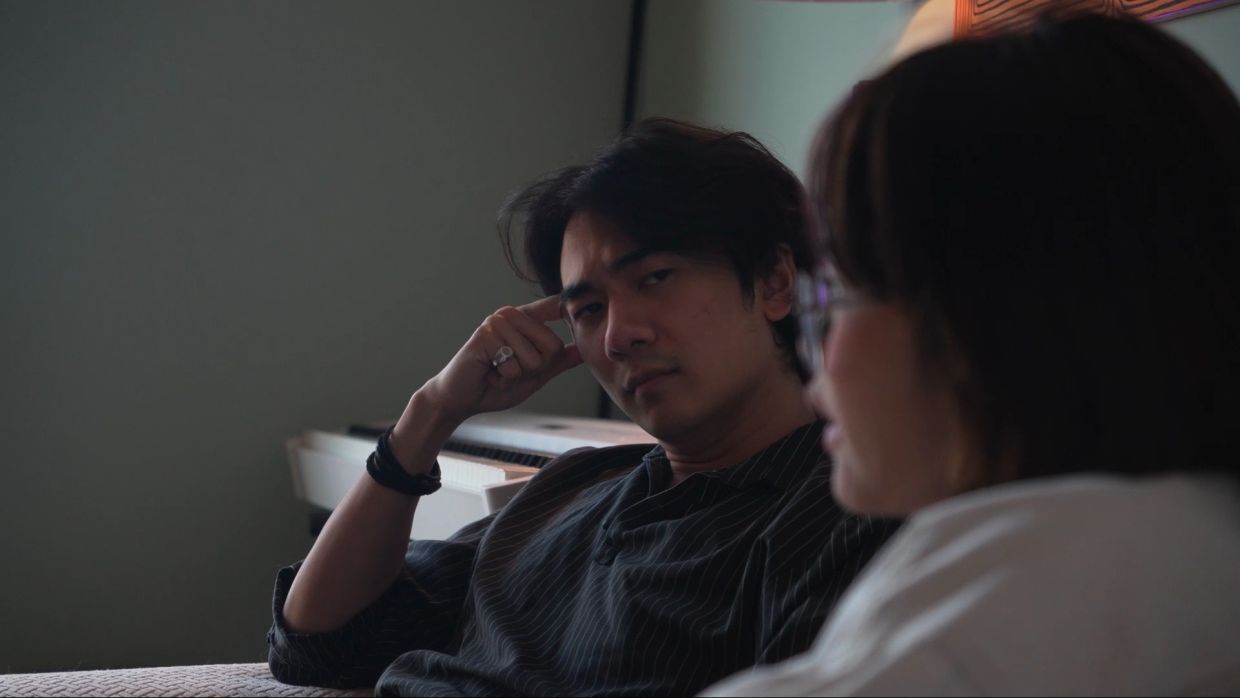
Ain adds, “Have we let the content that we consume shape our dominant reality?
“And has that created a lot of biases and judgement towards people of a certain identity, whether that would be gender, race or religion?
“Because sometimes, what we see on the feed is not necessarily the dominant reality that would actually represent people of a certain group.”
The Gendered Feed will be screened at the FreedomFilmFest 2026 on Saturday, Oct 24 at 8pm at PJPAC, 1 Utama E. For more details on FFF2026, go to https://freedomfilm.my/fff2026/
