INSTANT noodles. Hot chapatis. Sliced bread.
Wheat is at the heart of the modern diet, and this year, it is facing an accumulation of modern dangers. The breadbaskets of the world are getting pummelled by drone strikes and devilish weather, nudging prices higher amid already soaring food costs in the wake of the Iran war.
Heat and drought have diminished harvests in some of the biggest wheat-producing countries, including the United States, which is expected to have its worst wheat harvest in a half-century, spiking prices. Poor countries that agreed to buy American wheat under the threat of Trump tariffs could be stuck paying abnormally high prices.
The Black Sea, a crucial passage for the global wheat trade, is an active theatre of the Russia-Ukraine war, while the Houthi militia’s attacks on shipping in the Red Sea have already forced grain shipments to take a longer, more expensive route around South Africa.
Beyond that, a supercharged El Nino further threatens water levels in the Panama Canal, while drought has reduced water levels to perilously low levels in transit routes like the Rhine and Danube rivers in Europe, raising transportation costs. All this at a time when the global atmosphere is hotter than normal because of a century of fossil fuel burning, threatening the livelihoods of small farmers in poor countries.
The simultaneous troubles reveal the risks inherent in the global food system today. Only a few crops, like wheat, provide most of the world’s calories. Relatively few governments dominate the export of wheat, including Russia, Canada, the US, Ukraine and the European Union. Their customers are mainly low-income countries that no longer grow much of the food their people eat.
“The system we currently have in place depends on three things: seamless trade, cheap energy, stable climate,” said Evan Fraser, a professor who studies the global food system at the University of Guelph in Ontario.
“Today, it seems none of these assumptions are met.”
Few things are as politically potent as the price of bread, and wheat prices were already at a three-year high in July, according to the Food and Agriculture Organization (FAO) . The UN agency has warned of higher prices later this year.
The saving grace is that the world had a bumper crop of wheat last year, and global stocks remain strong. The risk, said Monika Tothova, an economist who specialises in commodities at FAO, is that “several sources of uncertainty begin to reinforce one another.”
“A combination of El Nino-related weather impacts across major exporters, renewed constraints on Black Sea exports and further disruptions to key shipping routes would have implications far beyond wheat production itself,” she said.
War hits the Black Sea, a grain choke point
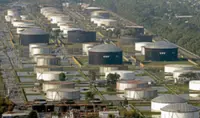
Russia and Ukraine together account for nearly a third of the wheat that the world buys. This year, just as harvests began, their grain shipments have nearly ground to a halt.
In recent weeks, Russia and Ukraine have stepped up their attacks on each other’s grain export terminals and ships in the Black Sea, a waterway they share to get their goods out to the world.
Weather is scrambling harvests
Wildfires this summer spared the wheat belt of France, the EU’s largest wheat producer. But the heat has not.
France expects lower yields because of record heat this summer, according to government projections. Germany’s main farmers group said Tuesday that yields were down for several crops, including wheat, because of drought and heat.
In July, the European trade group for agricultural commodities, Coceral, issued a special bulletin, estimating lower grain yields of 286.6 million metric tons this year, compared with 310 million metric tons in 2025, for the continent and for Britain.
Australia, also a major wheat exporter, planted fewer acres of wheat because of high fertiliser costs, stemming from the Strait of Hormuz closure.
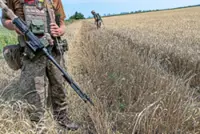
The US is about to have its worst wheat harvest since 1970, largely because of a terrible drought in the Great Plains, the US Department of Agriculture estimated in its latest report this month. American farmers had devoted fewer acres to wheat, and yields per acre were also down.
Importing countries feel the pinch
Rising prices of imported wheat put enormous pressure on governments that are forced to buy high and then help subsidise the costs to keep bread prices within the reach of its people.
Egypt, which buys most of its wheat from abroad, including from Russia and Ukraine, has tried to bolster wheat production at home, with the government offering higher prices to farmers. Still, Egypt remains far from reaching anything close to self-sufficiency. There is simply not enough water to produce what the country needs.
Then there are President Donald Trump’s tariffs. To try to avoid additional higher rates, some wheat-importing emerging economies, such as Bangladesh, agreed to buy substantial amounts of US wheat.
That means they are obliged to pay whatever price US wheat goes for this year, even if it is substantially higher than what other countries are offering.
Analysts in Bangladesh have denounced the deal as unfair.
History’s grim lessons
The perils facing the world’s breadbaskets come at a time when an El Nino, a naturally recurring weather pattern, is raising the risks of extreme weather for farmers in many parts of the world, including in countries like Ethiopia and Guatemala, where millions of small farmers subsist on what they grow on their own land.
The last major El Nino event, in 2015 and 2016, worsened food insecurity for an estimated 60 million to 100 million people, the World Food Program estimated.
This time, the World Food Program says, it could expand the ranks of those who are unable to meet their daily food needs to 274 million, up from 225 million today. The biggest effects are expected in Central America and southern Africa.
“It is naive to think we can rely on a food system built for a different era,” Fraser said. “And so we need to reimagine how to feed ourselves.” — ©2026 The New York Times Company
This article originally appeared in The New York Times.