IN the quietly bustling afternoons before urgent evening meetings in the editors’ “war room” of Menara Star, serious issues get Datin Paduka Esther Ng’s full scrutiny even as she swiftly interacts with colleagues popping by for pointers or waving through the meeting room glass walls.

Eagerly embracing long workdays and late nights filled with ideas, she describes a life in sync with the demanding pace of the media industry.
“Most journalists work to give voice to people who can’t speak for themselves.
“At 58 this year, my goal is still the same. We are here with the aim of making the world a better place,” she says, emphasising her primary role as a journalist even as she held various SMG leadership positions.
“At the end of the day, the media mirrors society. So we cannot deny what is in front of us because we are in that reflection, too,” she points out.
Ng’s determined stance – even as the media landscape underwent huge changes – saw her being entrusted to co-helm the main desk of the then Editorial Department as news editor in 2010 before taking charge of SMG’s weekend edition of the Sunday Star in 2015.
The executive editorship role came two years later and in May the following year, she was made the company’s first ever Chief Content Officer, replacing the traditional editor-in-chief mantle.
Continuing her predecessors’ efforts to digitalise and vary SMG’s media outputs for the company to stay competitive, she became the first to oversee content in its print, digital, data/interactive segment, Malay vertical-format media content, video and social media platforms.
Embracing challenges and new media trends
The Content Department underwent a comprehensive digital transformation, mostly to modernise the workflow and expand SMG’s reach.
It was vital to pivot towards a digital-first content strategy while still defending print all the way, says Ng, adding that this would create a flexible platform to cater to the ever-changing media landscape.
Ng also reinforced SMG’s brand authority, grounding the focus on credibility strengthened by the group’s market positioning and aimed at establishing it as a definitive, highly respected voice within the industry.
This brought about the success of the “True or Not” segment in The Star Online – developed to investigate claims and debunk misinformation – which gained widespread recognition, ultimately earning a prestigious editorial award last year.
Integrating data analytics into content direction was another strategy (although we use it more as a guide) as it was important to gauge engagement metrics to get insights into audience priorities, she said.
Ng also focused on interactive storytelling and immersive digital formats, turning legacy reporting into multi-layered experiences that gave more depth to readers. This could not be more pertinent as The Star celebrates its 55th anniversary this year.
Alongside digital growth and editorial credibility, Ng also zeroed in on elevating visual design, recognising the need to create a sophisticated visual identity across all platforms.
Getting staff buy-in for so many changes in short periods was not easy but she knew that frankness and diplomacy would be key: “The best thing is to get people on board and be honest about where you want to go. Journalists are very switched on and always raring to go.”
A true-blue Petaling Jaya girl, Ng also describes herself as a chatterbox.
“But, from my SMG superiors, I have learned to listen,” she shares, adding that she makes it a point to seek feedback from youth.
“If I have a problem and go to somebody my own generation, I can almost hear what they’re going to say because I would have had similar circumstances, and experiences as they did.
“If I talk to a younger person, I’ll come up with solutions that I would have never otherwise thought of.”
Working as a team for common goal
As CCO, Ng has found that a company culture of aiming for good internal communications and workflow has given her better control, especially during emergencies.
She also recalls how a united sense of purpose drove staff to instinctively come together to cover tragedies such as the painful loss of lives on board the two Malaysia Airlines airplanes – the MH370 and MH17 flights – in 2014 that saw the nation in deep grief, and searching for answers in the media as well as official channels.
“At SMG, we had very good generals and everybody knew what they needed to do,” she says, pointing to boardroom wall displays of framed iconic front pages of The Star, providing credible and clear information in times of disasters, or emergencies.
From her senior bosses who were already continuously working to stay apace or ahead of the rise of social media and fake news, Ng learnt to embrace new challenges.
“I learnt not to say ‘No’ to development or technology. Now, it is AI, which is another trend and challenge.
“As long as we stick to the basic tenets of journalism, this presents a different way of storytelling and we will make use of it intelligently and responsibly,” she says.
With SMG as the platform, Ng, together with the tech and product teams, expanded the company’s role in pioneering media development by introducing a Digital Access membership plan towards a subscription model for premium content while keeping breaking news free. SMG was the first mainstream media house to go this route.
This contributed to the company’s business recovery during the Covid-19 pandemic in 2020 and in the post-pandemic era.
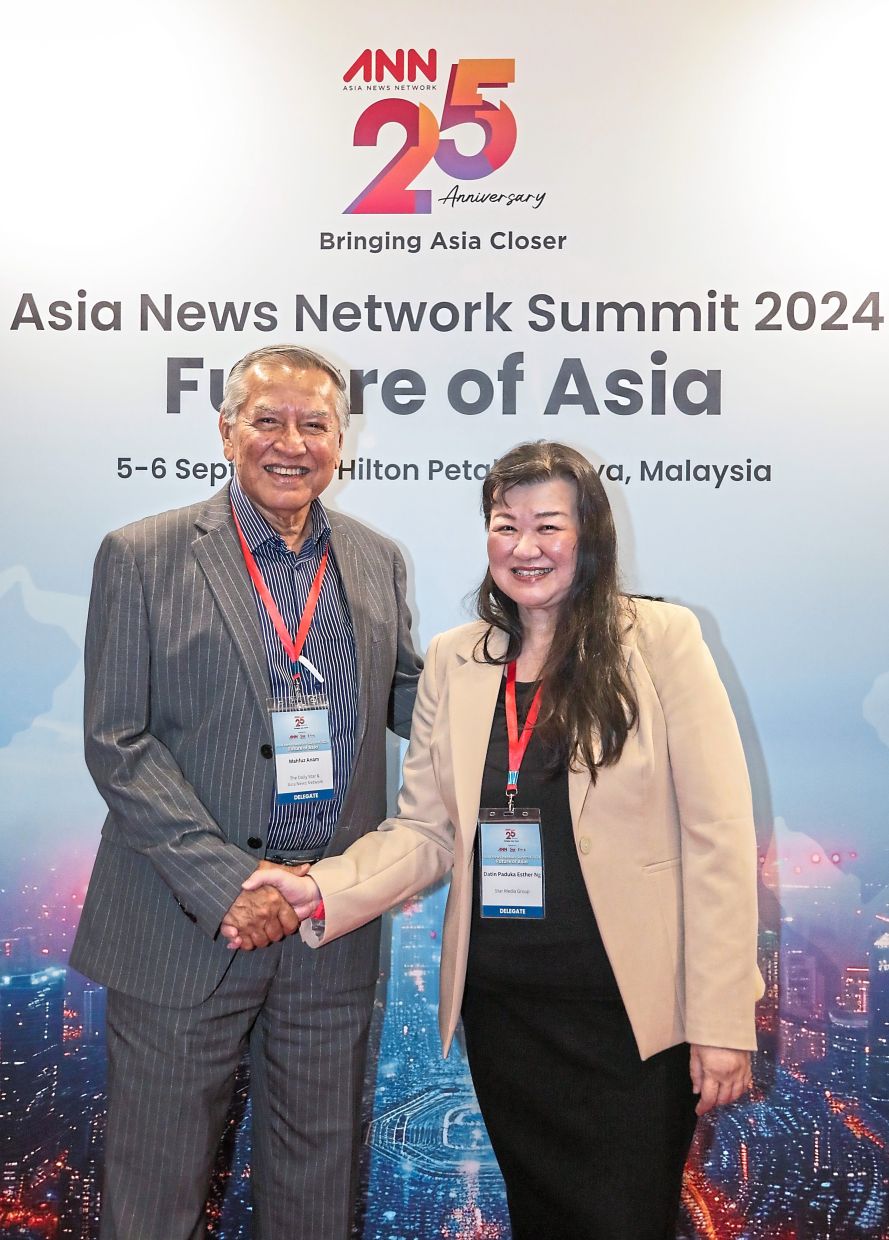
In 2025, she represented regional media through her chairmanship of the Asia News Network, a leading regional alliance of 20 news titles that share editorial content across 10 South-East Asian economies as well as several other locations in East and South Asia.

Ng was also elected to the board of the Malaysian Media Council set up by Parliament and convened for the first time earlier this year.
SMG’s various channels have also enabled her to spotlight issues related to women, climate and youth, through more active use of news angles even in feature articles.
A focus on using audience data to inform topics of coverage has also been a strong point under Ng’s leadership: “I don’t go by data 100% but use it to guide decisions.
“Credit must also go to my team. Because, at the end of the day, I’m nobody standing alone.”